Arunachal Police warn against sharing unverified border content on social media
Synopsis
A day before Independence Day, Arunachal Pradesh Police issued a pointed advisory warning citizens not to share unverified content about border incidents or troop movements on social media. With the state sharing over 1,680 km of international borders with China, Bhutan, and Myanmar, the stakes for operational security are unusually high — and the timing of the warning is hard to ignore.
Key Takeaways
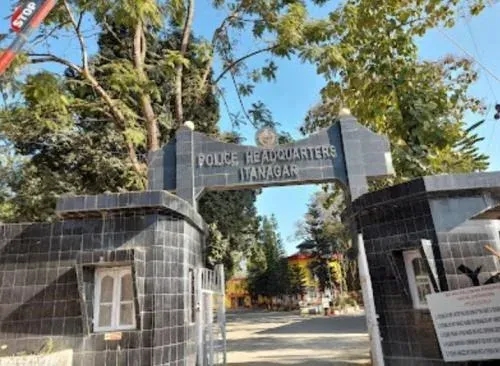
Arunachal Pradesh Police issued a social media advisory on 14 August from the Police Headquarters, Itanagar .
Citizens were warned against sharing unverified photographs, videos, or messages about border incidents or security force movements .
The state shares 1,080 km of border with China , 160 km with Bhutan , and 440 km with Myanmar .
Police cautioned that even well-intentioned sharing ‘may inadvertently affect operational security and the safety of security personnel.’ Citizens were directed to rely only on official statements and verified sources for security-related updates.
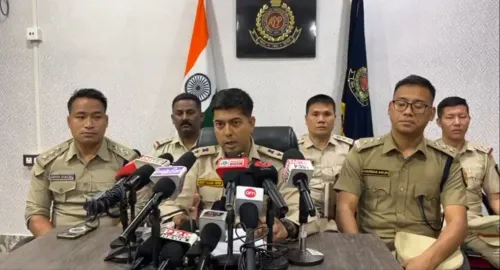
Arunachal Pradesh Police on Friday, 14 August issued a public advisory urging citizens to exercise caution on social media and stop sharing unverified photographs, videos, and messages related to border incidents and the movement or deployment of security forces. The warning, issued from the office of the Director General of Police at the Police Headquarters (PHQ) in Itanagar, comes as unverified security-related content has been observed circulating rapidly across multiple platforms.
What the Advisory Says
The PHQ statement explicitly asked the public not to upload or forward any content disclosing the location, movement, deployment, or operational activities of security forces. “Such information, even when shared with good intentions, may inadvertently affect operational security and the safety of security personnel,” the advisory stated.
Citizens were urged to rely exclusively on official statements and verified sources for information on sensitive security developments. The police also warned against circulating rumours, noting that unverified content “could create unnecessary fear, confusion and apprehension among members of the public.”
Why This Advisory Matters
Arunachal Pradesh shares 1,080 km of international border with China to the north and north-east, 160 km with Bhutan to the west, and 440 km with Myanmar to the east. The state also has over 804 km of inter-state border with Assam. Given this sensitive geopolitical position, any unverified content about troop movements or border incidents carries the potential to escalate public anxiety or, in a worst case, compromise active operations.
This comes amid a broader national pattern of security agencies issuing social media caution advisories, particularly around Independence Day and during periods of heightened border activity. The timing — a day before 15 August — is notable.
The Operational Security Risk
Security experts have long flagged that open-source information shared on platforms such as WhatsApp and Facebook can be aggregated by adversarial actors to map force dispositions. Even innocuous-seeming photographs — GPS-tagged images of convoys or camp locations — can reveal tactically sensitive data. The PHQ advisory implicitly acknowledges this threat vector without naming it explicitly.
Notably, the advisory does not reference any specific incident that triggered the warning, leaving open whether it is precautionary or a response to a particular episode of viral misinformation.
What Citizens Are Being Asked to Do
The Arunachal Pradesh Police outlined three clear asks: verify information before sharing, follow only official channels for security updates, and cooperate with authorities in maintaining public order. “Responsible use of social media and a small act of restraint by every citizen can make a significant contribution towards maintaining peace, public confidence and security of the state and nation,” the police said.
With social media penetration deepening even in border districts, the challenge of controlling the spread of unverified content is expected to remain a recurring concern for security agencies across India’s frontier states.
Point of View
Cites no platform, and references no particular viral post. That ambiguity is itself a signal: either the police are acting on a specific intelligence concern they cannot disclose, or this is a pre-Independence Day precautionary sweep. Either way, the underlying problem is structural. Arunachal Pradesh’s border districts now have smartphone penetration and social media access that outpaces the state’s capacity to counter misinformation in real time. A one-off advisory will not change behaviour; what is missing is a sustained public literacy programme on information hygiene in border communities, where rumours about Chinese incursions or troop buildups can cause genuine panic. The advisory is necessary — but it is not sufficient.
NationPress
29 Sept 2026
Frequently Asked Questions
What did the Arunachal Pradesh Police advisory say?
The Arunachal Pradesh Police, through the office of the Director General of Police, advised citizens on 14 August to stop sharing unverified photographs, videos, and messages related to border incidents and security force movements on social media. The advisory warned that even well-intentioned sharing could compromise operational security.
Why did Arunachal Pradesh Police issue this warning?
The police stated they had observed unverified content about border incidents and troop movements circulating on social media platforms. Given the state’s sensitive international borders with China, Bhutan, and Myanmar, such content poses a risk to both operational security and public order.
Which borders does Arunachal Pradesh share?
Arunachal Pradesh shares 1,080 km of border with China, 160 km with Bhutan, and 440 km with Myanmar. It also has over 804 km of inter-state border with Assam, making it one of India’s most strategically sensitive frontier states.
What are citizens being asked to do?
Citizens are asked to verify information before sharing it, follow only official statements and verified sources for security-related updates, and avoid circulating rumours. The police urged that responsible social media use can help maintain peace and public confidence across the state.
Is there a specific incident behind this advisory?
The advisory does not reference any specific incident. It is framed as a general precautionary warning, though it was issued on 14 August, a day before Independence Day — a period of traditionally heightened security sensitivity along India’s borders.