Assam CM Office: 36 Lakh Students Benefit from State Schemes

Synopsis
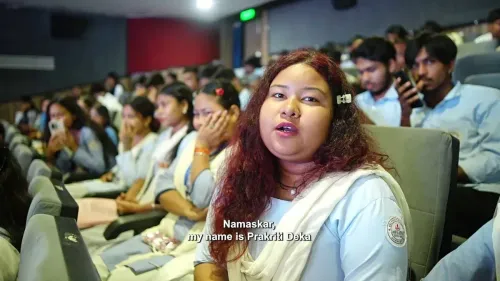
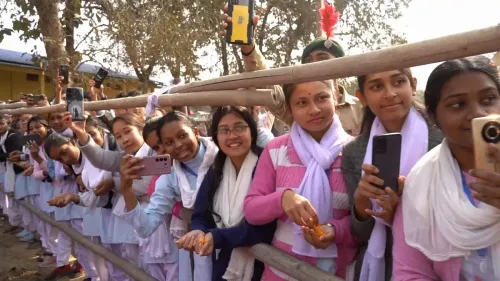
The Chief Minister's Office of Assam declared on 2 July 2026 that over 36 lakh students have gained from state-run education schemes, reflecting the government's sustained push to expand welfare coverage across school and higher education in the Northeast.
Key Takeaways
The Chief Minister's Office of Assam announced on 2 July 2026 that over 36 lakh students have benefited from state education schemes.
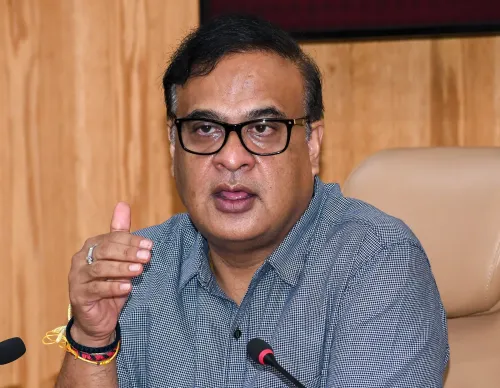
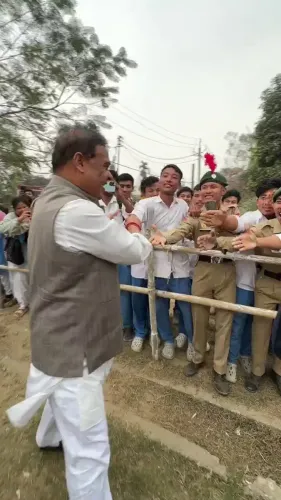
Chief Minister Himanta Biswa Sarma has led Assam since May 2021 and has prioritised student welfare as a core governance agenda.
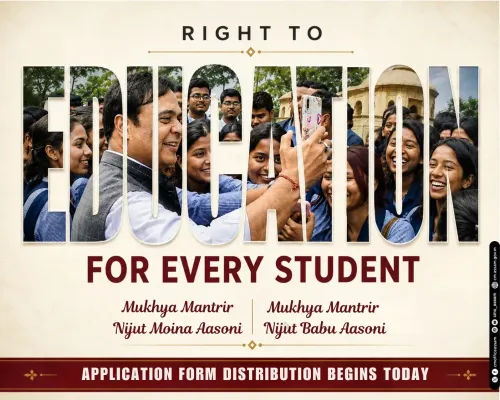
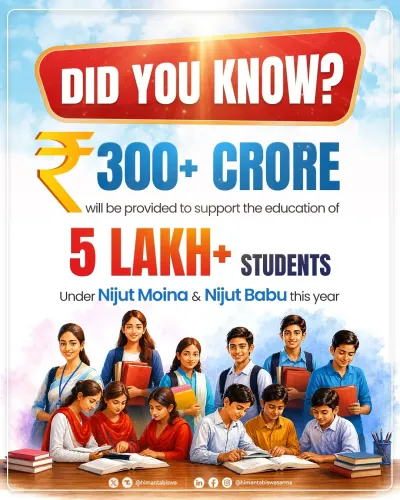
The Mukhya Mantri Nijut Moina scheme, launched in 2021 , provides direct financial support to girl students to reduce dropout rates.
Assam's education welfare framework is layered over central programmes including Sarva Shiksha Abhiyan , operational since 2001 .
The 36 lakh beneficiary count spans both school-level and higher education students across the state.
Detailed scheme-wise data and audited figures are expected through upcoming Assam budget documents or education status reports.
The Chief Minister's Office of Assam announced on Thursday, 2 July 2026 that over 36 lakh students have benefited from state-run education welfare schemes, underscoring the government's push to expand student support across the northeastern state.
Context
The post by the Chief Minister's Office of Assam states that 'over 36 lakh students gain from Assam schemes,' pointing to the cumulative reach of multiple student-centric programmes run by the Government of Assam. While the post does not enumerate specific schemes by name, the announcement reflects an ongoing state effort to document and publicise the scale of educational welfare delivery. Chief Minister Himanta Biswa Sarma, who has led the state since May 2021, has consistently positioned education outreach as a flagship governance priority.
Policy Backdrop
Assam's education welfare architecture draws from both central and state-level frameworks. The Right of Children to Free and Compulsory Education Act, 2009 established the foundational legal entitlement for school-age children, while centrally sponsored programmes such as Sarva Shiksha Abhiyan — launched in 2001 — have provided structural and financial support for universal elementary education across the state. Building on these, the Assam government introduced the Mukhya Mantri Nijut Moina scheme in 2021, which provides direct financial support to girl students to encourage enrolment and reduce dropout rates. Together, these layers of policy form the scaffolding within which the 36 lakh beneficiary figure is situated.
Assam governments have historically supplemented national programmes with targeted state measures — including scholarships, free textbook distribution, and financial incentives — aimed at improving human development indicators in the Northeast, a region that has faced persistent challenges in educational access and retention.
Stakeholders and Impact
The primary beneficiaries are school-going children and higher education students across Assam. A figure of 36 lakh — equivalent to 3.6 million students — represents a significant share of the state's student population, signalling broad programme penetration if the number holds across independent verification. Girl students, who are targeted specifically under schemes like Mukhya Mantri Nijut Moina, stand to be among the most directly impacted groups. Educators, school administrators, and district-level officials are key implementation stakeholders who translate scheme allocations into on-ground delivery.
For families in rural and semi-urban Assam, such schemes often represent the difference between continued schooling and early dropout, particularly in economically marginalised communities. The cumulative beneficiary count, if sustained, would mark a measurable step toward closing enrolment and retention gaps that have historically lagged national averages in parts of the Northeast.
What's Next
The announcement is likely to be followed by more granular data releases, including scheme-wise beneficiary breakdowns and budget allocations, potentially through the next Assam state budget documents or the forthcoming Annual Status of Education Report. Observers will watch whether the state provides audited figures to substantiate the 36 lakh count and details on which specific schemes contributed to the total. Sustained political attention to this number ahead of future electoral cycles in Assam may also shape how scheme outcomes are communicated and expanded in the months ahead.
Point of View
Even when scheme-level granularity remains unpublished. The Northeast, historically underfunded in social sector spending relative to its demographic needs, provides a politically resonant backdrop for such claims. The real test will lie in independent verification of the figure and whether enrolment and retention data corroborate the reach implied by the announcement.
NationPress
30 Sept 2026
Frequently Asked Questions
How many students have benefited from Assam government schemes?
The Chief Minister's Office of Assam announced on 2 July 2026 that over 36 lakh, or 3.6 million, students have benefited from state-run education welfare schemes.
What is the Mukhya Mantri Nijut Moina scheme in Assam?
Mukhya Mantri Nijut Moina is an Assam government scheme launched in 2021 that provides direct financial support to girl students to encourage school enrolment and reduce dropout rates.
Which education schemes does the Assam government run for students?
Assam implements a range of schemes including Mukhya Mantri Nijut Moina for girl students, alongside centrally sponsored programmes like Sarva Shiksha Abhiyan, covering scholarships, free textbooks, and financial incentives.
Who is the Chief Minister of Assam responsible for these education schemes?
Himanta Biswa Sarma has been the Chief Minister of Assam since May 2021 and has overseen the expansion of student welfare programmes in the state.
What is Sarva Shiksha Abhiyan and does it apply to Assam?
Sarva Shiksha Abhiyan is a centrally sponsored programme launched in 2001 for universal elementary education, and Assam is an active implementing state under this scheme.