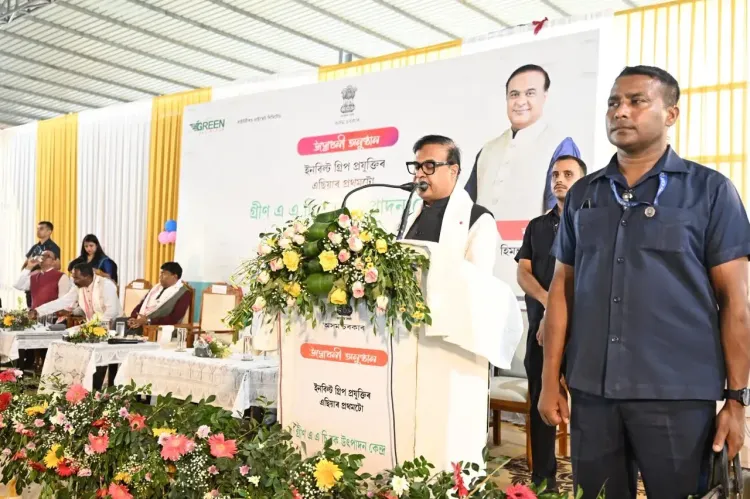
CM Himanta Inaugurates ₹55 Cr Green AAC Block Plant in Tinsukia
Synopsis
Chief Minister Himanta Biswa Sarma inaugurated a ₹55 crore Green AAC Block unit in Hapjan, Tinsukia — an Advantage Assam 2.0 outcome. The plant uses Brahmaputra silt, can produce 2 lakh cubic metres annually, replaces 10 crore bricks, and claims to be Asia's first AAC facility with in-built grip technology, creating 650+ jobs.
Key Takeaways
₹55 crore Green AAC Block manufacturing unit inaugurated at Hapjan, Tinsukia by CM Himanta Biswa Sarma .
The plant emerges directly from pledges made at the Advantage Assam 2.0 investment summit.
Annual capacity of 2 lakh cubic metres is projected to replace nearly 10 crore conventional fired bricks per year.
Brahmaputra river silt replaces topsoil as the primary raw material, protecting fertile agricultural land.
Claimed to be Asia's first AAC block facility with in-built grip technology for improved structural bonding.
Expected to generate 650+ jobs in the Tinsukia district of upper Assam.
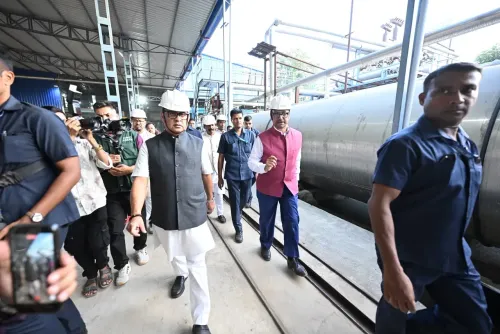
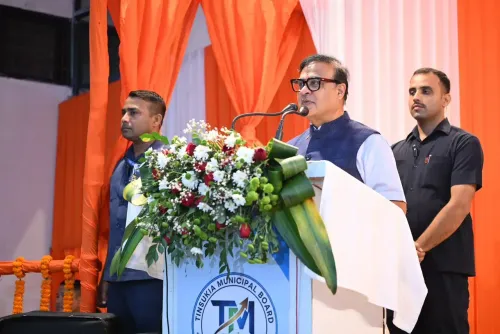
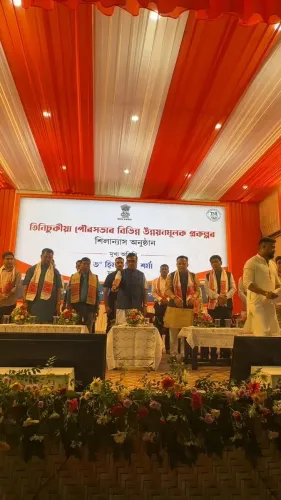
A river's silt — long seen as flood debris — is now the raw material for Assam's construction future. Chief Minister's Office of Assam announced on Thursday, 29 October 2026 that Chief Minister Dr. Himanta Biswa Sarma inaugurated a ₹55 crore Green AAC Block manufacturing unit at Hapjan, Tinsukia, delivering on a commitment made at the state's flagship investment summit.
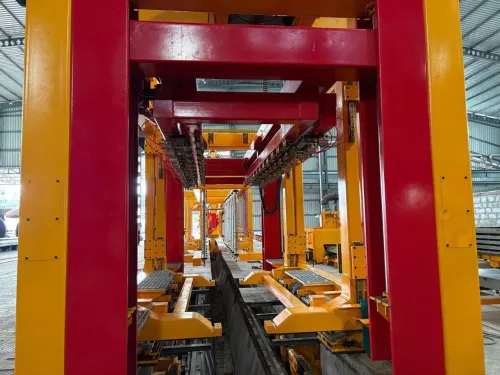
The facility is a direct outcome of Advantage Assam 2.0, the state government's investment summit designed to convert pitch-day promises into on-ground factories. This plant is not just another industrial unit — it carries a claim that sets it apart across the continent: according to the Chief Minister's Office, it is Asia's first AAC block facility equipped with in-built grip technology, a feature intended to improve structural bonding in construction.
Brahmaputra silt takes centre stage
The most striking design choice is the feedstock. Instead of stripping topsoil — the conventional source for clay bricks — the unit will draw on Brahmaputra river silt as its primary raw material. Upper Assam's rivers deposit enormous volumes of silt every monsoon season, often causing embankments to breach and farmland to flood. Channelling that silt into Autoclaved Aerated Concrete (AAC) blocks turns a recurring environmental liability into an industrial input, while sparing the fertile agricultural soil that farmers in the Brahmaputra valley depend on. With an annual production capacity of 2 lakh cubic metres, the plant is projected to replace nearly 10 crore conventional bricks every year — a significant dent in demand for fired clay bricks, whose kilns are a known source of particulate pollution and topsoil loss across the Gangetic and Brahmaputra plains.650+ jobs and the Advantage Assam pipeline
Beyond the environmental arithmetic, the unit is expected to generate more than 650 direct and indirect jobs in the Tinsukia district of upper Assam — a region that has historically lagged industrially despite its proximity to the oil-rich Digboi corridor. The Advantage Assam summit series was built precisely to address this gap, attracting manufacturing and infrastructure investment to parts of the state that rarely appear on a factory-location shortlist. Assam's push to convert river silt into green building materials mirrors a broader trend visible in other Indian states grappling with central and court-ordered restrictions on conventional brick kilns. AAC blocks — lighter, thermally efficient, and faster to lay than fired bricks — have gained steady ground in the Indian construction market over the past decade. Integrating silt harvesting into that supply chain is a policy innovation that other riverine states will be watching closely. A single plant in Hapjan is a start. Whether Assam's silt-to-block model can be replicated across the river system — and whether the state formalises a silt-utilisation policy to support it — will determine if this inauguration marks a turning point or a one-off.Point of View
Reduces ecological damage from brick kilns, and creates a new industrial supply chain in upper Assam. If the silt-utilisation approach is codified into state policy, it could become a template for other riverine states under pressure to phase out conventional clay brick production. The 'Asia's first' branding signals that Assam is positioning this not just as a local industrial story but as a global green-manufacturing credential.
NationPress
30 Oct 2026
Frequently Asked Questions
What is the Green AAC Block plant inaugurated in Tinsukia, Assam?
It is a ₹55 crore Autoclaved Aerated Concrete (AAC) block manufacturing facility at Hapjan, Tinsukia , inaugurated by Chief Minister Himanta Biswa Sarma . It uses Brahmaputra river silt as raw material and has an annual capacity of 2 lakh cubic metres.
What is Advantage Assam 2.0 and how is it connected to this plant?
Advantage Assam 2.0 is Assam's state-level investment summit series aimed at attracting manufacturing and infrastructure projects. The Hapjan AAC block unit is a direct outcome of investment commitments made at that summit.
Why is Brahmaputra silt used in this AAC block plant?
Using Brahmaputra river silt as raw material avoids stripping agricultural topsoil — the conventional source for fired clay bricks — thereby protecting fertile farmland in the Brahmaputra valley while utilising silt that would otherwise accumulate and cause flooding.
How many jobs will the Tinsukia AAC plant create?
The facility is expected to generate more than 650 direct and indirect jobs in the Tinsukia district of upper Assam, according to the Chief Minister's Office.
What makes this AAC block plant unique in Asia?
The Chief Minister's Office of Assam states it is Asia's first AAC block facility equipped with in-built grip technology , a feature designed to improve structural bonding when the blocks are used in construction.