CM Assam's Anna Sewa Din: 32L+ Ration Holders Collect Rice
Synopsis
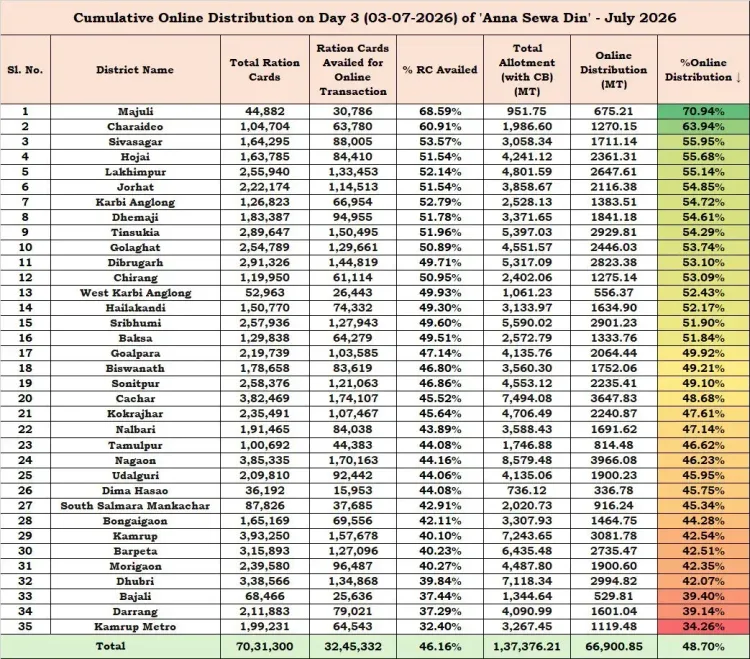
Assam's Anna Sewa Din drive completed its third day on July 3, 2026, with 32,45,332 ration card holders collecting 66,900.85 metric tonnes — 48.70 per cent — of allocated subsidised rice, the Chief Minister's Office announced, citing steady progress in state food security.
Key Takeaways
By the end of Day 3 of Anna Sewa Din, 32,45,332 ration card holders in Assam had collected their subsidised rice entitlements.
A total of 66,900.85 metric tonnes of rice was distributed, representing 48.70 per cent of the total allocated stock.
The drive is being conducted under the leadership of Chief Minister Dr.
Himanta Biswa Sarma , who has led Assam since May 2021.
Anna Sewa Din operates as a state-level mobilisation campaign layered on top of entitlements under the National Food Security Act, 2013 .
Daily progress figures are being publicly reported by the Chief Minister's Office of Assam , reflecting a data-transparency approach to welfare delivery.
The Chief Minister's Office of Assam announced on Friday, July 3, 2026, that the state's ongoing Anna Sewa Din drive has recorded substantial public participation by the close of its third day, with over 32 lakh ration card holders collecting subsidised rice across the state.
What the Numbers Say
By the end of Day 3 of the Anna Sewa Din drive, a total of 32,45,332 ration card holders had collected 66,900.85 metric tonnes of subsidised rice, representing 48.70 per cent of the allocated stock. The CMO described this as 'steady progress in ensuring food security across the state.' The drive is being conducted under the leadership of Chief Minister Dr. Himanta Biswa Sarma.
Context: What Is Anna Sewa Din?
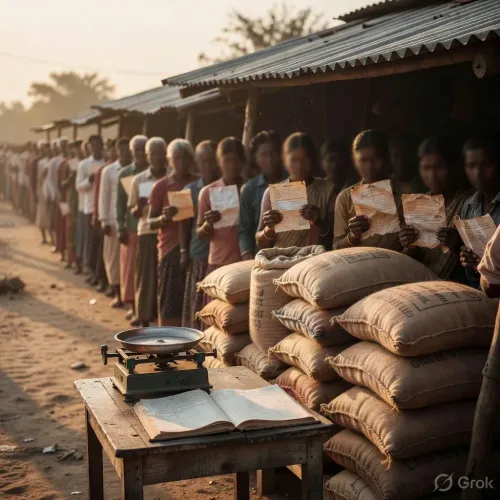
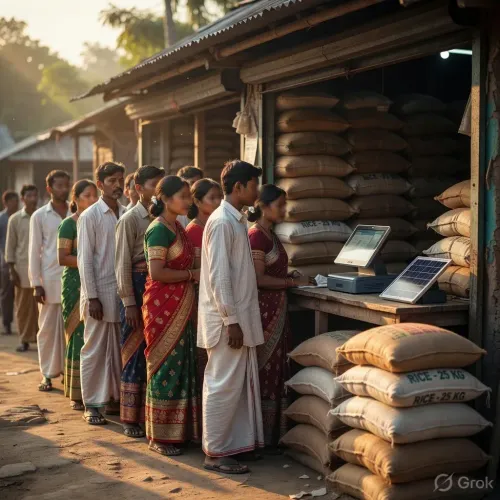
Anna Sewa Din is a state-designated food distribution initiative by the Government of Assam that enables eligible ration card holders to collect their subsidised rice entitlements from fair-price shops. The drive is designed to mobilise beneficiaries within a defined window, boosting off-take rates and reducing the risk of unconsumed allocations lapsing. It operates alongside central entitlements established under the National Food Security Act (NFSA), 2013, which guarantees subsidised food grains to priority and Antyodaya households across India.
Assam, a northeastern state with a large rural and low-income population, has periodically organised such time-bound Public Distribution System (PDS) drives to ensure central allocations reach intended beneficiaries efficiently.
Policy Backdrop
The National Food Security Act, 2013 laid the legal foundation for subsidised grain entitlements, and states like Assam have since layered their own mobilisation campaigns on top of this framework. Special PDS drives help state administrations demonstrate administrative reach, clear allocated stocks, and reduce leakages that can occur when beneficiaries miss routine collection windows. CM Dr. Himanta Biswa Sarma, who has led Assam since May 2021, has positioned food security as a key welfare priority of his administration. The daily public reporting of cumulative off-take figures — a practice visible in this drive — reflects a broader trend among Indian state governments of using real-time data disclosure to signal governance efficiency.
Stakeholders and Impact
The primary beneficiaries are low-income households and ration card holders across Assam who depend on the Public Distribution System for access to affordable food grains. With nearly 32.45 lakh households having collected their entitlements within three days, the drive signals meaningful ground-level reach. Fair-price shop operators and the state's food and civil supplies machinery are the key administrative actors ensuring smooth distribution at the last mile.
What's Next
Daily progress updates are expected through the remaining days of the Anna Sewa Din drive. The final tally — including total metric tonnes distributed, the percentage of allocated stock collected, and the number of beneficiaries covered — will offer a clearer picture of the drive's overall success. Any government statement on carry-over stocks or plans for a follow-up distribution window will be closely watched by welfare observers and beneficiary communities alike.
Point of View
Day-by-day disclosure of off-take figures by the Assam CMO is a deliberate governance communication strategy — turning a routine PDS drive into a visible accountability exercise. With nearly half the allocated stock distributed in just three days, the numbers project administrative momentum ahead of the drive's conclusion. For CM Himanta Biswa Sarma, welfare delivery metrics of this kind serve a dual purpose: demonstrating state capacity to the Centre and reinforcing a pro-poor governance image ahead of future electoral cycles. The broader pattern mirrors what several Indian states have adopted — converting entitlement programmes into branded, time-bound campaigns with measurable, publicly reported outcomes.
NationPress
2 Oct 2026
Frequently Asked Questions
What is Anna Sewa Din in Assam?
Anna Sewa Din is a state-designated food distribution drive by the Government of Assam that allows eligible ration card holders to collect their subsidised rice from fair-price shops within a fixed time window, complementing entitlements under the National Food Security Act, 2013.
How much rice was distributed in Assam's Anna Sewa Din by Day 3?
By the end of Day 3 on July 3, 2026, a total of 66,900.85 metric tonnes of subsidised rice had been collected by 32,45,332 ration card holders, representing 48.70 per cent of the allocated stock.
Who is overseeing the Anna Sewa Din drive in Assam?
The drive is being conducted under the leadership of Chief Minister Dr. Himanta Biswa Sarma, with daily progress updates issued by the Chief Minister's Office of Assam.
Who is eligible to collect rice under Anna Sewa Din in Assam?
Ration card holders in Assam — including priority and Antyodaya households entitled to subsidised food grains under the National Food Security Act, 2013 — are eligible to collect rice during the Anna Sewa Din drive.
What is the National Food Security Act and how does it relate to Assam's drive?
The National Food Security Act, 2013 is a central law that guarantees subsidised wheat and rice to eligible low-income households across India through the Public Distribution System. Assam's Anna Sewa Din is a state-level campaign built on top of these central entitlements to improve collection rates and beneficiary reach.