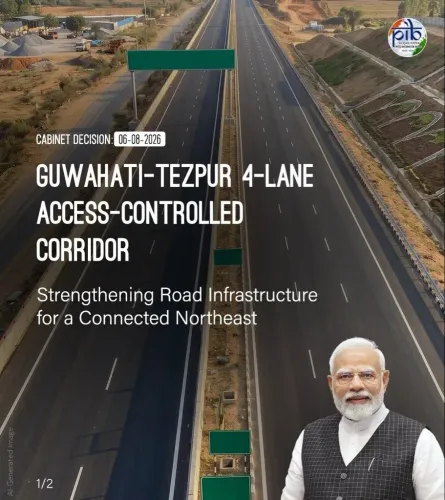
Assam Cabinet clears Rs 8,970 cr, 135-km 4-lane highway to Tezpur

Synopsis
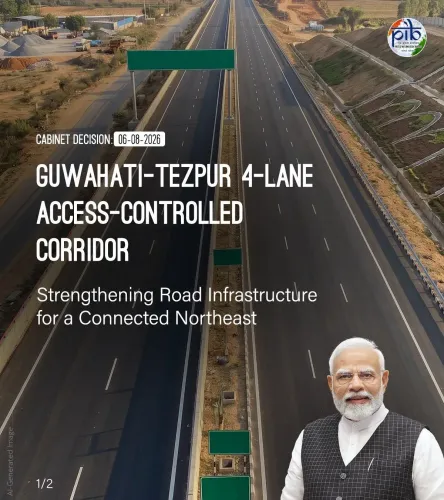
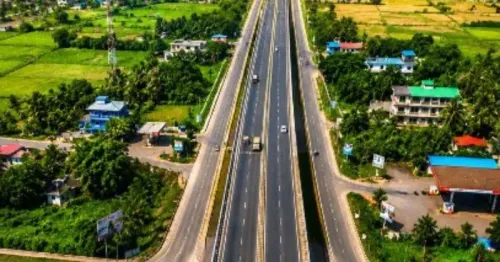
The Assam Cabinet has approved an Rs 8,970 crore project to four-lane the 135.87-km highway from Baihata Chariali, near Guwahati, to Tezpur — a major connectivity upgrade for the Brahmaputra belt that now moves into tendering and land acquisition.
Key Takeaways
The Assam Cabinet approved a Rs 8,970 crore four-lane highway project on 7 August 2026 .
The highway will span 135.87 km from Baihata Chariali (near Guwahati) to Tezpur in Sonitpur district.
Tezpur is a key logistics and strategic hub on the Brahmaputra and a gateway to Arunachal Pradesh.
The project aligns with the Union government's Bharatmala Pariyojana framework for Northeast highway development.
Tendering, land acquisition, and environmental clearances are the critical next steps before construction begins.
The corridor is expected to cut travel times, reduce freight costs, and ease congestion on one of central Assam's busiest routes.
A single cabinet decision just redrew the road map for central Assam. The Chief Minister's Office of Assam announced on 7 August 2026 that the state cabinet has approved a Rs 8,970 crore project to build a 135.87-kilometre four-lane highway from Baihata Chariali, near Guwahati, all the way to Tezpur — a corridor that carries the weight of commerce, commuters, and strategic access across the Brahmaputra belt.
The corridor that connects Guwahati's doorstep to the Brahmaputra's banks
Baihata Chariali sits at a critical road junction just outside Guwahati, where traffic fans out northward toward Tezpur and beyond. The existing road is a chokepoint — narrow, congested, and long overdue for an upgrade. Tezpur, the district headquarters of Sonitpur, is not just a heritage town on the Brahmaputra; it is a logistics pivot for upper Assam, home to an air force station, and a gateway to Arunachal Pradesh. A four-lane highway between these two points is not incremental improvement — it is a structural shift in how goods and people move through the heart of the state.
Rs 8,970 crore and what comes next
Cabinet approval is the starting gun, not the finish line. Projects of this scale — 135.87 km of four-laning at a sanctioned outlay of Rs 8,970 crore — move through a pipeline of tendering, land acquisition notifications, and environmental clearances before a single machine breaks ground. The pace of those downstream steps will determine whether this approval translates into concrete progress or joins the long queue of announced-but-delayed highway schemes in the Northeast. Commuters, transporters, and businesses along the corridor will be watching closely.
Bharatmala's shadow and Assam's infrastructure push
The project fits squarely within a pattern that has defined Assam's infrastructure politics for the better part of a decade. The Bharatmala Pariyojana, launched by the Union government in 2015, opened a pipeline of highway widening funds for the Northeast, and Assam has consistently leveraged that framework to advance four-laning on corridors near Guwahati and beyond. State cabinets have used these approvals as both development milestones and political signals — demonstrating momentum on connectivity even as the harder work of execution unfolds over years.
If the project delivers on its mandate, the Baihata–Tezpur corridor will cut travel times, reduce freight costs, and ease the chronic bottlenecks that slow Assam's economic integration with the rest of the Northeast. The cabinet has made its call. The clock starts now.
Point of View
Building on the Bharatmala framework to demonstrate Centre-state coordination. The Baihata–Tezpur corridor is strategically significant beyond economics — it feeds into the road network approaching Arunachal Pradesh, giving the project a quiet defence-connectivity dimension. However, the gap between cabinet approval and ground-level execution has historically been wide in Northeast highway projects, making the speed of land acquisition and tendering the real test of intent. Analysts will track whether this approval accelerates through the pipeline or stalls at the environmental clearance stage, as similar projects in the region have done.
NationPress
21 Sept 2026
Frequently Asked Questions
What is the Baihata Chariali to Tezpur highway project?
It is a 135.87-km four-lane highway project approved by the Assam Cabinet at a cost of Rs 8,970 crore , connecting Baihata Chariali near Guwahati to Tezpur in Sonitpur district.
How much will the Assam 4-lane highway from Guwahati to Tezpur cost?
The project has received cabinet approval for an outlay of Rs 8,970 crore for the 135.87-km stretch.
When did the Assam Cabinet approve the Baihata Tezpur highway?
The Assam Cabinet approved the project on 7 August 2026 , as announced by the Chief Minister's Office of Assam.
What is Bharatmala Pariyojana and how does it relate to Assam highways?
Bharatmala Pariyojana , launched by the Union government in 2015 , is a national highway development programme that has funded multiple road-widening projects in Assam and the Northeast, providing a framework for projects like the Baihata–Tezpur corridor.
What are the next steps after cabinet approval for the Tezpur highway?
After cabinet approval, the project will move through tendering, land acquisition notifications, and environmental clearances before construction can begin.