Assam CM Himanta: 20% salary cut for bigamous govt staff

Synopsis
Assam CM Himanta Biswa Sarma has announced a 20% mandatory salary deduction from government employees who abandon their first wife without legal divorce and enter an informal second marriage, with the amount deposited directly into the first wife's account. Legislation to extend the rule to private-sector workers is also proposed.
Key Takeaways
20% of salary will be deducted from any Assam government employee who deserts his first wife without a legal divorce and enters an informal second marriage.
The deducted amount is deposited directly into the first wife's bank account upon her application to the government — no court order required.
Himanta Biswa Sarma announced the measure on Independence Day, 15 August 2026 .
The government has also proposed legislation to extend identical protections to employees in the private sector, though no bill has been tabled yet.
The rule leverages existing government service-rule mechanisms, bypassing the delays of court-ordered alimony for affected wives.
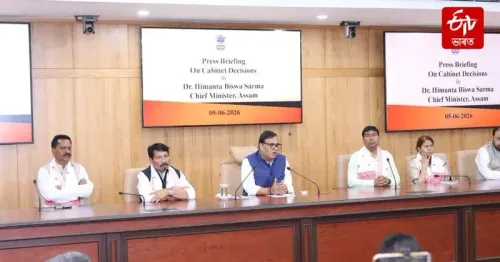
A quiet but pointed policy announcement on Independence Day, 15 August 2026, could reshape how Assam treats abandoned first wives of government employees — and potentially millions more in the private sector. Chief Minister Dr. Himanta Biswa Sarma, speaking through the Chief Minister's Office of Assam, declared that any government employee who deserts his first wife without a legal divorce and enters an informal second marriage will face a mandatory 20% salary deduction, deposited directly into the first wife's account upon her application to the government.
What the deduction rule actually does
The mechanism is surgical in design. It does not require the abandoned wife to fight a court battle or chase her husband for maintenance — she applies to the government, and the salary pipeline does the rest. 'So that she can live with dignity,' CM Sarma said, framing the measure explicitly around economic autonomy rather than moral censure. The deduction is not a fine payable to the state. It flows directly to the first wife's bank account — a detail that matters enormously in practice, since it bypasses the delays and defaults that plague court-ordered alimony. For a government employee earning ₹50,000 a month, that is a guaranteed ₹10,000 reaching the abandoned spouse every pay cycle, automatically.Assam's history of using service rules as social levers
This is not the first time Assam has reached into the service rulebook to enforce social obligations. The state has previously used administrative orders on government servants to compel compliance with family responsibilities — salary attachment as a tool of social protection has precedent in the state's administrative culture. The new announcement formalises and sharpens that instrument for the specific case of informal second marriages. The timing — announced on Independence Day — is deliberate. CM Sarma, who has led the state since May 2021 and positioned himself as a reformist BJP administrator, has a pattern of using high-visibility occasions to signal policy direction.The private-sector extension: a bigger fight ahead
The more ambitious — and more complex — half of the announcement is the proposed legislation to extend identical protections to private-sector employees. That is a far harder lift. Unlike government service rules, which the state can amend by executive order, regulating private employment requires legislation in the Assam Assembly, potential legal challenges on grounds of labour law jurisdiction, and an enforcement mechanism the state does not yet possess for private payrolls. CM Sarma used the word 'proposing' — signalling intent, not enactment. The legislative timeline, the draft bill's scope, and the deduction-transfer mechanism for private employers are all still to be defined. What to watch: whether a bill is tabled in the next Assembly session and how private employers respond to the compliance burden. For now, the government-employee rule stands as a concrete, immediate shield for a group of women who previously had little recourse short of litigation. The private-sector promise is the bigger story — but it is still a promise.Point of View
The Assam government sidesteps the enforcement gap that renders much court-ordered maintenance theoretical. The private-sector extension is the bolder signal: if legislated, it would represent one of the few state-level attempts to impose matrimonial-obligation compliance on non-government employers, a legally contested space. The Independence Day timing also suggests the measure is as much a political statement about women's economic dignity as it is an administrative reform.
NationPress
15 Aug 2026
Frequently Asked Questions
What is the new Assam rule for government employees who abandon their wives?
Under the new rule announced by CM Himanta Biswa Sarma , any Assam government employee who deserts his first wife without obtaining a legal divorce and enters an informal second marriage will have 20% of his salary deducted and deposited directly into the first wife's bank account, upon her application to the government.
Does the abandoned wife need to go to court to get this money?
No. The rule is designed to bypass litigation — the first wife applies directly to the government, and the deduction is made from the employee's salary and transferred to her account automatically, without a court order.
Will this rule apply to private-sector employees in Assam?
CM Sarma has proposed legislation to extend the same protection to private-sector employees, but no bill has been tabled yet. The current rule applies only to government employees, whose service conditions the state can regulate directly.
When was this Assam salary deduction rule announced?
The announcement was made on 15 August 2026 (Independence Day) by the Chief Minister's Office of Assam, with CM Dr. Himanta Biswa Sarma as the author of the statement.
Is bigamy already illegal in India? Why does Assam need a separate rule?
Bigamy is a criminal offence under Indian law for Hindus and most non-Muslim communities, but criminal cases are slow and rarely result in financial relief for the abandoned spouse. The Assam rule creates an immediate, administrative income-transfer mechanism that works in parallel with — and far faster than — the criminal justice process.