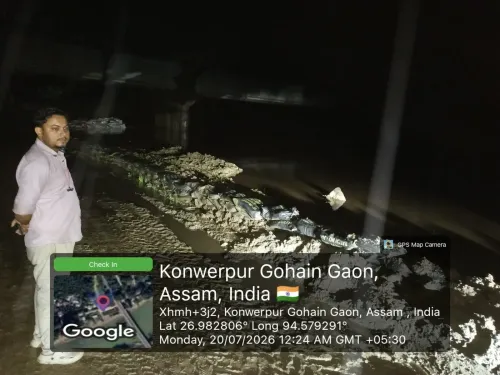
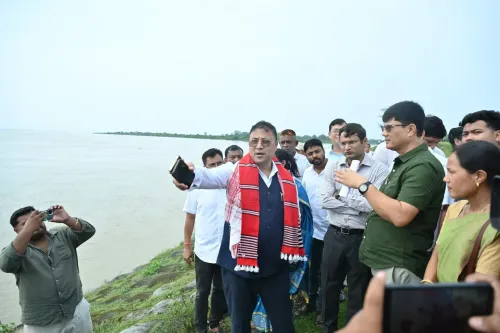
Assam CM Office: DTP Dyke erosion repair begins near Maijan
Synopsis
Erosion detected at Stone Spur No. I of the DTP Dyke near Thakurbari in Maijan, Dibrugarh has triggered immediate geo-bag restoration work, the Chief Minister's Office of Assam announced on 6 August 2026. Authorities say the situation is expected to be stabilised at the earliest.
Key Takeaways
Erosion was observed downstream of Stone Spur No.
I of the DTP Dyke near Thakurbari in the Maijan area of Dibrugarh district .
Restoration work began immediately after the erosion was detected, as confirmed by the Chief Minister's Office of Assam on 6 August 2026 .
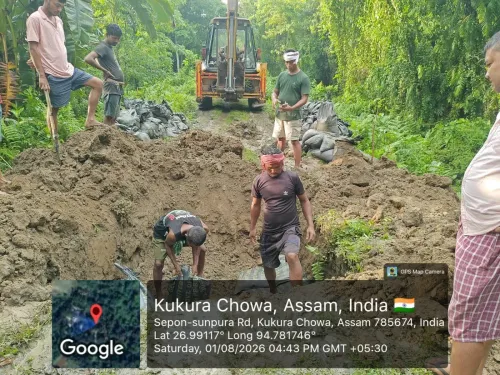
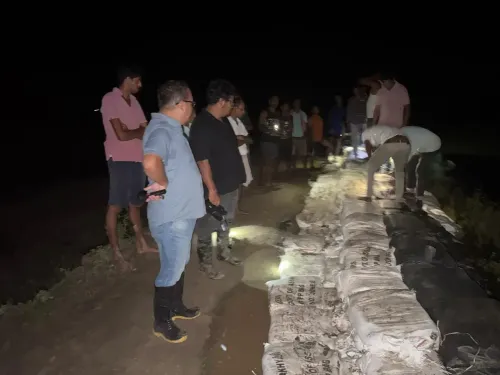
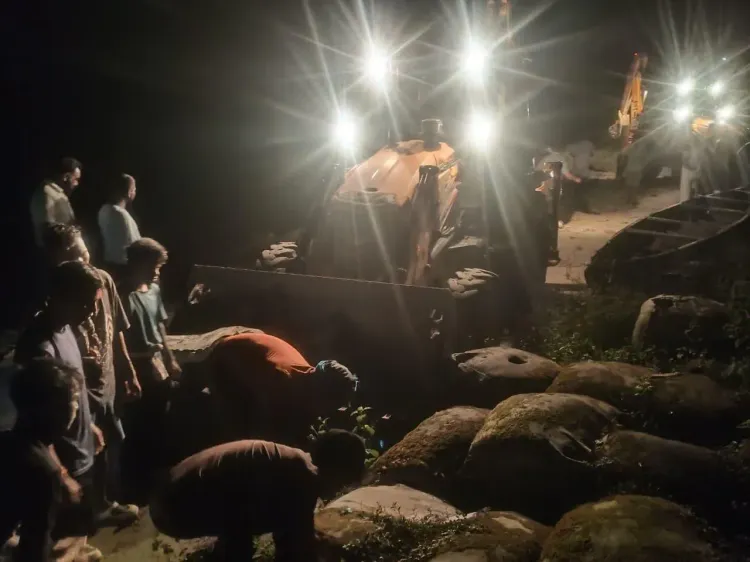
Geo bags are being launched to stabilise the affected stretch of the embankment.
The DTP Dyke is a primary flood-protection structure shielding Dibrugarh and surrounding riverine communities from Brahmaputra erosion.
Authorities expect the situation to be brought under control at the earliest; escalation to boulder or RCC measures remains possible if pressure intensifies.
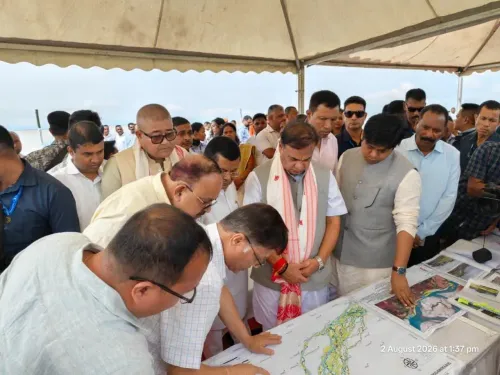
A critical stretch of the DTP Dyke — the embankment that stands between Dibrugarh and the Brahmaputra's monsoon fury — is under active repair after erosion was detected downstream of Stone Spur No. I near Thakurbari in the Maijan area. The Chief Minister's Office of Assam confirmed on Thursday, 6 August 2026 that restoration work began immediately upon the erosion being observed.
Geo bags are being launched along the affected stretch to stabilise the embankment, with authorities stating the situation is 'expected to be brought under control at the earliest.' The response signals that the state's flood-management machinery moved quickly — and in peak monsoon season, speed is everything.
Why the DTP Dyke matters to Dibrugarh
The DTP Dyke is one of the primary flood-protection embankments in Dibrugarh district, engineered to shield the town and its surrounding riverine communities from the Brahmaputra's chronic bank erosion. Maijan, the locality where the breach-risk has emerged, sits directly along the river and has faced repeated erosion events over the years. A failure at Stone Spur No. I — the very first spur in the structure's defensive line — would expose a wide downstream stretch to uncontrolled river action.
Geo bags: Assam's first-response tool
Geo-bag placement is the standard rapid-intervention technique deployed across Assam's embankment network when erosion is detected mid-monsoon. Heavy jute or synthetic bags filled with sand or aggregate are stacked along the vulnerable face of a spur or dyke to absorb hydraulic pressure and arrest further undercutting. The method buys time — and in many cases, when placed in sufficient volume, holds the line until the river's peak discharge subsides.
Whether geo bags alone will suffice here depends on the scale of erosion and how the Brahmaputra's flow behaves over the coming days. If pressure intensifies, engineers may need to escalate to boulder pitching or RCC porcupine structures before the flood season's next surge.
A recurring battle along the Brahmaputra
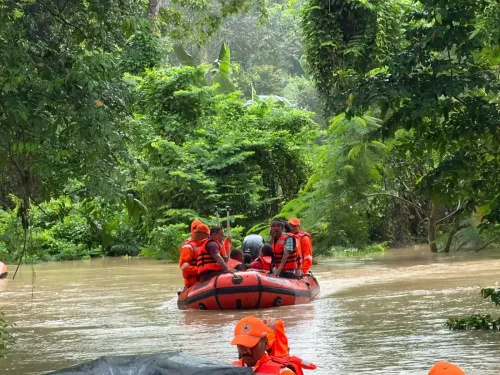
Assam loses thousands of hectares to river erosion every monsoon — among the highest erosion rates of any river system in the world. Successive state governments have leaned on exactly this playbook: rapid spur reinforcement and geo-bag launches as first response, followed by heavier civil works where budgets and logistics allow. The communities in Maijan and Thakurbari know this cycle intimately; for them, the speed of the government's acknowledgment and the pace of on-ground work are what count.
The DTP Dyke repair is not a headline policy move — it is the unglamorous, essential maintenance work that determines whether thousands of families wake up to intact land or a river where their homes once stood.
Point of View
While effective as first response, underscore the structural gap between Assam's annual erosion scale and the pace of permanent river-training infrastructure. The recurring nature of spur erosion at sites like Maijan points to the need for long-cycle capital investment in the Brahmaputra flood-management network, beyond seasonal patch-up cycles. Until that investment materialises, rapid-response announcements will remain the primary instrument of flood governance in the valley.
NationPress
6 Aug 2026
Frequently Asked Questions
What is the DTP Dyke in Assam?
The DTP Dyke is a major flood-protection embankment in Dibrugarh district, Assam, built to protect the town and surrounding riverine areas from Brahmaputra river erosion and flooding.
What caused the erosion at Stone Spur No. I near Maijan?
Erosion was observed downstream of Stone Spur No. I of the DTP Dyke near Thakurbari in the Maijan area. The precise scale and trigger are operational details; monsoon-season hydraulic pressure from the Brahmaputra is the established pattern for such erosion events.
What are geo bags and how do they help?
Geo bags are heavy bags filled with sand or aggregate that are stacked along a vulnerable embankment face to absorb river pressure and arrest further erosion. They are the standard rapid-response tool used across Assam's flood-protection network.
Is the DTP Dyke breach situation under control?
As of 6 August 2026, restoration work is underway and authorities have stated the situation is expected to be brought under control at the earliest. Whether geo bags alone will suffice depends on river conditions in the coming days.
Which area is most at risk from the DTP Dyke erosion?
The Maijan and Thakurbari areas in Dibrugarh district are most directly at risk. Maijan is a locality along the Brahmaputra that has historically faced repeated bank erosion events.