Has 912 acres of land been freed in the eviction drive?

Synopsis
Assam's Chief Minister Himanta Biswa Sarma has announced that 912 acres of encroached land in the Hailakandi district has been successfully reclaimed, marking a significant step in the state's eviction campaign. This drive is vital to protect Assam's ecological balance and indigenous culture.
Key Takeaways
912 acres of land reclaimed from illegal occupants.
The drive aims to protect Assam's ecological balance .
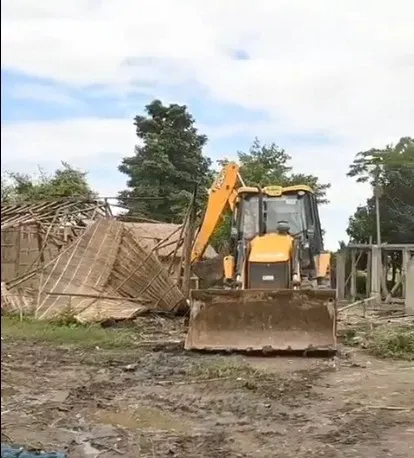
Bulldozers have been deployed since Monday for the eviction.
Rehabilitation options will be offered to affected families.
The government emphasizes the need to safeguard indigenous rights.
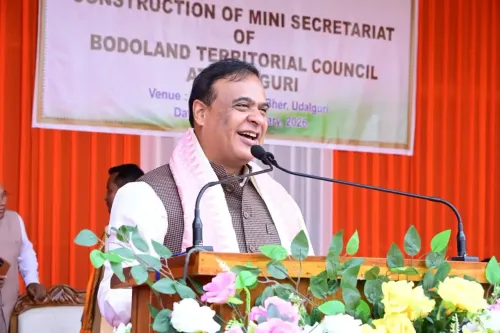
Guwahati, Feb 3 (NationPress) The Chief Minister of Assam, Himanta Biswa Sarma, announced on Tuesday that a total of 912 acres of land, which is significantly larger than the IIT Guwahati campus, has been liberated from illegal encroachers in the Hailakandi district. This action marks a significant escalation in the state government's ongoing campaign to evict encroachments.
In a statement made on X, Sarma emphasized that the successful recovery of land underscores the government's dedication to “reclaim every inch of our land from encroachers,” as bulldozers commenced operations on Monday.
“This is a matter of our survival, and we shall prevail,” he stated in his post.
The eviction operation in Hailakandi is part of a larger state strategy aimed at clearing forest, government, and reserve land of purported illegal settlers. Sarma asserted that this campaign is essential for safeguarding Assam’s ecological integrity and preserving its indigenous heritage.
According to official reports, the 912 acres freed includes both forest and government lands that had been encroached upon for many years. Since 2021, Sarma has spearheaded vigorous land reclamation initiatives throughout Assam, justifying these efforts as vital to countering illegal occupation by outsiders and preventing demographic changes in the region.
He has consistently pointed out that unchecked encroachments have disrupted population dynamics and jeopardized the rights of local indigenous communities. Last year, he noted that eviction drives had reclaimed tens of thousands of acres statewide, asserting that land recovery is crucial not only for maintaining law and order but also for cultural preservation.
He warned that once encroachers establish political footholds, eviction becomes increasingly challenging, endangering the future of Assam’s indigenous populations.
The ongoing eviction drive in Hailakandi is anticipated to impact hundreds of families.
Local officials have indicated that those affected will be presented with rehabilitation options per government regulations, despite opposition from political parties and civil rights organizations advocating for humane treatment and due process for the displaced individuals.
Point of View
It is imperative to acknowledge the complexities surrounding eviction drives like the one in Assam. While the government's determination to reclaim encroached lands is driven by the need to protect indigenous rights and ecological balance, it is equally essential to ensure that the human rights of those displaced are also respected. A balanced approach that prioritizes the welfare of both indigenous communities and affected families is crucial for sustainable solutions.
NationPress
24 Sept 2026
Frequently Asked Questions
What triggered the eviction drive in Hailakandi?
The eviction drive was initiated to reclaim encroached lands in Hailakandi, which the Assam government identifies as critical for maintaining ecological balance and protecting indigenous rights.
How much land has been reclaimed?
A total of 912 acres of encroached land has been freed during this eviction drive.
What will happen to the families affected by the eviction?
Local administrators have assured that rehabilitation options will be provided to displaced families in accordance with government norms.
Why is this eviction drive important for Assam?
This drive is seen as crucial for safeguarding Assam's ecological integrity and preserving the rights of its indigenous communities.
How has the government justified these eviction operations?
The government has argued that these operations are necessary to curb illegal occupation and prevent demographic shifts that threaten local communities.