CM Himanta's Advantage Assam 2 Yields Green AAC Block Plant in Tinsukia

Synopsis
The Chief Minister's Office of Assam has spotlighted the Green AAC Block Project in Tinsukia — an eco-friendly autoclaved aerated concrete manufacturing unit — as a verified industrial outcome of the Advantage Assam 2 global investors summit under CM Himanta Biswa Sarma.
Key Takeaways
The Green AAC Block Project in Tinsukia is an eco-friendly autoclaved aerated concrete block manufacturing unit now operational in eastern Assam.
It is being highlighted as a direct, tangible outcome of Advantage Assam 2 , Assam's second global investors summit.
Himanta Biswa Sarma has led Assam since 2021, steering the state's industrial and infrastructure push.
The first edition, Advantage Assam 1.0 , was held in February 2018 to position the Northeast as an investment destination.
Tinsukia, historically known for tea and oil activity, is expanding its economic base into green manufacturing.
Rollout timelines and employment figures for other Advantage Assam 2 projects remain key data points to watch.
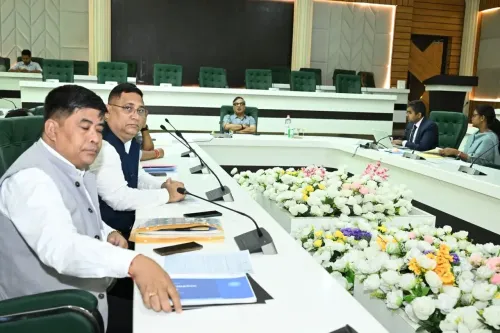
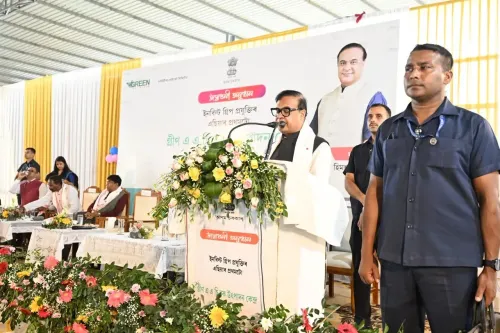
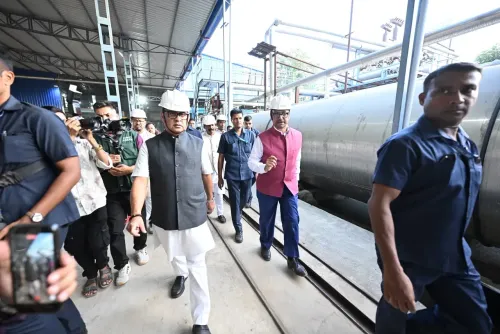
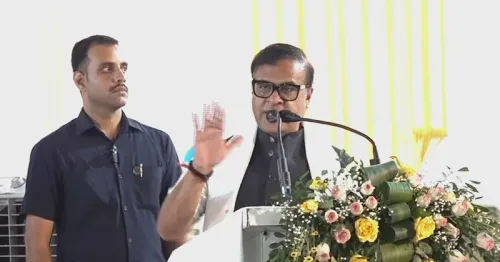
A manufacturing unit built on eco-friendly concrete technology is now running in eastern Assam's Tinsukia district — and the Chief Minister's Office of Assam is holding it up as proof that the promises made at the state's global investors summit are translating into bricks-and-mortar reality. On Monday, 2 November 2026, the CMO spotlighted the Green AAC Block Project in Tinsukia as a concrete outcome of Advantage Assam 2, the state's second edition of its flagship investment-attraction summit.
What is the Green AAC Block Project and why Tinsukia?
Autoclaved Aerated Concrete — AAC — blocks are lightweight, thermally efficient, and significantly more sustainable than conventional red bricks. The Green AAC Block Project is a manufacturing unit that produces these eco-friendly building blocks, positioning Assam as a contributor to India's broader push for greener construction materials. Tinsukia, a district in the far east of Assam historically anchored by tea gardens and oil infrastructure, now adds a modern manufacturing footprint to its economic mix.
The location is deliberate: Tinsukia sits at the edge of the Northeast's road and rail connectivity network, giving the unit access to construction demand across the region. Industrial activity in this corridor has long been underdeveloped relative to its resource base, making the plant a signal of changed priorities.
Advantage Assam 2 and the summit-to-factory pipeline
The Green AAC project traces its origin to Advantage Assam 2, the second edition of Assam's global investors summit convened under Chief Minister Dr. Himanta Biswa Sarma, who has led the state since 2021. The first edition — Advantage Assam 1.0 — was held in February 2018 and was designed to reposition the Northeast as a serious investment destination at a time when it was largely invisible to industrial capital.
The current government has doubled down on that strategy, framing the second summit not just as a deal-signing event but as a pipeline with measurable outputs. The Tinsukia plant is being cited as one such output — a project that moved from an investor commitment to operational status. The CMO's decision to release a dedicated video on the project signals that the administration wants specific, name-and-place proof points rather than aggregate investment figures.
Green manufacturing as Assam's new industrial narrative
Across India, state governments are increasingly competing not just on ease-of-doing-business metrics but on the sustainability credentials of the industries they attract. Assam's emphasis on the 'Green' tag in the AAC block project fits a broader pattern: the state is pitching eco-conscious manufacturing as part of its identity, a message aimed at both environmentally-conscious investors and central-government schemes that prioritise green infrastructure funding.
The construction sector — one of the largest consumers of raw materials in growing economies — is a logical target for this pivot. AAC blocks consume less energy in production and reduce the structural load on buildings, making them attractive to developers navigating tightening green-building norms.
With rollout timelines and employment numbers from other Advantage Assam 2 commitments still being watched, the Tinsukia plant now sets the benchmark: the question is how many more projects in the pipeline move from MoU to machine by the time the next accounting is due.
Point of View
Who has staked considerable political capital on making Advantage Assam 2 count, visible factory-floor outcomes in districts like Tinsukia carry more credibility than MoU tallies. The 'green' framing also positions Assam to compete for ESG-conscious capital and central-government green-infrastructure funds — a dual strategic dividend. Whether the Tinsukia plant becomes a replicable template or an isolated showcase will define the real legacy of the summit.
NationPress
2 Nov 2026
Frequently Asked Questions
What is the Green AAC Block Project in Tinsukia, Assam?
It is an eco-friendly autoclaved aerated concrete (AAC) block manufacturing unit in Tinsukia, eastern Assam, promoted as a sustainable construction-material initiative and highlighted as an outcome of the Advantage Assam 2 investors summit.
What is Advantage Assam 2?
Advantage Assam 2 is the second edition of Assam's global investors summit, aimed at attracting industrial investment to the state. The first edition was held in February 2018.
Who is the Chief Minister of Assam in 2026?
Dr. Himanta Biswa Sarma has been the Chief Minister of Assam since 2021 and is credited with driving the state's current industrial and infrastructure initiatives.
Why are AAC blocks considered eco-friendly?
Autoclaved aerated concrete blocks are lightweight, thermally efficient, and require less energy to produce compared to conventional red bricks, making them a greener option for the construction sector.
Why was Tinsukia chosen for the Green AAC Block Project?
Tinsukia, located in far-eastern Assam with existing tea and oil industry infrastructure, offers road and rail connectivity across the Northeast, giving the AAC block plant access to strong regional construction demand.