Assam CM Office Launches Vigilance Awareness Week 2026
Synopsis
The Chief Minister's Office of Assam launches Vigilance Awareness Week 2026 from 26 October to 1 November under the theme 'Probity for Prosperity', issuing a public pledge against bribery and publishing dedicated complaint helpline numbers for citizens.
Key Takeaways
Vigilance Awareness Week 2026 runs from 26 October to 1 November across India, including Assam.
The official theme is 'Probity for Prosperity' , linking integrity directly to economic and social progress.
The Central Vigilance Commission has organised this national drive annually since 2000 , anchored to Sardar Patel's birth anniversary on 31 October .
Citizens in Assam can report vigilance complaints via toll-free number 18003453767 , landline 03612462295 , or mobile 6026901243 .
An online complaints portal is available at dgvigilance.assam.gov.in .
The core public pledge calls on everyone to neither take nor offer bribes .
A week-long national call to conscience begins today — the Chief Minister's Office of Assam has joined India's annual anti-corruption drive as Vigilance Awareness Week 2026 kicks off on 26 October, running through 1 November, under the theme 'Probity for Prosperity'. The observance urges every citizen and public servant to pledge: neither take nor offer a bribe.
A National Tradition Anchored to Sardar Patel's Legacy
The Central Vigilance Commission (CVC), India's apex anti-corruption watchdog, has organised Vigilance Awareness Week every year since 2000, scheduling it around Sardar Vallabhbhai Patel's birth anniversary on 31 October — a deliberate symbolic choice, anchoring the drive to the man who unified the nation in the first place. States across India align their local administrations with the CVC's central theme each year, and Assam is no exception.
The theme 'Probity for Prosperity' frames integrity not merely as a civic virtue but as an economic imperative — the argument being that corruption bleeds public resources, slows investment, and keeps ordinary people from the services they are owed.
Assam's Complaint Channels — and Who Handles Them
The post puts specific, actionable numbers in the hands of the public. Citizens with vigilance complaints can reach the Directorate of Vigilance, Assam — the state agency responsible for anti-corruption enforcement in public administration — through three direct lines: toll-free number 18003453767, landline 03612462295, and mobile 6026901243. A dedicated web portal at dgvigilance.assam.gov.in offers an online complaints pathway.
Publishing these channels publicly during the awareness week is deliberate — grievance accessibility is central to the CVC's model, designed so that the barrier to reporting corruption stays as low as possible.
The Pledge That Drives the Week
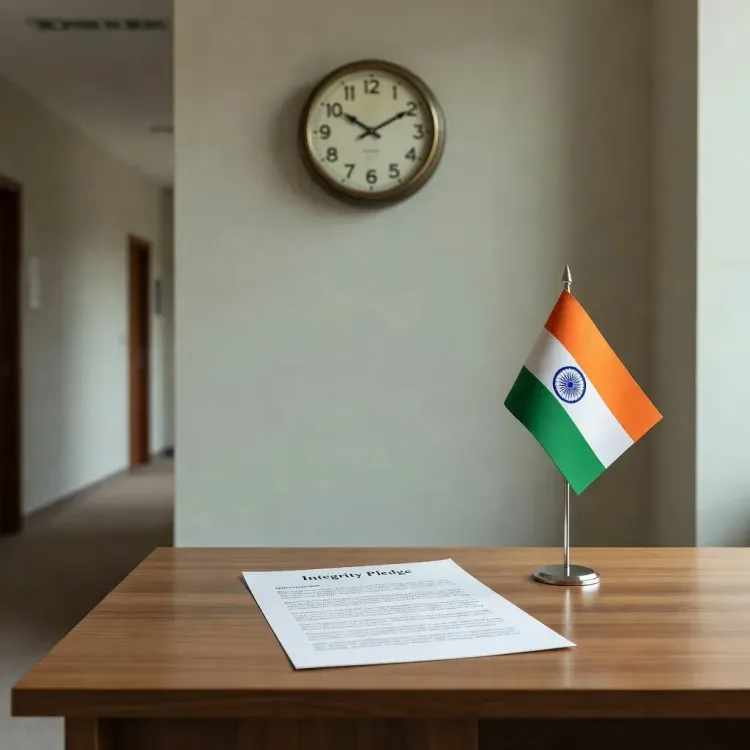
The core ask is deceptively simple: 'Let us pledge to neither take nor offer bribes.' Government employees across Assam are expected to take formal integrity pledges during the week — a ritual the CVC has used for over two decades to normalise anti-corruption culture inside bureaucracies rather than treating it as an external audit exercise.
The broader pattern is one of sustained institutional pressure: week-long drives, public outreach, accessible complaint systems, and symbolic anchoring to national icons — none of it a silver bullet, but collectively a framework designed to shift the default inside public service from tolerance of graft to active resistance.
The real test, as always, comes after the banners come down — in how many complaints are logged, investigated, and resolved before the next October arrives.
Point of View
Complete with state-specific helplines and a dedicated portal, reflects how central governments increasingly devolve the grievance-capture function to states to make reporting feel local and credible. The 'Probity for Prosperity' framing is a pointed rebranding: it moves the anti-corruption argument away from morality alone and into economic self-interest, a more durable motivator for both citizens and officials. Whether the week generates measurable complaint data — and whether that data is acted on — will determine if the exercise is institutional commitment or ceremonial optics.
NationPress
26 Oct 2026
Frequently Asked Questions
When is Vigilance Awareness Week 2026 in India?
Vigilance Awareness Week 2026 is observed from 26 October to 1 November 2026 . It is held annually around Sardar Vallabhbhai Patel's birth anniversary on 31 October.
What is the theme of Vigilance Awareness Week 2026?
The theme for Vigilance Awareness Week 2026 is 'Probity for Prosperity' , emphasising that integrity and a corruption-free society are essential for national progress.
How can I file a vigilance complaint in Assam?
You can file a vigilance complaint in Assam by calling the toll-free helpline 18003453767 , landline 03612462295 , or mobile 6026901243 . Complaints can also be submitted online at dgvigilance.assam.gov.in .
Which organisation coordinates Vigilance Awareness Week in India?
The Central Vigilance Commission (CVC) is India's apex body that coordinates Vigilance Awareness Week, having organised it annually since 2000 to promote anti-corruption and ethical conduct in public service.
Why is Vigilance Awareness Week held in October?
Vigilance Awareness Week is scheduled in late October to coincide with the birth anniversary of Sardar Vallabhbhai Patel on 31 October , symbolically connecting the drive to his legacy of national unity and integrity.