CM Himanta Reclaims 530 Hectares of Assam Forest Land
Synopsis
Assam CM Himanta Biswa Sarma announced the reclamation of 530 hectares at Lutumai and Borpani Reserve Forests in Nagaon, bringing the cumulative total to 1,200 acres. The freed land is a key elephant movement corridor, and Sarma warned encroachers across the state that more operations are imminent.
Key Takeaways
530 hectares of encroached land reclaimed at Lutumai and Borpani Reserve Forests in Nagaon district .
Cumulative land freed across both forests now stands at 1,200 acres through phase-wise operations.
The reclaimed area is a recognised elephant movement corridor , making the drive a direct conservation measure.
Assam Forest Department has been conducting intensified anti-encroachment operations since 2021 under CM Sarma.
CM Sarma publicly warned encroachers across all of Assam that further operations are planned district by district.
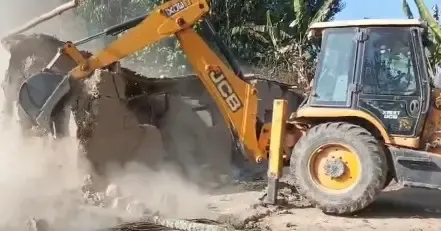
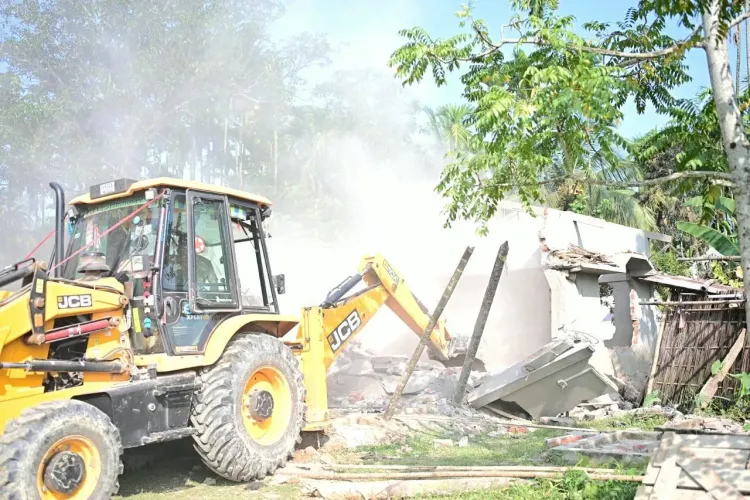
A vital elephant corridor in central Assam just got bigger. Assam Chief Minister Himanta Biswa Sarma announced on Wednesday, October 21, 2026, that the Assam Forest Department has reclaimed 530 hectares of encroached land at the Lutumai and Borpani Reserve Forests in Nagaon district — pushing the total area freed up in that zone, phase by phase, to 1,200 acres of critical forest habitat.
530 Hectares Back — and a Warning to Every Encroacher in Assam
Sarma framed the operation with characteristic bluntness: 'Illegal Encroachments Tod Diya; Assam me Naya Forest Land Jod Diya' — 'Illegal encroachments broken down; new forest land added back to Assam.' The message that followed was a direct warning: 'Encroachers anywhere in Assam, BEWARE. We are coming for you next.'
The Nagaon operation is not a one-off. It is the latest chapter in a phase-wise drive that has progressively freed land from illegal settlers across both Lutumai and the adjacent Borpani Reserve Forest. Together, the two forests form a recognised movement corridor for wild elephants — one of the most conflict-prone human-wildlife interfaces in central Assam.
Why Nagaon's Elephant Corridor Makes This More Than a Land Story
Nagaon district sits at a geographic pinch-point in Assam where forest patches are fragmented by agriculture and settlements. Elephant herds moving between larger forest blocks routinely push through this corridor, and illegal occupations shrink the passable width with every season — raising the frequency of deadly human-elephant conflicts. Reclaiming 1,200 acres across Lutumai and Borpani is, in practical terms, a conservation intervention as much as a law-enforcement one.
The Assam Forest Department has carried out successive anti-encroachment operations in reserve forests and wildlife sanctuaries since 2016, with the tempo visibly accelerating after 2021 under Sarma's administration. The government's framing consistently places biodiversity protection alongside enforcement — elephant corridors, wetlands, and reserve-forest buffers are cited as the justification for each eviction wave.
What Comes Next for Assam's Forest Reclamation Drive
Sarma's post signals that Nagaon is not the endpoint. The administration has telegraphed a district-by-district roll-out, and the Forest Department is expected to announce fresh operational phases in other encroachment-heavy zones. Any legal challenges — High Court petitions are a recurring feature of Assam's eviction drives — will test whether the momentum holds.
For now, the arithmetic is stark: 530 hectares reclaimed in the latest push, 1,200 acres restored in Nagaon's forests cumulatively, and a government publicly daring encroachers to remain in place.
Point of View
The Sarma administration insulates the drive from purely demographic critiques and anchors it in biodiversity law. The phase-wise framing also matters: it signals bureaucratic stamina, not a one-time spectacle, and the public warning to encroachers functions as a deterrence broadcast aimed at future operations. Whether High Court interventions slow the pace remains the critical variable to watch.
NationPress
22 Oct 2026
Frequently Asked Questions
How much forest land has been reclaimed in Nagaon's Lutumai and Borpani forests?
A cumulative total of 1,200 acres has been freed in phase-wise operations at Lutumai and Borpani Reserve Forests in Nagaon. The latest single operation recovered 530 hectares.
Why is the Nagaon forest corridor important for elephants?
Nagaon district sits in a fragmented forest zone in central Assam where elephant herds move between larger forest blocks. The Lutumai and Borpani forests form part of this corridor, and illegal encroachments narrow the passable habitat, increasing human-elephant conflict.
What is Assam's anti-encroachment policy under CM Himanta Biswa Sarma?
The Assam government has pursued a zero-tolerance approach to illegal forest occupation since 2021, with the Forest Department conducting successive eviction drives in reserve forests and wildlife sanctuaries across the state.
Will there be more anti-encroachment operations in Assam?
CM Sarma's post explicitly warned encroachers in other parts of Assam that operations are continuing. The government has signalled a district-by-district roll-out of further reclamation drives.
What is Lutumai Reserve Forest in Nagaon?
Lutumai Reserve Forest is a protected forest area in Nagaon district, central Assam, adjacent to Borpani Reserve Forest. Together they form a key elephant movement corridor that has been the focus of a phase-wise anti-encroachment operation by the Assam Forest Department.