Assam sends 1.41 lakh textbooks to flood-hit students in 3 districts
Synopsis
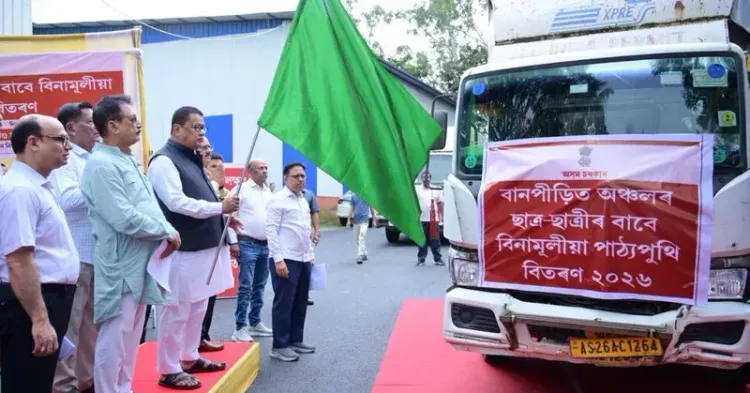
The Assam Government dispatched the first lot of 1.41 lakh textbooks to flood-hit students across three districts on 31 July 2026, launching a phased education-recovery effort as annual monsoon flooding continues to disrupt schooling across the northeastern state.
Key Takeaways
The Assam Government dispatched the first lot of 1.41 lakh textbooks to flood-affected students on 31 July 2026 .
The distribution covers students in three flood-hit districts , with further lots expected in a phased rollout.
Annual Brahmaputra flooding routinely forces school closures and destroys personal learning materials across Assam.
The dispatch is part of Assam's broader pattern of bundling education-recovery measures with flood relief operations.
Completion of distribution across all affected districts before the new academic session resumes is the key benchmark to watch.
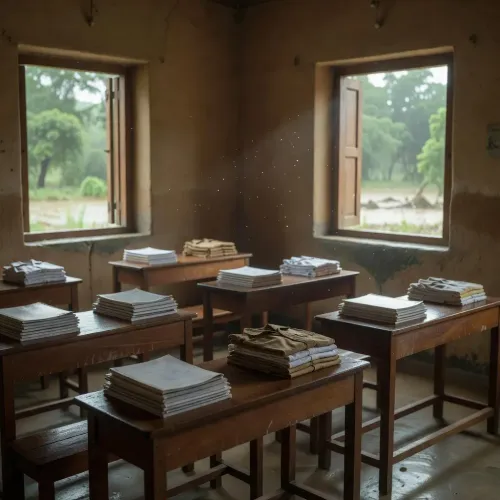
When floodwaters swallow classrooms, the loss of a textbook can mean the loss of an entire school year. The Assam Government moved to prevent exactly that on Friday, 31 July 2026, dispatching the first lot of 1.41 lakh textbooks to flood-affected students across three districts — a direct intervention to keep education from becoming yet another casualty of the annual monsoon.
Books before the backlog: what the dispatch covers
The Chief Minister's Office of Assam confirmed the dispatch in an official post, describing it as the 'first lot' — signalling that this is the opening move in a larger, phased distribution effort. The 1.41 lakh figure represents a substantial initial tranche aimed squarely at children in the worst-hit zones, where school infrastructure and personal belongings alike have been swept away by the Brahmaputra and its tributaries.
For families already displaced and stripped of their possessions, replacing textbooks is not a bureaucratic formality — it is the difference between a child returning to school and dropping out entirely. The state's move to prioritise this early signals an intent to restore academic continuity before the flood season fully recedes.
Assam's recurring flood-education crisis
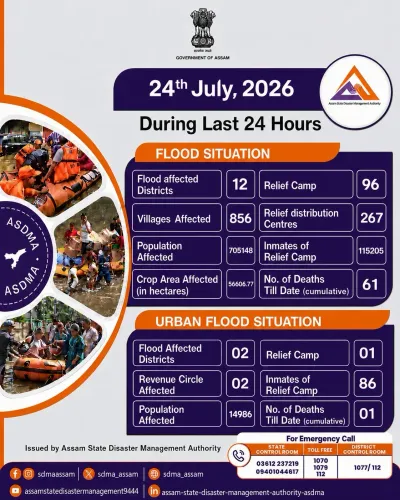
Assam is no stranger to this cycle. Every monsoon season, the Brahmaputra's swollen waters force school closures across multiple districts, displace tens of thousands of families, and wipe out learning materials that many households cannot afford to replace. State relief operations have increasingly bundled education-recovery measures alongside food and shelter support, recognising that children falling behind academically is a long-tail consequence of flooding that compounds year after year.
Textbook distribution drives have become a visible, trackable component of these efforts — concrete proof of the government reaching students in the recovery phase, not just during the emergency.
What comes next for the remaining districts
The government's framing of this as a 'first lot' raises the immediate question: when do the remaining flood-affected districts receive their share? Any delay in subsequent dispatches risks students missing the reopening of schools once waters recede. The pace and completeness of follow-through will determine whether this initiative translates into genuine academic continuity or remains a partial gesture.
A full, on-time distribution across all affected areas before the new academic session resumes is the benchmark against which this effort will ultimately be judged.
Point of View
Operationally measurable relief action — the kind that lets a state government demonstrate functional governance during a crisis season that repeats every year. By framing it as a 'first lot,' the administration sets a public accountability marker: follow-up dispatches will be scrutinised. The broader arc here is Assam's gradual institutionalisation of education continuity as a formal pillar of disaster response, not an afterthought. Whether this year's effort is faster or more complete than previous seasons will shape the credibility of that institutional claim.
NationPress
31 Jul 2026
Frequently Asked Questions
How many textbooks did the Assam Government dispatch to flood-hit students?
The Assam Government dispatched 1.41 lakh textbooks as the first lot to flood-affected students across three districts on 31 July 2026 .
Which districts in Assam received textbooks after the 2026 floods?
The dispatch covered students in three flood-hit districts of Assam, though the specific district names were not detailed in the official announcement.
Why does Assam face repeated flood disruptions to education?
Assam experiences annual monsoon flooding from the Brahmaputra river and its tributaries, which forces school closures, displaces families, and destroys learning materials across multiple districts every year.
Is this the complete textbook distribution or will there be more?
This is described as the 'first lot,' indicating a phased distribution. Further dispatches to remaining flood-affected areas are expected as the relief effort continues.
What is the Assam Government doing to help students affected by floods in 2026?
Beyond immediate flood relief, the Assam Government is running an education-recovery effort that includes dispatching replacement textbooks to students who lost materials due to flooding, starting with 1.41 lakh books to three districts.