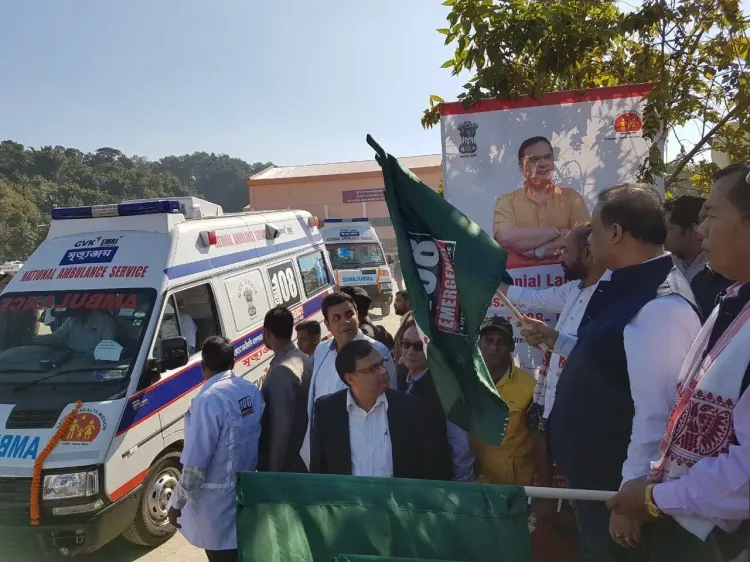
CM Himanta marks 18 years of Mrityunjoy 108, 67 lakh served
Synopsis
Assam Chief Minister Himanta Biswa Sarma marked the 18th anniversary of Mrityunjoy 108 on 6 November, citing over 67 lakh citizens served — including 23 lakh pregnancy emergencies and 5.33 lakh accident victims — and paid tribute to the drivers and technicians who keep the free ambulance network running across floods and difficult terrain.
Key Takeaways
Mrityunjoy 108 was launched on 6 November 2008 as Assam's free statewide emergency ambulance service under the National Rural Health Mission.
Over 67 lakh citizens have been served in 18 years, roughly one in five of Assam's population.
23 lakh pregnancy emergencies were handled — the single largest category of cases.
5.33 lakh accident victims and more than 2.34 lakh critically ill patients have been assisted by the service.
The 108 ambulance model originated in Andhra Pradesh in 2005 and was adopted by Assam under then CM Tarun Gogoi .
CM Sarma specifically acknowledged drivers and emergency technicians navigating floods and tough terrain.
Eighteen years ago, a single question drove a policy decision in Assam: should geography decide who lives and who dies? On 6 November 2008, the answer came in the form of Mrityunjoy 108 — a free, statewide emergency ambulance service built to ensure that distance would never cost a life. Assam Chief Minister Himanta Biswa Sarma marked the anniversary on Saturday, sharing figures that tell the full weight of that founding promise.
Eighteen years, 67 lakh lives touched
The numbers CM Sarma cited are staggering in scale. Over 67 lakh citizens have been served since launch — in a state of roughly 3.5 crore people, that is nearly one in five residents reached at a moment of acute crisis. Of those, 23 lakh cases involved pregnancy emergencies, a category where hours — sometimes minutes — separate a safe delivery from a tragedy. 5.33 lakh accident victims were transported, and more than 2.34 lakh critically ill patients have been pulled back from the edge.
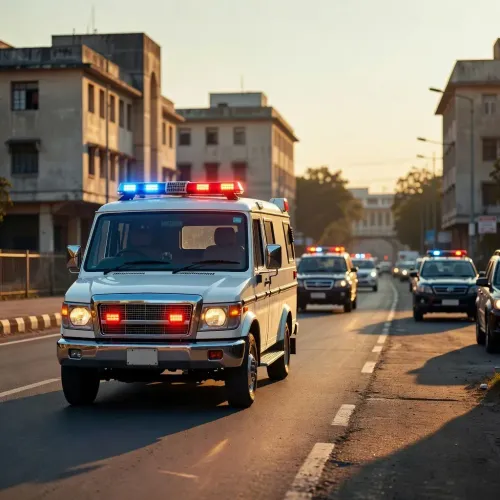
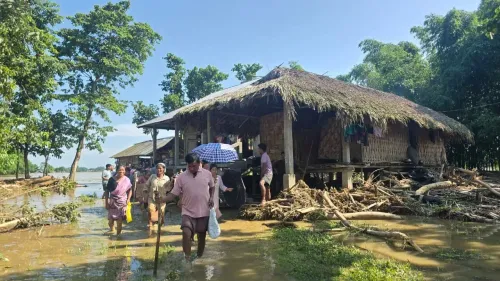
Sarma's post offered a pointed tribute to the people behind those statistics: 'My heartfelt thanks to our drivers and emergency technicians, who brave floods and tough terrain to answer every call.' In a state that faces annual Brahmaputra flooding, landslides in its hill districts, and settlements reachable only by unpaved tracks, that is not a ceremonial line — it is a description of a physically demanding job.
From Andhra Pradesh to Assam's floods and hills
The 108 emergency response model was pioneered in Andhra Pradesh in 2005 before being adopted across Indian states. Assam brought it in under the National Rural Health Mission in 2008, during the government of then Chief Minister Tarun Gogoi, specifically to close the gap between dispersed rural populations and the nearest equipped hospital. The challenge was structural: Assam's terrain — river islands, forested belts, highland passes — routinely defeats road access, especially during the June–September flood season.
What the anniversary underlines is continuity. Mrityunjoy 108 has outlasted political cycles, running across successive governments, sustained as essential infrastructure rather than a partisan scheme. That longevity matters: emergency transport services that survive one administration often fail when the political calculus shifts. Assam's service has not.
Maternal emergencies — the quiet centrepiece
The single most telling figure in Sarma's post is the 23 lakh pregnancy emergencies handled over eighteen years — a third of the total caseload. Maternal mortality in rural India has historically tracked directly with access to institutional delivery and emergency obstetric care. An ambulance that reaches a village in a flood-prone district at 2 a.m. is not just a vehicle; it is the difference between a home delivery with no trained support and a hospital birth. For Assam, a state that has worked to bring down its maternal mortality ratio, that figure is the service's clearest measure of impact.
What the next chapter may look like
Fleet expansion in flood-prone districts and possible integration with Ayushman Bharat digital health platforms represent the natural next frontier for the service — connecting pre-hospital data with hospital intake systems so that treatment can begin before the ambulance arrives. For now, though, the milestone belongs to the drivers navigating submerged roads and the technicians stabilising patients in the back of a vehicle on a mountain track.
Eighteen years in, the original premise of Mrityunjoy 108 — that distance must not cost a life — is still the benchmark. The numbers suggest it is being met.
Point of View
Owning and amplifying Mrityunjoy 108's cumulative figures builds a governance record on a metric — maternal and emergency care reach — that speaks directly to rural and semi-urban voters. The emphasis on frontline workers (drivers, technicians) also fits the broader BJP communication pattern of humanising state machinery. The 23 lakh pregnancy cases figure, in particular, ties directly to the national agenda on reducing maternal mortality and improving institutional deliveries, lending the anniversary message a policy dimension beyond the ceremonial.
NationPress
7 Nov 2026
Frequently Asked Questions
What is Mrityunjoy 108 in Assam?
Mrityunjoy 108 is Assam's free statewide emergency ambulance service launched on 6 November 2008 to provide pre-hospital care and transport, particularly for rural and remote communities facing terrain and distance barriers.
How many people has Assam's 108 ambulance service helped?
According to CM Himanta Biswa Sarma's post marking the 18th anniversary, Mrityunjoy 108 has served over 67 lakh citizens, including 23 lakh pregnancy emergencies, 5.33 lakh accident victims, and more than 2.34 lakh critically ill patients.
Who launched Mrityunjoy 108 in Assam?
Mrityunjoy 108 was launched on 6 November 2008 under the government of then Assam Chief Minister Tarun Gogoi, as part of the National Rural Health Mission's emergency transport initiative.
Is the 108 ambulance service free in Assam?
Yes, Mrityunjoy 108 is a free emergency ambulance service available to all residents of Assam, designed specifically to ensure that financial or geographic barriers do not prevent access to emergency care.
Which state first launched the 108 ambulance model in India?
The 108 emergency response model was first launched in Andhra Pradesh in 2005 before being adopted by Assam and several other Indian states through public-private frameworks focused on trauma, maternal, and critical care.