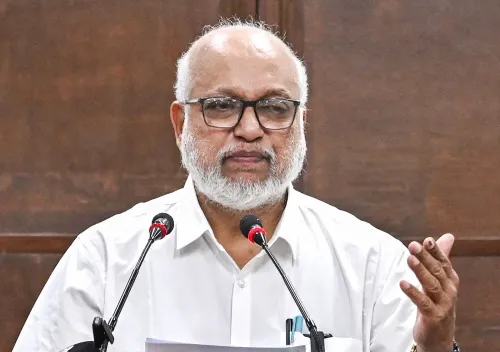
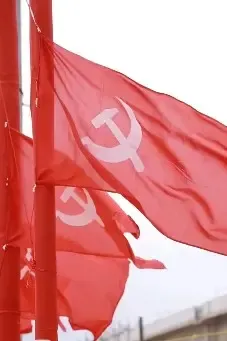
CPI-M's M.A. Baby defends Rahul Gandhi, hands BJP fresh 'Gusthi-Dhosthi' ammo
Synopsis
CPI-M General Secretary M.A. Baby's defence of Rahul Gandhi's overseas travel has handed the BJP a fresh airing of its decades-old 'Gusthi in Kerala, Dhosthi in Delhi' taunt — and with the BJP now holding seats in the state, the contradiction between Congress-Left rivalry at home and alliance nationally is no longer just rhetorical ammunition; it is becoming an electoral liability.
Key Takeaways
CPI-M General Secretary M.A.
Baby on 20 October dismissed BJP criticism of Rahul Gandhi's foreign visits as an attempt to create confusion.
Baby countered by alleging PM Modi had travelled abroad more than he had visited Indian states, including during the Manipur crisis.
The remarks revived the 'Gusthi in Kerala, Dhosthi in Delhi' slogan, popularised by former Vice-President M.
Kerala BJP President Rajeev Chandrasekhar accused the two parties of 'underhand dealings' benefiting each other politically.
The BJP now holds one Lok Sabha seat and three Assembly seats in Kerala, lending growing electoral weight to the contradiction narrative.
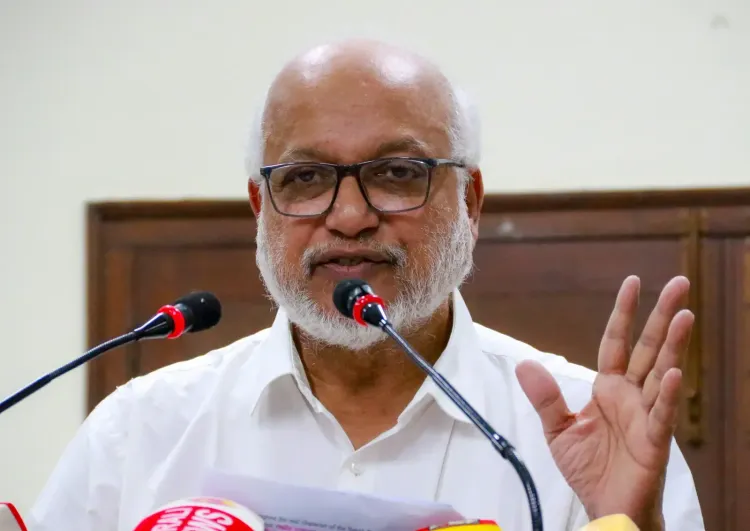
Communist Party of India-Marxist (CPI-M) General Secretary M.A. Baby on Tuesday, 20 October defended Rahul Gandhi's overseas travel, dismissing the Bharatiya Janata Party (BJP)'s campaign against it as a deliberate attempt to create confusion among the public. The remarks, made in Thiruvananthapuram, have handed the BJP a fresh opportunity to revive its long-running charge of political double standards against the Congress and the CPI-M — fierce adversaries in Kerala, yet allies within the national INDIA bloc.
What Baby Said
Baby countered the BJP's criticism of Rahul Gandhi's foreign trips by pointing to Prime Minister Narendra Modi's own overseas travel record, arguing that Modi had visited foreign countries more frequently than he had toured Indian states. He further alleged that the Prime Minister had undertaken foreign visits even as the crisis in Manipur unfolded. Crucially, Baby also cautioned members of the INDIA bloc against statements that could undermine the unity of the opposition alliance's joint protests, stressing that each constituent party retained the right to determine the form of its own agitation.
The 'Gusthi-Dhosthi' Fault Line
Baby's defence of Rahul Gandhi has inevitably revived an old political taunt. Former Vice-President M. Venkaiah Naidu, during his tenure as a BJP leader, popularised the Malayalam phrase 'Gusthi in Kerala, Dhosthi in Delhi' — loosely translated as 'wrestling in Kerala, friendship in Delhi' — to expose the apparent contradiction in the Congress-CPI-M relationship. The slogan captures a structural tension: in Kerala, the Congress-led United Democratic Front (UDF) and the CPI-M-led Left Democratic Front (LDF) are the state's two principal political rivals, clashing in every Assembly and Lok Sabha election. Yet at the national level, both parties are co-members of the INDIA bloc, united against the BJP.
BJP Seizes the Moment
The BJP has consistently exploited this duality during Kerala election campaigns, deploying national leaders to question the credibility of both parties. On Tuesday, Kerala BJP State President and legislator Rajeev Chandrasekhar targeted the two traditional rivals, accusing them of 'underhand dealings' designed to benefit each other politically. This critique carries growing weight: the BJP has made notable inroads in Kerala, having secured one Lok Sabha seat and three Assembly seats — a foothold that makes Naidu's old narrative increasingly relevant to the state's electoral calculus.
The Deeper Contradiction
Baby's remarks do not signal any shift in the CPI-M's position within Kerala's competitive politics. However, his explicit emphasis on preserving national opposition unity gives the BJP grounds to argue that federal political compulsions routinely override the Congress-Left rivalry in the state. This is not a new charge, but each episode — such as a senior CPI-M leader publicly defending the Congress president — refreshes it. The challenge for both parties remains unchanged: sustaining national cooperation without allowing their opponents to convert it into an electoral liability on Kerala's highly competitive political terrain.
What to Watch
With assembly elections on the horizon and the BJP consolidating its Kerala presence, the frequency and visibility of such cross-party defences within the INDIA bloc are likely to intensify scrutiny. How the Congress and the CPI-M manage the optics of national solidarity against the backdrop of their Kerala rivalry will be a defining thread in the state's politics going forward.
Point of View
But it is sharpening precisely when the BJP can actually capitalise on it — it now holds seats in Kerala, giving the narrative electoral teeth it previously lacked. Baby's remarks were aimed at shoring up INDIA bloc solidarity, but the optics of a CPI-M leader publicly defending the Congress president will be weaponised repeatedly in Kerala's campaign rhetoric. The deeper problem for both parties is structural: they cannot simultaneously run a zero-sum state competition and a seamless national alliance without gifting their common opponent the most durable attack line in Kerala politics. Until one formation or the other shifts its strategic posture, this cycle will repeat every time a senior figure on either side speaks out of turn at the national level.
NationPress
20 Oct 2026
Frequently Asked Questions
What did CPI-M General Secretary M.A. Baby say about Rahul Gandhi's foreign visits?
M.A. Baby on 20 October dismissed the BJP's campaign against Rahul Gandhi's overseas travel as an attempt to create confusion, arguing that PM Modi himself had travelled abroad more frequently than he had visited Indian states, including during the Manipur crisis.
What is the 'Gusthi in Kerala, Dhosthi in Delhi' phrase?
It is a Malayalam expression meaning 'wrestling in Kerala, friendship in Delhi,' popularised by former Vice-President M. Venkaiah Naidu as a BJP attack line to highlight the contradiction between the Congress and the CPI-M — rivals in Kerala but allies at the national level.
Why does this contradiction matter in Kerala's politics?
In Kerala, the Congress-led UDF and the CPI-M-led LDF are the two dominant political blocs competing directly for power in every election. Their simultaneous national alliance within the INDIA bloc creates a credibility challenge that the BJP routinely exploits, especially during election campaigns.
What has the BJP said in response to Baby's remarks?
Kerala BJP State President and legislator Rajeev Chandrasekhar on Tuesday accused the Congress and the CPI-M of 'underhand dealings' designed to benefit each other, echoing the long-running BJP narrative about the parties' dual relationship.
How much ground has the BJP gained in Kerala?
The BJP has secured one Lok Sabha seat and three Assembly seats in Kerala, a foothold that makes the 'Gusthi-Dhosthi' narrative increasingly relevant and gives the party a stronger platform from which to press the contradiction between Congress-CPI-M rivalry in the state and their national alliance.