Is Bangalore Metro Travel Set to Become 5% More Expensive from February 9?
Synopsis
Bengaluru's Metro fare will increase by 5% from February 9, marking a significant change after 7.5 years. This adjustment is part of a new annual fare revision strategy aimed at maintaining financial sustainability. Find out how this impacts commuters and the rationale behind the decision.
Key Takeaways
5% fare increase effective February 9.
Minimum fare rises from Rs 10 to Rs 11 .
Maximum fare increases to Rs 95 .
Annual fare revisions to prevent sudden hikes .
Discounts for smart-card users remain intact.
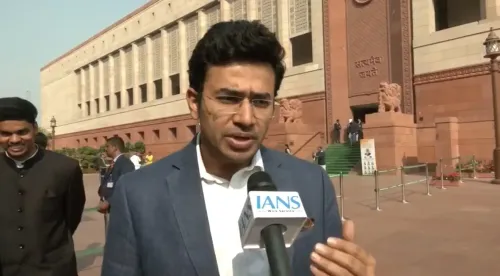
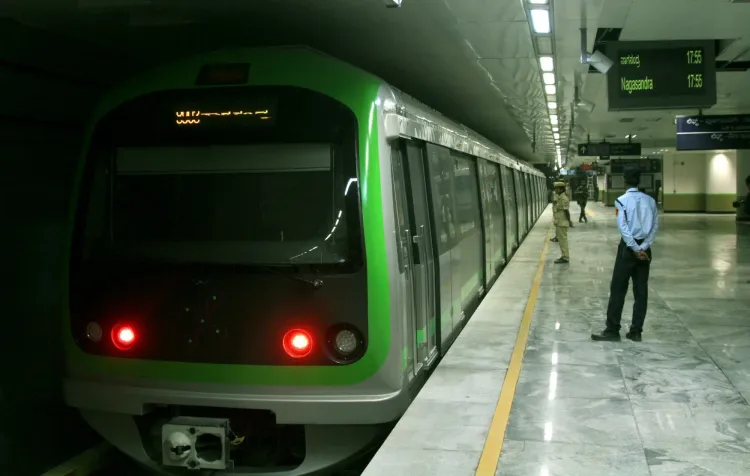
Bengaluru, Feb 5 (NationPress) The Bangalore Metro Rail Corporation Limited (BMRCL) has announced a fare increase of five percent, effective from February 9. This adjustment was confirmed by BMRCL Public Relations Officer B.L. Yashwant Chauhan, who explained that the Fare Fixation Committee evaluates fare changes annually based on a specific formula.
According to Chauhan, the committee established that a maximum fare increase of 5 percent and a minimum of 4 percent is permissible. Although calculations indicated a requirement for a 10 percent increase, the FFC limited the hike to 5 percent. Consequently, the minimum fare will rise from Rs 10 to Rs 11, while the maximum fare will increase from Rs 90 to Rs 95.
The report from the FFC noted that the fare had not been revised in the past 7.5 years, and that the optimization of fare zones from 29 to 10 led to an average fare increase of 51.55 percent. To prevent large fare hikes in the future, the committee suggested implementing an Annual Automatic Fare Revision Formula linked to operational costs, capped at 5 percent per annum.
This approach allows for manageable annual fare adjustments.
With adherence to the FFC's guidelines, the Annual Automatic Fare Revision will commence on February 9, marking a year since the last fare implementation by BMRCL.
The minimal increase ranges from Rs 1 to Rs 5 across the 10 fare zones along the 96.10-kilometre network, as stated by BMRCL.
In light of the audited financial data for the fiscal year 2024-25, compared to the previous fiscal year 2023-24, the formula indicated a cost increase of 10.20 percent. However, the fare adjustment remains capped at 5 percent, per FFC guidelines.
Now, traveling zero to two kilometres will cost Rs 11.2 instead of Rs 10, and Rs 21.4 for 4 kilometres, among other increases.
BMRCL affirmed its commitment to maintain all existing discounts for smart-caNCMC users, including a 5 percent discount during peak hours and a 10 percent discount during non-peak hours on Sundays and on three National Highways. However, the annual increase of 5 percent will also apply to tourist cards and group tickets.
In conclusion, BMRCL emphasizes that this modest annual fare adjustment aims to ensure financial sustainability and service reliability, thereby preventing the need for sudden, large fare increases in the future. This strategy allows fares to gradually adjust in accordance with inflation and operational costs, safeguarding commuters from abrupt hikes.
Point of View
The fare increase implemented by the Bangalore Metro Rail Corporation Limited is a necessary step towards maintaining the operational viability of public transportation in Bengaluru. While fare hikes can be unpopular, they are essential for ensuring that services can continue to meet demand and remain sustainable over time. By adopting an annual revision formula, BMRCL aims to prevent sudden spikes in fares, which can burden commuters and disrupt their travel budgets.
NationPress
19 Sept 2026
Frequently Asked Questions
When will the new fares come into effect?
The revised fares will be effective from February 9.
How much will the minimum fare increase?
The minimum fare will increase from Rs 10 to Rs 11.
Is there any discount for smart-card users?
Yes, smart-card users will continue to receive discounts during peak and non-peak hours.
Why is the fare being increased after so long?
The fare has not been revised in 7.5 years, and the increase is necessary to align with operational costs and ensure financial sustainability.
How often will fares be revised in the future?
Fares will be revised annually based on an automatic fare revision formula.