Baramati Succession War: Jay Pawar's 2029 Bid Rocks Pawar Dynasty
Synopsis
Jay Pawar's 2029 election declaration has triggered a four-way succession battle among the Pawar family's third generation in Baramati — pitting Rohit, Parth, Yugendra, and Jay against each other in a contest that blends family legacy, NCP's factional split, and Maharashtra's political future into one explosive rivalry.
Key Takeaways
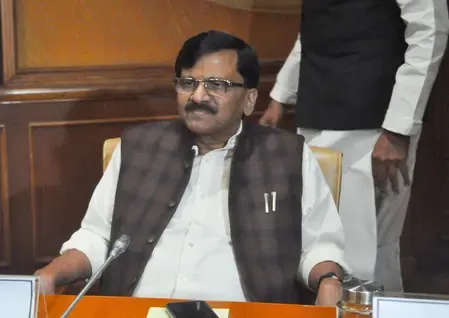
Jay Pawar , younger son of Ajit Pawar , publicly stated on April 24 that Baramati residents want him to contest the 2029 Assembly elections .
At least four third-generation Pawar family members — Rohit Pawar , Parth Pawar , Yugendra Pawar , and Jay Pawar — are positioning themselves for political dominance in Baramati .
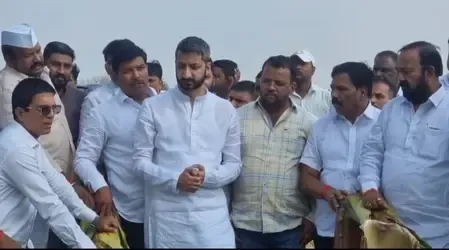
Rohit Pawar (NCP-SP MLA, Karjat-Jamkhed) has expanded his presence in Baramati despite representing a different constituency, citing his first Zilla Parishad win from the Shirsufal-Gunvadi block .
Parth Pawar , now a Rajya Sabha MP , was publicly rebuked by Sharad Pawar for threatening Congress, yet continued managing campaign operations behind the scenes.
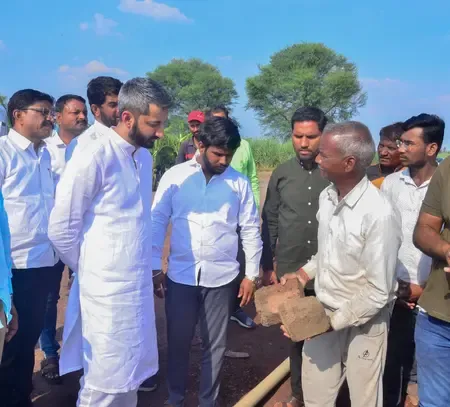
Yugendra Pawar contested against Ajit Pawar in the last Assembly elections and, despite losing, has maintained active grassroots outreach in Baramati.
The intra-family contest is a direct consequence of the 2023 NCP split , which divided the Pawar family across rival political factions.
Baramati, April 25 — The succession battle within Maharashtra's most powerful political dynasty has entered a dramatic new phase after Jay Pawar, younger son of NCP leader and Maharashtra Deputy Chief Minister Ajit Pawar, publicly declared his intent to contest the 2029 Baramati Assembly elections. The statement has ignited a fierce internal debate over who will inherit the political throne of Baramati — long considered the nerve centre of Pawar family influence in Maharashtra.
Jay Pawar's Declaration Sparks Succession Firestorm
On Thursday, Jay Pawar stated plainly, "The people of Baramati desire that I contest the 2029 Assembly elections." The remark, though measured in tone, carries explosive political weight. It signals that the third generation of the Pawar family is no longer content to operate in the shadows — and that the contest for Baramati's future will be fought within the family as fiercely as it is against political opponents.
The statement has revived what political analysts in Pune and Mumbai are calling the "brother-versus-brother" narrative — a reference to the broader Pawar family divisions that have already split the Nationalist Congress Party (NCP) into two rival factions: NCP (Ajit Pawar faction) and NCP (Sharad Pawar faction).
Four Claimants, One Throne: The Contenders for Baramati
The succession question in Baramati is no longer binary. At least four prominent members of the Pawar third generation are now positioning themselves for political dominance in the constituency:
Rohit Pawar, currently the NCP (SP) MLA from Karjat-Jamkhed in Ahilyanagar district, has been quietly but assertively expanding his footprint in Baramati. He played a key role in persuading Congress leaders to withdraw their candidate, Akash More, to consolidate support for NCP president Sunetra Pawar during the Baramati Lok Sabha by-election. "While my work remains in Karjat-Jamkhed, Baramati is my political foundation. I first won my Zilla Parishad seat from the Shirsufal-Gunvadi block here," Rohit has stated, making clear he views Baramati as his ancestral political home.
Parth Pawar, Ajit Pawar's elder son and now a Rajya Sabha MP, has been active behind the scenes. His aggressive warning to Congress — "The consequences will be felt across Maharashtra" — drew a rare public rebuke from his own granduncle, Sharad Pawar, forcing him to step back from public rallies. Yet Parth continued to manage the campaign infrastructure discreetly, underscoring his ambition and organizational acumen.
Yugendra Pawar, nephew of Ajit Pawar, contested directly against Ajit Pawar in the previous Maharashtra Assembly elections and, despite losing, has maintained an active grassroots presence in Baramati. He has adopted a conciliatory public posture, urging, "Now is not the time for this discussion; we must not create conflict between brothers." However, political observers note that his consistent outreach signals long-term ambition rather than a retreat.
Now, Jay Pawar — the youngest of the four — has entered the arena, completing what is shaping up to be a four-cornered contest for Baramati's political legacy.
The Deeper Fault Lines: Family, Faction, and Maharashtra Politics
This intra-family rivalry does not exist in isolation. It is deeply intertwined with the 2023 NCP split, when Ajit Pawar broke away from Sharad Pawar and joined the Mahayuti alliance with the BJP and Shiv Sena (Eknath Shinde). That fracture effectively divided the Pawar family politically — with Rohit Pawar and Yugendra Pawar aligning with Sharad Pawar's NCP (SP), while Parth Pawar and Jay Pawar remain in Ajit Pawar's camp.
The irony is stark: the very family that built Baramati into a political fortress is now the primary source of its political uncertainty. For decades, Sharad Pawar ran Baramati as an uncontested fiefdom — a model of political management that other Maharashtra leaders envied. That era now appears to be conclusively over.
Notably, Rohit Pawar himself acknowledged the possibility of another "Pawar vs Pawar" contest in 2029 — a scenario that would have been unthinkable just five years ago. The fact that he publicly entertains this possibility signals how normalized intra-family political combat has become in Baramati.
What This Means for Baramati Voters and Maharashtra Politics
For the Baramati electorate, the multiplying claimants present both an opportunity and a dilemma. On one hand, competitive politics could mean greater accountability and more active representation. On the other, a fractured Pawar vote could open the door for BJP or other opposition parties to make inroads into a constituency that has historically been a Pawar stronghold.
At the state level, the Baramati succession saga has implications beyond one constituency. Baramati has long served as the emotional and organizational headquarters of the NCP. Whoever controls Baramati controls the symbolic heart of the party — and, by extension, holds significant leverage over coalition negotiations, ministerial berths, and Maharashtra's broader political arithmetic heading into 2029.
Political analysts also point to a generational shift underway across Maharashtra's political families — from the Thackerays to the Mundes to the Pawars — where younger heirs are no longer willing to wait their turn. Jay Pawar's declaration is, in many ways, a symptom of this larger trend.
The Road to 2029: What to Watch
With the 2029 Maharashtra Assembly elections still four years away, the contest for Baramati will likely intensify through local body elections, Zilla Parishad polls, and by-elections in the interim. Each of these will serve as a proxy battlefield for the four Pawar claimants.
The next critical indicator will be whether Ajit Pawar — still the dominant political force in the family — publicly endorses any one successor, or whether he deliberately keeps the field open to maintain leverage. His silence or statement on Jay Pawar's declaration will be closely watched by Maharashtra's political establishment.
As Baramati heads toward what promises to be its most consequential political transition in decades, the Pawar family's internal struggle has become a mirror for Maharashtra's evolving political landscape — one where dynasty, democracy, and personal ambition are increasingly difficult to separate.
Point of View
And Jay Pawar's 2029 declaration is the clearest signal yet that the old rules no longer apply. What the mainstream narrative misses is that this isn't merely a family drama — it is a stress test for whether Maharashtra's political establishment can manage generational transitions without imploding. The answer, increasingly, appears to be no.
NationPress
19 Sept 2026
Frequently Asked Questions
Who is Jay Pawar and why is his 2029 statement significant?
Jay Pawar is the younger son of NCP leader and Maharashtra Deputy Chief Minister Ajit Pawar. His public statement expressing intent to contest the 2029 Baramati Assembly elections is significant because it adds a fourth Pawar family member to an already crowded succession race, intensifying intra-family rivalry.
Who are the main contenders for Baramati's political leadership in 2029?
The four primary contenders from the Pawar family's third generation are Rohit Pawar (NCP-SP MLA, Karjat-Jamkhed), Parth Pawar (Rajya Sabha MP, Ajit Pawar's elder son), Yugendra Pawar (Ajit Pawar's nephew), and Jay Pawar (Ajit Pawar's younger son). Each has a distinct political base and strategy.
Why is Baramati politically important in Maharashtra?
Baramati has been the political headquarters of the Pawar family for decades and serves as the symbolic nerve centre of the NCP. Controlling Baramati confers significant leverage over Maharashtra's coalition politics, ministerial allocations, and party organizational strength.
How did the 2023 NCP split affect the Pawar family's Baramati politics?
The 2023 NCP split divided the Pawar family across rival factions — Rohit Pawar and Yugendra Pawar aligned with Sharad Pawar's NCP (SP), while Parth Pawar and Jay Pawar remained with Ajit Pawar's NCP. This factional divide has made the Baramati succession contest both a family and a party-level conflict.
What did Yugendra Pawar say about the Baramati succession debate?
Yugendra Pawar urged restraint, stating, 'Now is not the time for this discussion; we must not create conflict between brothers.' Despite this conciliatory tone, he has maintained consistent grassroots outreach in Baramati, signalling his own long-term political ambitions in the constituency.