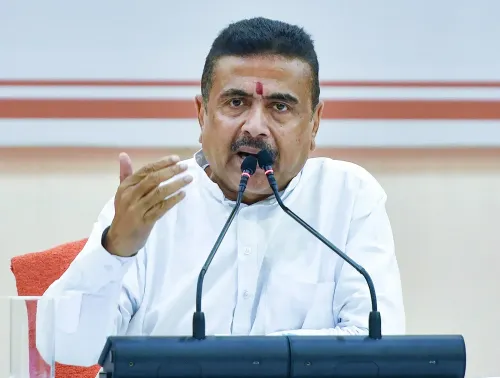
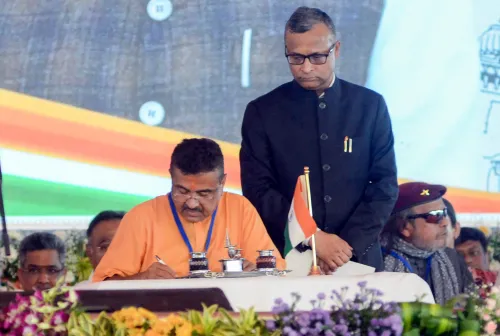
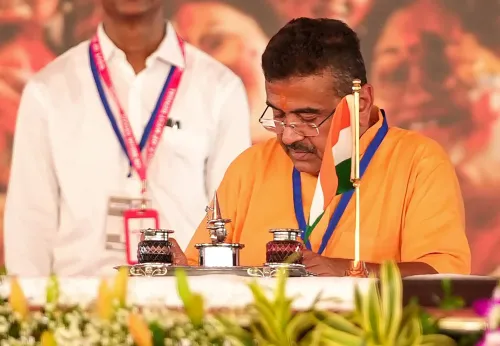
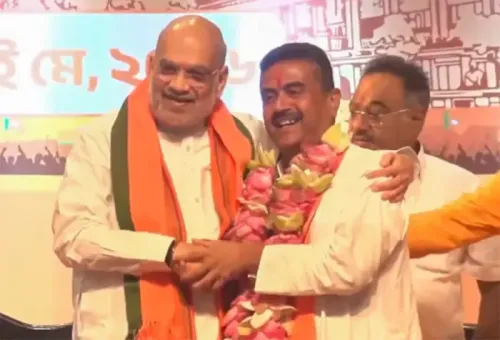
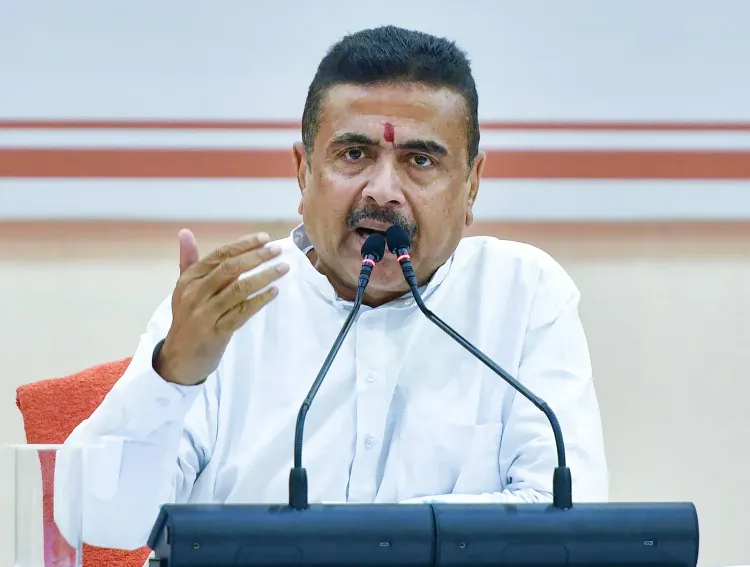
West Bengal CM Suvendu Adhikari to hold 'Janatar Darbar' twice a week
Synopsis
Days into office, West Bengal's new BJP Chief Minister Suvendu Adhikari is planning a direct public grievance forum — 'Janatar Darbar' — twice a week. With no official notification yet issued but groundwork already underway at Nabanna, the move signals a deliberate governance pivot in a state unaccustomed to BJP rule.
Key Takeaways
West Bengal Chief Minister Suvendu Adhikari is planning a public grievance forum called 'Janatar Darbar' , to be held twice a week for two hours each session.
The Chief Minister's Office has taken an in-principle decision; an official notification is expected this month .
The programme is expected to commence next month , according to a state secretariat source.
Senior bureaucrats from Nabanna will accompany the Chief Minister at each sitting.
The initiative aims to give citizens direct access to the CM, bypassing security and administrative barriers that often delay grievance redressal.
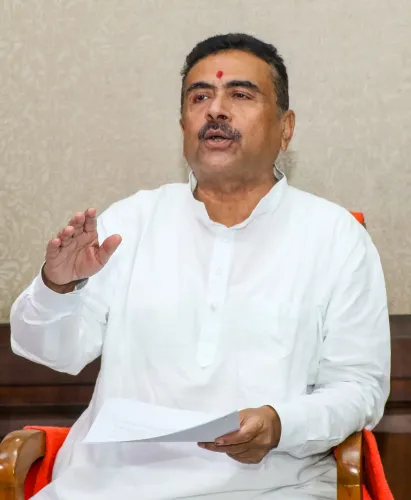
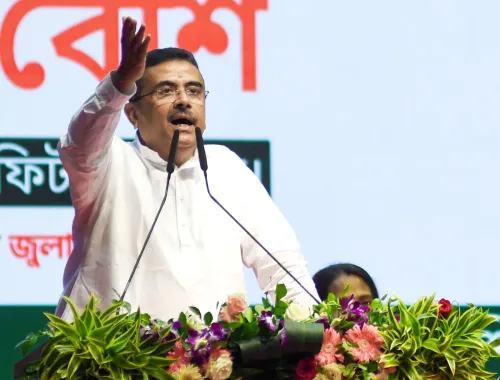
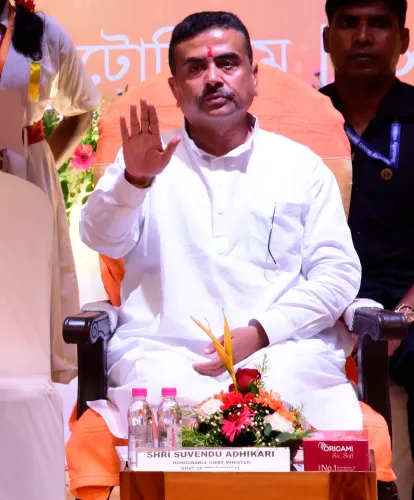
West Bengal Chief Minister Suvendu Adhikari is set to launch a public grievance programme called 'Janatar Darbar' (People's Court), where he will personally hear complaints from citizens for two hours twice a week, according to sources at the state secretariat. The initiative, planned by the newly elected Bharatiya Janata Party (BJP) government in Kolkata, has received in-principle approval from the Chief Minister's Office, though an official notification is yet to be issued.
What the Programme Entails
According to a source at Nabanna, the state secretariat, Chief Minister Adhikari will be accompanied by senior bureaucrats during each session of the 'Janatar Darbar'. Each sitting will run for two hours and is expected to be held twice a week. Administrative groundwork has reportedly already begun, with officials working out the operational modalities of the programme.
The source indicated that an official notification is likely to be issued this month, with the programme expected to commence next month. No specific dates have been confirmed as of yet.
The Rationale Behind the Initiative
The state secretariat source explained that the Chief Minister believes the head of the administration should receive public grievances directly — not solely through official administrative channels. 'Our new Chief Minister feels that the Chief Minister, as the head of the administration, should have first-hand information about public grievances, the flow of which should come at times directly from the public,' the source said.
The source also noted a practical gap that the programme aims to address: letters addressed to the Chief Minister often do not reach him directly, and security protocols make it difficult for ordinary citizens to access the top executive. The 'Janatar Darbar' is being designed as a structured channel to bridge that gap.
Context and Political Significance
The launch of this initiative comes shortly after the BJP came to power in West Bengal, marking a significant political transition in a state that had been governed by the All India Trinamool Congress (TMC) for over a decade. The 'Janatar Darbar' model is not without precedent — similar public grievance forums have been used by chief ministers in other states as a governance and outreach tool.
Notably, the source acknowledged that public grievances exist regardless of which party governs: 'Irrespective of which party is in power, people always have some grievance or another about the administration's functioning.' The programme, therefore, is being framed as an administrative necessity rather than a purely political gesture.
What Happens Next
All eyes are now on the official notification expected from the West Bengal government. Once issued, the programme's schedule, venue, and registration process for citizens will be made public. The rollout will be closely watched as a test of the new government's governance approach and its ability to translate outreach intent into administrative delivery.
Point of View
But the real question is whether grievances heard at such forums translate into measurable administrative action — or become a managed optics exercise. West Bengal's bureaucracy, long aligned with the previous TMC dispensation, will need to demonstrate both responsiveness and follow-through for the programme to carry credibility. The absence of an official notification at the time of reporting also suggests the announcement may be partly about signalling a governance style shift rather than an imminent policy rollout.
NationPress
7 Oct 2026
Frequently Asked Questions
What is 'Janatar Darbar' in West Bengal?
'Janatar Darbar,' which translates to 'People's Court,' is a proposed public grievance programme where West Bengal Chief Minister Suvendu Adhikari will personally hear complaints from citizens for two hours twice a week. The initiative has received in-principle approval from the Chief Minister's Office, with an official notification expected this month.
When will the 'Janatar Darbar' programme begin?
According to a state secretariat source, an official notification is expected to be issued this month, with the programme likely to commence next month. No specific launch date has been confirmed yet.
Why is Chief Minister Suvendu Adhikari launching 'Janatar Darbar'?
The Chief Minister believes the head of the administration should receive public grievances directly, not just through official channels. The programme also addresses a practical barrier: letters to the CM often do not reach him, and security protocols limit direct citizen access.
Who will be present at the 'Janatar Darbar' sessions?
Chief Minister Suvendu Adhikari will be present at each session, accompanied by a couple of senior bureaucrats from Nabanna, the West Bengal state secretariat.
Is 'Janatar Darbar' a new concept in Indian governance?
No. Similar public grievance forums have been used by chief ministers in other Indian states as a governance and public outreach tool. West Bengal's version is being positioned as a structured channel for direct citizen-to-CM communication under the new BJP government.