Bengal CM Adhikari vows zero tolerance on extortion, unveils ₹15,000 crore steel plant at Mejia
Synopsis
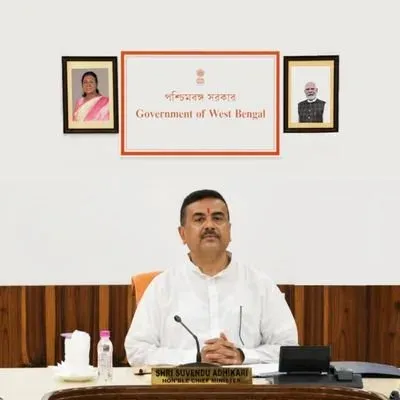
West Bengal CM Suvendu Adhikari used the inauguration of a ₹15,000 crore steel plant in Bankura to send a pointed message: lock a factory gate and go to jail, break one and pay triple the damages. Backed by a new 2026 law, this is Bengal's most explicit industrial security guarantee in decades — and a direct repudiation of the Left and TMC eras.
Key Takeaways
West Bengal CM Suvendu Adhikari announced a zero-tolerance policy against extortion and hooliganism targeting investors on 17 July .
The West Bengal Public Safety and Control of Anti-Social Activities Act, 2026 mandates imprisonment for gate-locking and recovery of three times the damage amount from perpetrators.
Adhikari inaugurated a ₹15,000 crore steel plant expansion at Mejia, Bankura district .
The state government's 'direct land policy' has it purchase land itself before handing it over for industrial projects, replacing both forced acquisition and investor self-procurement models.
Adhikari credited the recent change in government for reversing industrial outmigration and reviving investor interest in Bengal.
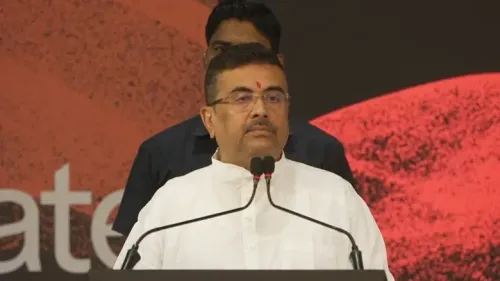
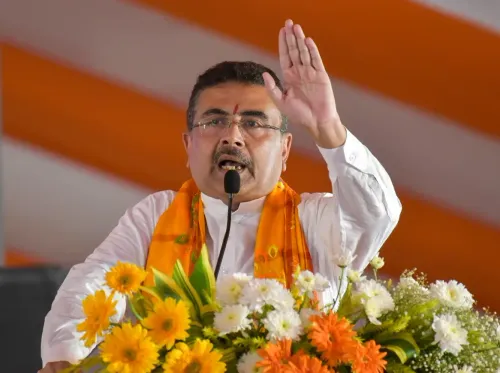
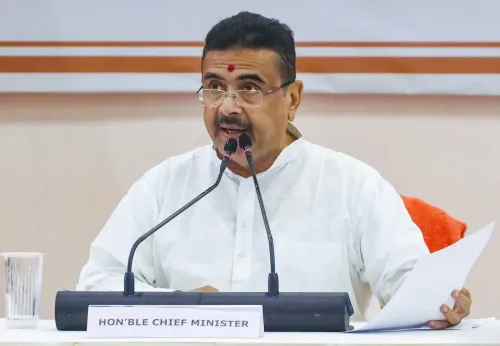
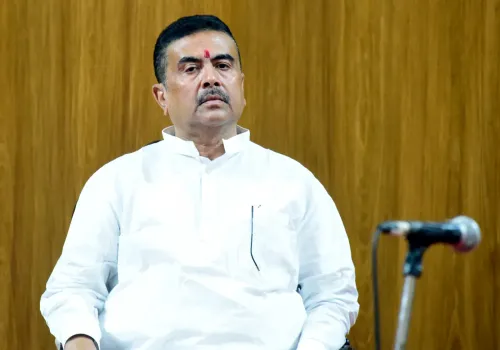
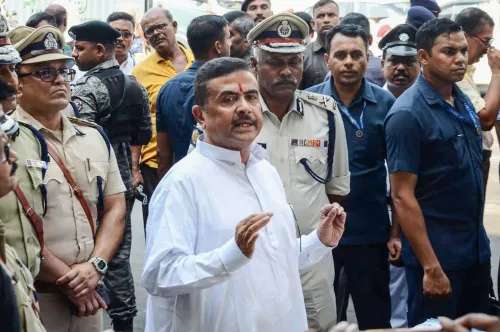
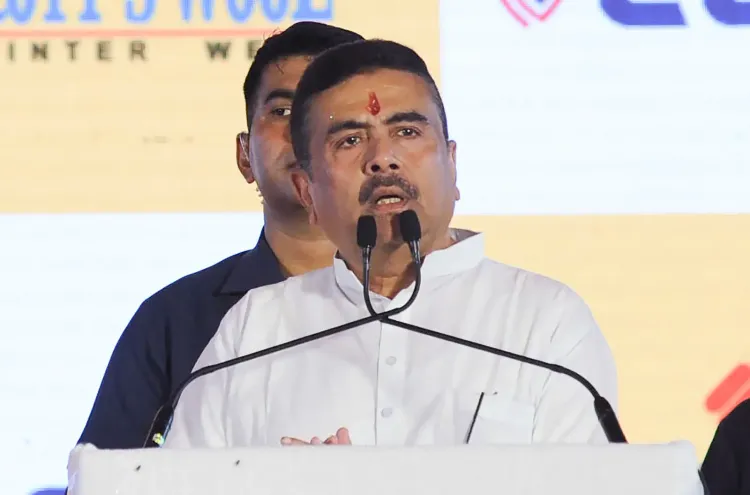
West Bengal Chief Minister Suvendu Adhikari on Friday, 17 July declared that any hooliganism or extortion targeting industrialists and investors in the state will be met with swift and severe police action, as his government has adopted a 'zero tolerance' policy against activities that could undermine investor confidence. The declaration came at the inauguration of a ₹15,000 crore steel plant expansion at Mejia in Bankura district.
New Law to Protect Investors
Chief Minister Adhikari cited the newly enacted West Bengal Public Safety and Control of Anti-Social Activities Act, 2026 as the legislative backbone of his government's industrial security drive. Under this law, anyone who locks a factory gate will face imprisonment, and those who damage factory property will be liable to pay three times the value of the loss incurred.
'Henceforth, if anyone or any group locks the factory gate, their place will be behind the bars. If they come to the factory and break the gate, three times of the loss amount will be recovered from those who would resort to such hooliganism. No syndicate, no extortion... We are adopting a zero-tolerance policy on this count,' Adhikari said at the event.
A Distinct Land Procurement Approach
Adhikari also drew a sharp contrast between his government's land acquisition model and those of its predecessors. He criticised the Left Front government, which governed Bengal from 1977 to 2011, for what he described as forceful acquisition, and the Trinamool Congress (TMC) government, which held power from 2011 to 2026, for abdicating responsibility by directing investors to procure land independently.
'The Left Front government believed in acquiring land from landowners at gunpoint. The previous Trinamool Congress government played no role in land procurement for industry and instead asked the investors to procure land directly, which was an impossible proposition,' he said. His administration, he explained, follows a 'direct land policy' — the state government purchases the required land itself and then hands it over for the relevant project, avoiding both coercion and governmental disengagement.
Political Context and Regime Change
Adhikari attributed Bengal's renewed investor interest directly to the change in government following the recently concluded state Assembly elections. He argued that without the political transition, the remaining industrial base in West Bengal would have migrated to other states.
'Bengal and Bengalis have been saved because of this change in regime. The investors have also started coming back and showing investment interest,' he said. This comes amid a broader effort by the new state government to reposition West Bengal as an investment-friendly destination after years of perceived industrial stagnation.
Significance of the Mejia Steel Plant
The ₹15,000 crore steel plant expansion at Mejia, Bankura represents one of the larger industrial commitments seen in the state in recent years. The inauguration served as a platform for Adhikari to signal that the government's law-and-order reforms and land policy are already beginning to attract capital. Analysts note that Bengal's industrial revival will be measured not by announcements but by sustained investment follow-through over the coming years.
Point of View
But the real test lies in enforcement consistency — West Bengal's industrial decline was not simply a law-and-order failure; it was also structural, rooted in decades of labour militancy, land-use rigidity, and policy uncertainty. The new 2026 Act sets a firm legal baseline, but similar tough-talk from previous administrations rarely translated into sustained investor confidence. The ₹15,000 crore Mejia plant is a credible data point, yet one project does not a turnaround make. What Bengal's industrial story needs is a pipeline of investments across districts, not just headline inaugurations in Bankura. The direct land policy is a genuine departure from past practice, but its execution — speed, transparency, fair compensation — will determine whether it becomes a model or another well-intentioned reform that stalls in the bureaucracy.
NationPress
16 Oct 2026
Frequently Asked Questions
What did West Bengal CM Suvendu Adhikari announce regarding industrialists?
CM Adhikari declared a zero-tolerance policy against hooliganism and extortion targeting industrialists and investors in West Bengal. He stated that police will deal drastically with any such activity, backed by the West Bengal Public Safety and Control of Anti-Social Activities Act, 2026.
What is the West Bengal Public Safety and Control of Anti-Social Activities Act, 2026?
It is a new state law that mandates imprisonment for anyone who locks a factory gate and requires perpetrators of factory property damage to pay three times the value of losses caused. The law is designed to protect investors and industrial establishments from syndicate activity and extortion.
What is the ₹15,000 crore steel plant project at Mejia?
It is a steel plant expansion project worth ₹15,000 crore located at Mejia in Bankura district, West Bengal. CM Adhikari inaugurated the expansion on 17 July, using the occasion to outline his government's industrial and law-and-order policies.
How does the new government's land policy differ from its predecessors?
Adhikari described a 'direct land policy' under which the state government itself purchases land needed for industrial projects and then transfers it to investors — contrasting with the Left Front's alleged forced acquisition and the TMC's practice of leaving land procurement entirely to investors.
Why does Adhikari say Bengal's industrial outlook has improved?
He attributed the improvement to the change in government following recent Assembly elections, arguing that without the political transition, remaining industries in West Bengal would have relocated to other states. He said investors have begun returning and showing fresh interest in the state.