Why Was Sujay Krishna Bhadra Granted Bail by the Calcutta HC?
Click to start listening
Synopsis
In a significant development in the West Bengal cash-for-school job scandal, Sujay Krishna Bhadra has been granted bail by the Calcutta High Court. This decision marks the last of the major accused to receive bail, following Partha Chatterjee's earlier release. What are the implications of this ruling?
Key Takeaways
- Sujay Krishna Bhadra granted bail by Calcutta HC.
- Final major suspect in cash-for-school job scandal.
- Partha Chatterjee previously released on bail.
- Bhadra must comply with court restrictions.
- Ongoing investigations by ED and CBI.
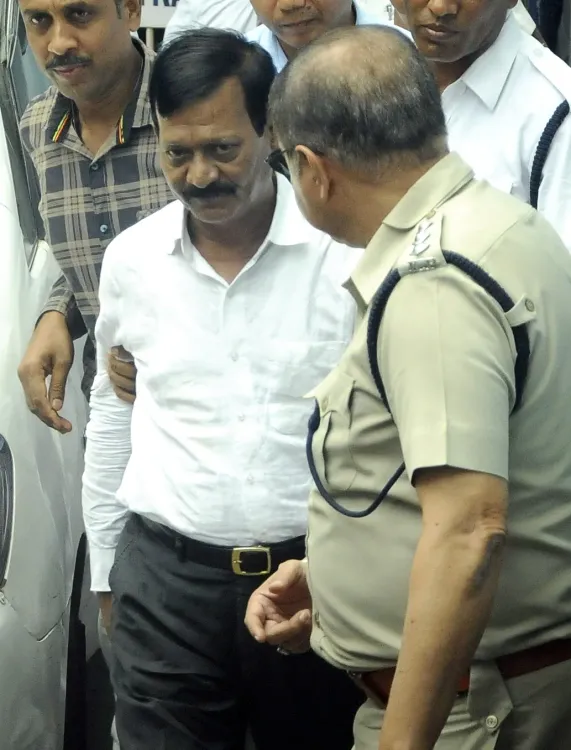
Kolkata, Dec 5 (NationPress) The Calcutta High Court's single-judge Bench granted bail to Sujay Krishna Bhadra, a key figure implicated in the extensive cash-for-school job scandal in West Bengal, on Friday. Bhadra is the final major suspect in this case to receive bail, following the release of Partha Chatterjee, the former West Bengal education minister and ex-secretary general of the Trinamool Congress, who was granted bail last month after spending over three years in custody due to his arrest by the Enforcement Directorate (ED) in July 2022.
Known locally as “Kalighater Kaku” (Uncle of Kalighat), Bhadra was under house arrest after being granted interim bail earlier this year on medical grounds. Justice Suvra Ghosh imposed several conditions upon granting bail to Bhadra, including the surrender of his passport and a requirement to report to the Investigating Officer of the central agency each week.
Furthermore, he must provide his mobile number to both the Investigating Officer and the court. The court emphasized that Bhadra must not attempt to destroy or tamper with any evidence or documents related to the case. Justice Ghosh also stated that any breach of these conditions could result in the trial court revoking his bail.
Bhadra was initially arrested by the ED on May 30, 2023, in connection with this job scandal. Subsequently, the Central Bureau of Investigation (CBI), which is conducting a concurrent investigation, also arrested him. In April, the CBI informed a special court in Kolkata that Bhadra allegedly received Rs 75 crore from Arun Hazra, a middleman involved in the school job case.
The CBI's counsel stated that this sum was collected by Hazra from candidates deemed “tainted” who paid to secure school positions. They also provided details of Hazra's methods, revealing that he operated a network of sub-agents tasked with identifying candidates willing to pay for school jobs and collecting the corresponding payments for various teaching positions, including primary, secondary, and higher secondary levels.
Point of View
Our commitment remains steadfast in delivering unbiased news. The bail granted to Sujay Krishna Bhadra highlights the complexities of the ongoing investigations in the West Bengal cash-for-school job case. It underscores the judicial process and the implications it holds for accountability in such high-profile corruption cases.
NationPress
05/12/2025
Frequently Asked Questions
Who is Sujay Krishna Bhadra?
Sujay Krishna Bhadra is one of the prime accused in the cash-for-school job scandal in West Bengal, often referred to as 'Kalighater Kaku'.
What are the conditions of Bhadra's bail?
Bhadra must surrender his passport, report to the Investigating Officer weekly, and not tamper with any evidence related to the case.
What was the role of Arun Hazra in the scandal?
Arun Hazra acted as a middleman, allegedly collecting substantial sums from candidates in exchange for securing school jobs.
How long was Partha Chatterjee in jail?
Partha Chatterjee spent over three years in jail before being granted bail last month.
What is the significance of this case?
This case sheds light on corruption within the education sector in West Bengal and the ongoing efforts of enforcement agencies to tackle it.