Did Sensex and Nifty Surge After RBI's Repo Rate Cut?
Click to start listening
Synopsis
The Indian stock markets have responded positively to the RBI's unexpected rate cut, with both Sensex and Nifty climbing significantly. Analysts suggest this move has bolstered market confidence amid changing economic forecasts.
Key Takeaways
- Sensex closed at 85,712.37, up 447.05 points.
- Nifty ended at 26,186.45, gaining 152.7 points.
- RBI cut repo rate by 25 bps to 5.25 percent.
- Inflation forecast lowered to 2 percent for FY26.
- Analysts recommend watching support levels in the market.
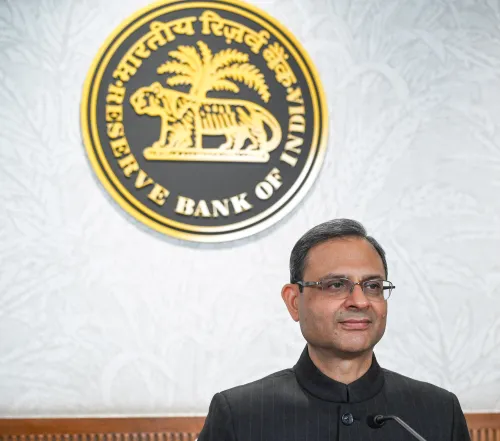
Mumbai, Dec 5 (NationPress) The Indian stock market experienced an uptick on Friday following the Reserve Bank of India's (RBI) decision to reduce the repo rate by 25 basis points to 5.25 percent.
The Monetary Policy Committee (MPC), chaired by Governor Sanjay Malhotra, maintained a neutral policy stance.
In addition to the rate cut, the RBI significantly revised its inflation forecast for FY26 down to 2 percent from 2.6 percent and raised its growth estimate to 7.3 percent, an increase from the earlier 6.8 percent.
Post-announcement, the Sensex concluded at 85,712.37, climbing by 447.05 points or 0.52 percent.
The Nifty also saw an increase, finishing at 26,186.45, up 152.7 points or 0.59 percent. Analysts noted that the Nifty remained close to 26,200, firmly above the psychological threshold of 26,000.
“Strong support persists in the 26,000–26,100 range, which continues to serve as the immediate demand base,” they added.
“A steady closing above 26,300 is essential to unlock the next upward movement towards 26,450–26,600,” market observers indicated.
In the broader market, the Nifty MidCap index saw a gain of 0.49 percent, while the Nifty SmallCap index dipped by 0.57 percent.
Most major sectoral indices finished positively, with the Nifty PSU Bank showing the strongest performance, rising by 1.5 percent.
Banking, auto, IT, metal, real estate, oil and gas, and chemical stocks also saw upward movement. However, indices for media, pharma, consumer durables, and FMCG finished lower.
On the Sensex, the top gainers included State Bank of India, Bajaj Finserv, Maruti Suzuki, Bajaj Finance, and HCL Tech.
Conversely, Hindustan Unilever, Eternal, Trent, Sun Pharma, Tata Motors PV, and Bharat Electronics were among the day's major losers.
Analysts remarked that the Indian markets responded positively to the RBI's unexpected 25 bps rate cut, a move that seemed unlikely given the robust Q2 GDP figures.
“This surprise, coupled with sharply reduced inflation forecasts and supportive liquidity measures, has sparked a risk-on sentiment throughout equities,” market specialists added.
Point of View
It is crucial to provide our readers with an accurate and balanced perspective on economic developments. The recent rate cut by the RBI reflects a proactive approach to stimulate growth while managing inflation, which is essential for the stability of the Indian economy. We're committed to keeping our audience informed about these pivotal shifts in the financial landscape.
NationPress
05/12/2025
Frequently Asked Questions
What impact does the RBI repo rate cut have on the stock market?
The RBI's repo rate cut generally lowers borrowing costs, encouraging investment and spending, which can lead to a positive impact on the stock market.
How does the repo rate affect inflation?
A lower repo rate may help to reduce inflation by encouraging spending and investment, which can lead to increased economic activity.
What is the significance of the Sensex and Nifty?
The Sensex and Nifty are key indicators of the Indian stock market's performance, reflecting the overall economic health and investor sentiment.
What should investors consider after this rate cut?
Investors should monitor which sectors are likely to benefit from lower borrowing costs and consider adjusting their portfolios accordingly.
Is the current market rally sustainable?
While the current rally is encouraging, investors should remain cautious and consider economic indicators and market conditions before making decisions.