Why Did ECI Reject Domicile Certificates as Identity Proof?
Click to start listening
Synopsis
In a significant decision, the Election Commission of India has stated that domicile certificates from West Bengal cannot serve as valid identity documents for voting rights. The rationale behind this choice has ignited political debates and accusations among parties in the state. Discover the implications of this ruling and its impact on voters.
Key Takeaways
- ECI's rejection of domicile certificates as identity proof
- Specific criteria must be met for issuance
- Political tension arises over voting rights
- Implications for residents of West Bengal
- Importance of proper identity documentation in elections
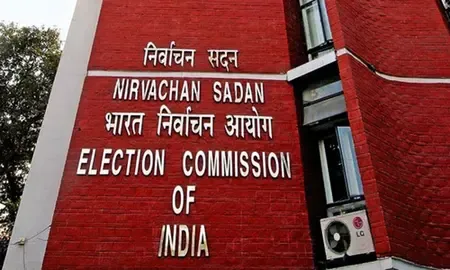
Kolkata, Jan 8 (NationPress) The Election Commission of India (ECI) has clarified the rationale behind its decision not to recognize domicile certificates issued by the West Bengal government as valid identity documents. According to the ECI, documents created for specific intents cannot be utilized for validating voting rights.
Officials from the Chief Electoral Officer's (CEO) office in West Bengal stated that one key function of these domicile certificates is to serve as supplementary proof of residency in the state for citizens serving in the armed forces or central forces, acknowledging their frequently transferable job nature across the country.
Additionally, citizens from other states with parents who have resided in West Bengal for over 15 years can apply for a domicile certificate from the West Bengal government.
However, the issuance of such certificates is contingent on meeting certain criteria. The primary requirement is to verify if the applicant's parents possess any land, house, or other property in West Bengal. The second condition assesses whether the applicant was born in West Bengal.
Moreover, the state police conduct a thorough verification of the applicant's present residence in another state.
The sources from the CEO's office emphasized, "Only after satisfying all these criteria is the domicile certificate granted. Therefore, the intended use of the domicile certificate does not encompass its acceptance as an identity document necessary for affirming voting rights in the SIR process."
A political debate has already erupted in West Bengal regarding the acceptance of domicile certificates as valid identity proof for the SIR exercise.
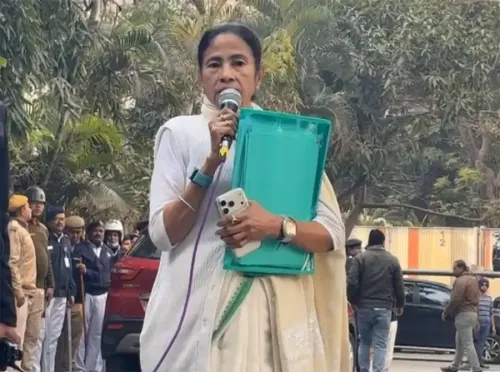
Notably, Chief Minister and Trinamool Congress president Mamata Banerjee has accused the Commission of intentionally rejecting domicile certificates as identity proof to potentially remove legitimate names from the voters' list.
Conversely, opposition parties in the state argue that the domicile certificates issued by Mamata's administration should not be recognized as valid identity proof for the revision process, claiming they were distributed "rampantly and illegally" to include unauthorized Bangladeshi and Rohingya entrants in the voters' list.
Point of View
The Election Commission's stance on domicile certificates reflects a commitment to uphold the integrity of the electoral process. While the political discourse in West Bengal becomes heated, it is essential to focus on ensuring that voting rights are protected and that all identity documentation meets stringent criteria.
NationPress
09/01/2026
Frequently Asked Questions
Why are domicile certificates not accepted as identity documents by ECI?
The ECI states that domicile certificates are issued for specific purposes and do not fulfill the requirements for establishing voting rights.
What criteria must be met to obtain a domicile certificate in West Bengal?
Applicants must demonstrate that their parents own land or property in West Bengal and that the applicant was born in the state.
What impact does this decision have on voters?
This ruling may affect the inclusion of certain individuals in the voters' list, leading to political disputes within West Bengal.