Bengaluru woman, 74, loses ₹24 crore in digital arrest scam; six held

Synopsis
A 74-year-old Bengaluru woman lost ₹24 crore over two months to fraudsters impersonating CBI and ED officers — one of India's largest reported digital arrest scams. A last-minute tip-off from ICICI Bank saved another ₹3 crore, and six accused spanning five states have now been arrested.
Key Takeaways
Lakshmi Ramamurthy , 74 , a senior citizen from Bengaluru , was allegedly defrauded of ₹24 crore in a 'digital arrest' scam.
Fraudsters impersonated CBI and ED officers, coercing her into 26 transactions across 23 accounts in 10 banks between 10 February and 24 April 2026 .
ICICI Bank officials alerted the Karnataka State Cyber Command , preventing an additional ₹3 crore transfer via a gold loan.
More than ₹5.46 crore has been recovered — ₹4 crore via frozen accounts and ₹1.46 crore through court orders.
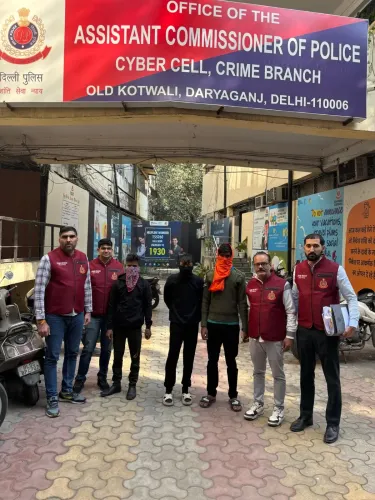
Six accused from Tamil Nadu , Maharashtra , Gujarat , New Delhi , and Bihar have been arrested; six mobile phones seized.
A 74-year-old Bengaluru woman, Lakshmi Ramamurthy, was allegedly defrauded of ₹24 crore by cyber criminals posing as officers of the Central Bureau of Investigation (CBI) and the Enforcement Directorate (ED) in a sophisticated 'digital arrest' scam, the Karnataka State Cyber Command revealed on Sunday, 25 May 2026. Six accused have been arrested in connection with the case, police confirmed.
How the Fraud Unfolded
According to an official press note issued by Punab Mohanty, IPS, Director General of Police, Cyber Command, Bengaluru, the victim was systematically intimidated and manipulated over a period of more than two months. The fraudsters, impersonating senior federal agency officials, pressured Ramamurthy into transferring funds repeatedly.
Between 10 February and 24 April 2026, she transferred ₹24 crore from her ICICI Bank account across 26 separate transactions into 23 root accounts linked to 10 different banks spread across the country.
ICICI Bank Alert Prevents Further Loss
The fraud came to light on 24 April 2026, when the victim was reportedly preparing to transfer an additional ₹3 crore by availing a gold loan. Alert officials at ICICI Bank notified the Cyber Command unit, which intervened in time and blocked the transfer — preventing further loss to the victim. Officials noted that the fraudsters had continued attempting to extract money even after the initial massive transfers.
Recovery and Investigation
Following a formal complaint, the Cyber Command traced the movement of funds through first-tier accounts. With support from the National Cyber Crime Reporting Portal (NCRP), police froze several root accounts and recovered approximately ₹4 crore. An additional ₹1.46 crore was subsequently recovered through court orders, bringing the total amount recovered to more than ₹5.46 crore. Investigators also seized six mobile phones allegedly used in the commission of the crime.
The Six Accused
The arrested individuals have been identified as N. Shivanam from Erode, Tamil Nadu; Akkach Mallik from Mumbai, Maharashtra; Palak Bhai Patel and Amit Narendra Patel from Ahmedabad, Gujarat; Om Prakash Rajut from New Delhi; and Gaurav Kumar from Bihar. The geographic spread of the accused underscores the organised, multi-state nature of the operation.
The Wider Threat of Digital Arrest Scams
This case is among the largest 'digital arrest' frauds reported in India, a scheme in which victims are falsely told they are under virtual legal detention by impersonated government officials. Senior citizens, who may be less familiar with digital fraud tactics, have emerged as a primary target demographic. This is the latest in a series of high-value cyber fraud cases that the Karnataka Cyber Command has investigated in 2026, reflecting a broader national surge in organised online crime targeting vulnerable individuals.
Point of View
Not law enforcement, was the first line of defence: an ICICI Bank alert stopped the final transfer. That raises a pointed question about whether India's cyber policing infrastructure is reactive by design. The multi-state spread of the six accused — Tamil Nadu, Maharashtra, Gujarat, Delhi, Bihar — confirms that digital arrest gangs operate as distributed networks, making jurisdictional coordination as critical as technical investigation. Recovery of just ₹5.46 crore out of ₹24 crore also signals that once funds move through layered accounts, retrieval becomes structurally difficult.
NationPress
25 Sept 2026
Frequently Asked Questions
What is a 'digital arrest' scam?
A digital arrest scam involves fraudsters impersonating law enforcement or government officials — such as CBI or ED officers — who falsely tell victims they are under virtual legal detention and must transfer money to avoid arrest. Victims are psychologically coerced into compliance, often over days or weeks.
How much money did the Bengaluru woman lose and how much has been recovered?
Lakshmi Ramamurthy, 74, lost ₹24 crore across 26 transactions between 10 February and 24 April 2026. Police have so far recovered more than ₹5.46 crore — approximately ₹4 crore through frozen accounts and ₹1.46 crore via court orders.
How was the fraud discovered?
Officials at ICICI Bank noticed the victim was about to transfer an additional ₹3 crore through a gold loan on 24 April 2026 and alerted the Karnataka State Cyber Command. Police intervened in time to block that transfer, which also triggered the formal investigation.
Who are the six arrested accused?
The six arrested are N. Shivanam (Erode, Tamil Nadu), Akkach Mallik (Mumbai, Maharashtra), Palak Bhai Patel and Amit Narendra Patel (Ahmedabad, Gujarat), Om Prakash Rajut (New Delhi), and Gaurav Kumar (Bihar). Six mobile phones allegedly used in the crime were also seized.
What should citizens do to avoid digital arrest scams?
No legitimate government agency — including the CBI or ED — conducts arrests or legal proceedings over video or phone calls, or demands money transfers. Anyone receiving such calls should immediately hang up, not transfer any funds, and report the incident to the National Cyber Crime Reporting Portal (NCRP) at cybercrime.gov.in or call the helpline 1930.