Why did Bharat Bandh fail to disrupt normal life in BJP-ruled Tripura?
Synopsis
The recent Bharat Bandh called by trade unions largely fell flat in Tripura, with daily life remaining unaffected. This article explores the events surrounding the bandh and the contrasting perspectives from political leaders and union representatives.
Key Takeaways
Bharat Bandh in Tripura had minimal impact.
Daily life remained largely unchanged despite union calls.
The government reported no significant disruptions.
Trade unions continue to oppose labor laws enacted by the government.
Political leaders present differing views on the bandh's effectiveness.
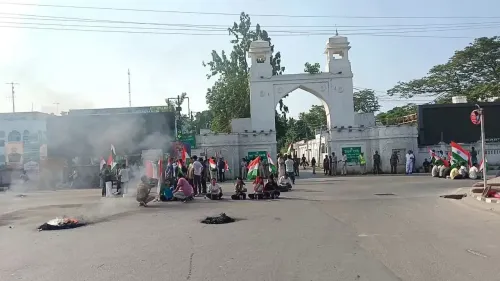
Agartala, Feb 12 (NationPress) The nationwide strike initiated by various central trade unions on Thursday did not have a significant impact in the Bharatiya Janata Party (BJP)-governed Tripura, as daily life remained predominantly unchanged throughout the state.
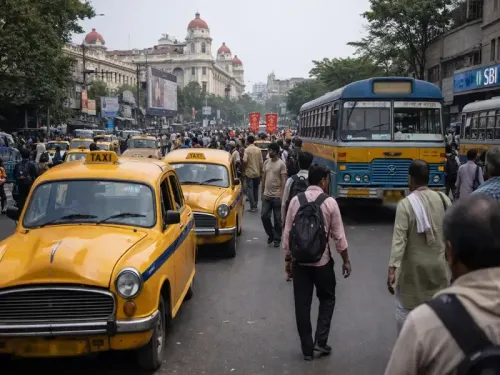
A police spokesperson reported that routine activities were largely normal across most regions of Tripura.
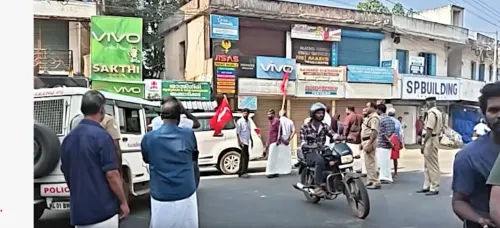
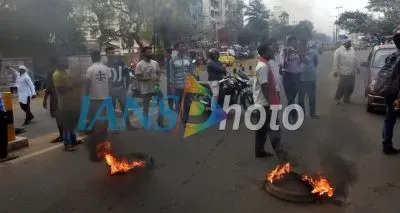
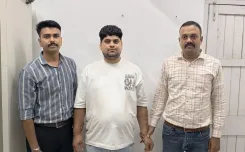
Approximately 225 bandh participants were apprehended from various districts for attempting to conduct picketing but were subsequently released.
No adverse incidents were reported from anywhere in the state, the official noted.
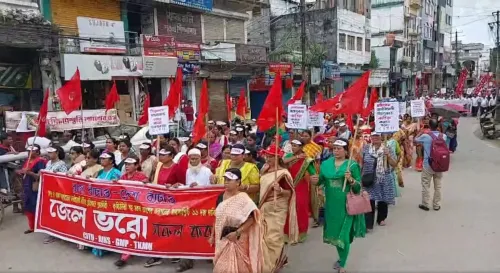
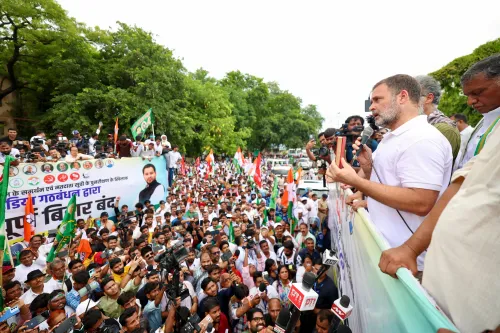
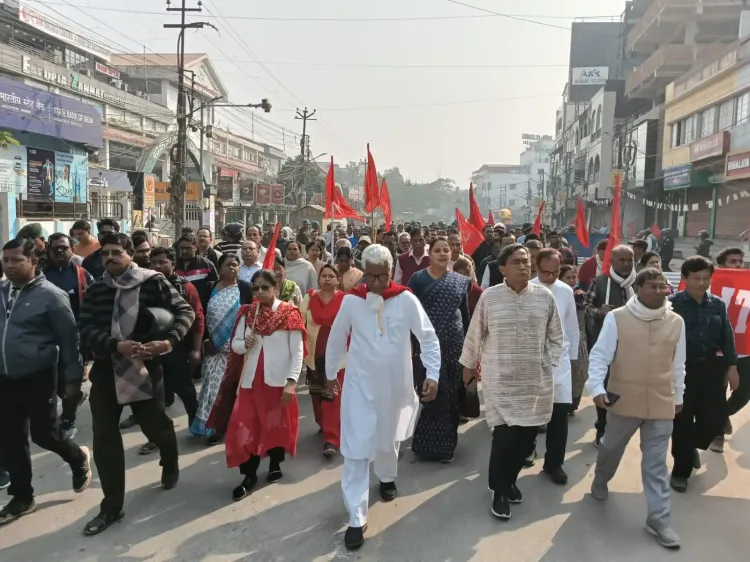
In Agartala, the CPI-M and its trade union faction, the Centre of Indian Trade Unions (CITU), organized a rally to advocate for their demands and support the shutdown.
Former Chief Minister Manik Sarkar, Leader of the Opposition and State CPI-M Secretary Jitendra Chaudhury, along with CITU State President and former Minister Manik Dey, led the protest march which traversed various areas of the capital city.
Describing the Bharat Bandh as “total and successful” in Tripura, Chaudhury, who is also a member of the CPI-M Politburo, asserted that individuals from all sectors spontaneously participated in the shutdown despite alleged intimidation from BJP members and supporters directed at traders and transport operators to maintain operations.
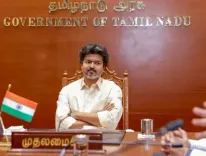
Countering these assertions, Chief Minister Manik Saha stated that there was no observable response to the bandh in Tripura.
Shops, marketplaces, government and private offices, banks, and educational institutions operated as usual, while attendance in government offices remained largely unaffected.
“CPI-M’s bandh tactics have been dismissed by the populace as they directly disrupt traders, low-income individuals, and others,” the Chief Minister informed the media.
Meanwhile, the Bharatiya Janata Yuva Morcha and the Bharatiya Janata Mazdoor Sangh also held rallies against the shutdown.
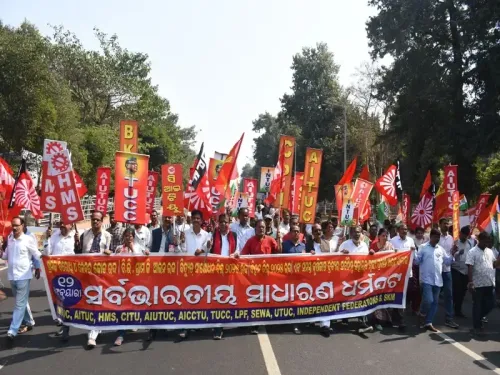
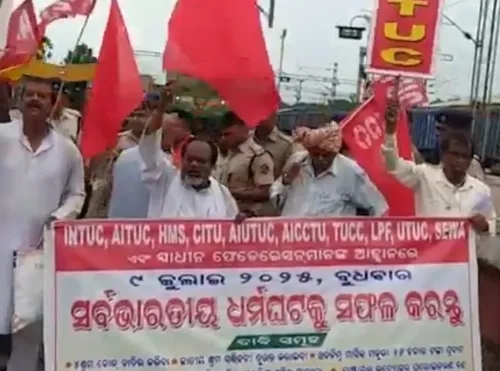
More than 10 Central Trade Unions, including the CITU, All India Trade Union Congress (AITUC), Indian National Trade Union Congress (INTUC), Hind Mazdoor Sabha (HMS), All India Central Council of Trade Unions (AICCTU), Labour Progressive Federation (LPF), and United Trade Union Congress (UTUC), along with several independent organizations representing banks, insurance, and state and Central government employees, had called for the nationwide strike.
The strike was organized as a protest against what the unions characterized as the Union government’s “pro-corporate, anti-worker, and anti-farmer” policies.
The trade unions demanded the repeal of the four labor codes enacted by the Central government.
They also expressed opposition to the Viksit Bharat–Guarantee for Rozgar and Ajeevika Mission (Gramin) Act, 2025 (VB–G RAM G), which replaced the Mahatma Gandhi National Rural Employment Guarantee Act (MGNREGA) introduced during the Congress-led UPA administration, in addition to raising various other labor and farmer-related issues.
Point of View
The Bharat Bandh in Tripura highlights the complexities of labor movements and political influence in the region. While trade unions assert their demands for worker rights, the government maintains that the public's response indicates a rejection of such tactics, reflecting a broader sentiment among the populace.
NationPress
19 Sept 2026
Frequently Asked Questions
What was the purpose of the Bharat Bandh?
The Bharat Bandh was organized by various trade unions to protest against the Union government's policies, which they describe as pro-corporate and detrimental to workers and farmers.
How did the people of Tripura respond to the bandh?
In Tripura, the Bharat Bandh received minimal support, with daily life continuing as usual, as reported by local authorities.
Were there any arrests during the Bharat Bandh?
Yes, approximately 225 bandh supporters were detained for attempting to organize picketing, but they were later released.
What did the Chief Minister say about the bandh?
Chief Minister Manik Saha stated that there was no significant response to the bandh in Tripura and emphasized that the public had rejected the CPI-M's tactics.
What are the trade unions demanding?
The trade unions are demanding the repeal of four labor codes enacted by the Central government and oppose the new employment guarantee act replacing MGNREGA.