CM Bihar flags off special train for 1,150 Somnath pilgrims

Synopsis
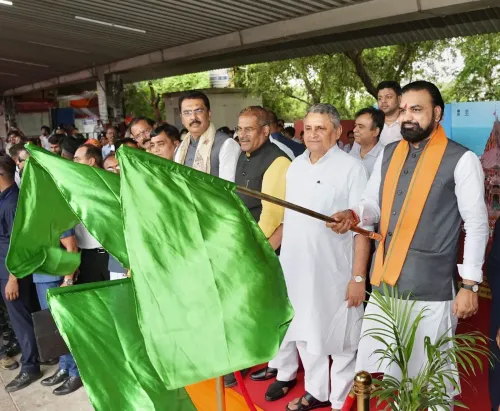
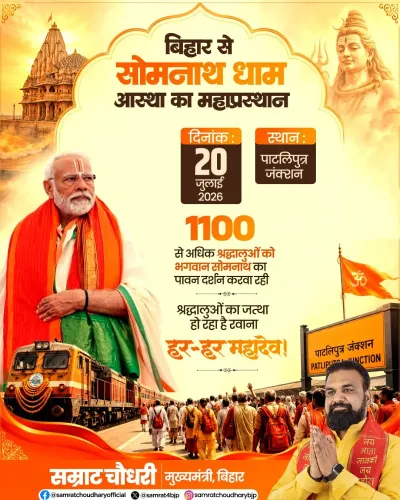
Bihar Chief Minister Samrat Chaudhary on 20 July 2026 flagged off a special train from Patliputra Junction, Patna, carrying 1,150 devotees to the Somnath Jyotirlinga in Gujarat under the state-organised 'Somnath Swabhiman Parv' pilgrimage initiative.
Key Takeaways
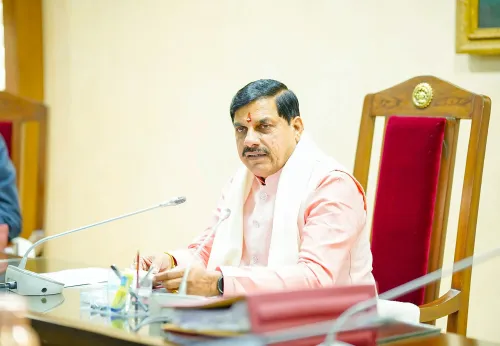
Chief Minister Samrat Chaudhary personally flagged off the special train at Patliputra Junction, Patna on 20 July 2026 .
The train carries 1,150 pilgrims to the Somnath Temple in Gujarat, one of India's twelve Jyotirlingas.
The initiative is named 'Somnath Swabhiman Parv' — framing the pilgrimage as a cultural pride event, not just a religious journey.
The programme follows an established pattern of Indian state governments organising facilitated yatras to reduce logistical burdens on devotees.
Whether further pilgrim batches will follow under this initiative remains to be announced by the Bihar government .
The Chief Minister's Office of Bihar announced on Monday, 20 July 2026, that Chief Minister Samrat Chaudhary flagged off a special train carrying 1,150 devotees from Patliputra Junction, Patna, under the 'Somnath Swabhiman Parv' — a state-facilitated pilgrimage initiative to the Somnath Temple in Gujarat.
Context
The special train was flagged off by Chief Minister Samrat Chaudhary in a formal ceremony at Patliputra Junction, one of Patna's principal railway stations and a major departure hub for state-organised travel. The post from the official Chief Minister's Office account confirmed that the batch of 1,150 pilgrims was being taken under the banner of the 'Somnath Swabhiman Parv' — translated broadly as the 'Somnath Self-Respect Festival' or 'Somnath Pride Observance' — signalling the event's dual cultural and civic character.
Policy Backdrop
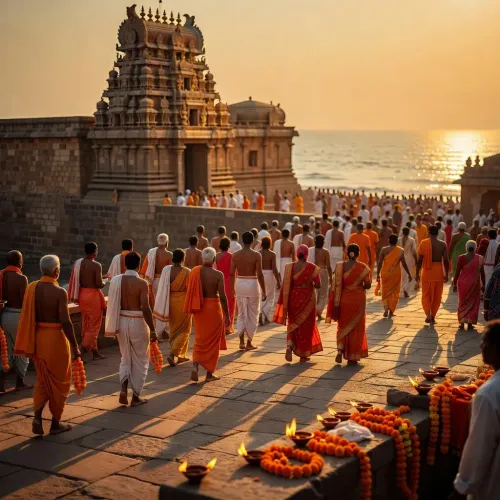
The Somnath Temple, located in Prabhas Patan, Gujarat, is one of the twelve Jyotirlingas — the most sacred shrines dedicated to Lord Shiva in Hindu tradition — and draws millions of pilgrims annually from across India. Organising state-sponsored or state-facilitated special trains to major pilgrimage sites is an established practice among Indian state governments, aimed at reducing the logistical and financial burden on devotees, particularly from economically weaker sections.
The Government of Bihar has previously supported access to pilgrimage destinations through subsidised travel and coordinated yatra schemes. Initiatives linking Bihar with temples in Gujarat and other states reflect broader inter-state cultural connectivity efforts, and such programmes often align with state-level religious tourism policies and budgetary allocations for pilgrimage facilitation.
Stakeholders and Impact
The immediate beneficiaries are the 1,150 pilgrims travelling from Patna under this batch, who gain organised, state-backed access to one of Hinduism's holiest sites. For many devotees from Bihar — particularly those from rural or lower-income backgrounds — state-facilitated trains provide an otherwise difficult journey at reduced complexity and cost.
The initiative also carries symbolic weight: the name 'Swabhiman Parv' ('Pride Festival') frames the pilgrimage not merely as a religious journey but as a statement of cultural identity, potentially strengthening the state government's connect with a significant section of the electorate that holds pilgrimage to Jyotirlingas as a lifelong aspiration.
What's Next
It remains to be seen whether the Somnath Swabhiman Parv will involve subsequent batches of pilgrims beyond this first group of 1,150, and whether the state government plans to extend similar facilitated yatras to other Jyotirlingas or major pilgrimage destinations in the coming months. Any related budget allocations or formal scheme announcements from the Bihar government will clarify the long-term scope of this initiative. State-supported pilgrimage programmes that prove popular often evolve into annual fixtures, setting a precedent for institutionalised religious tourism support.
Point of View
Chief Minister Chaudhary maximises the visibility of a relatively low-cost initiative that yields high symbolic returns. The choice of the word 'Swabhiman' (self-respect or pride) is deliberate, elevating the yatra beyond welfare into the register of dignity and heritage. If the programme expands to cover more batches or other Jyotirlingas, it could become a durable pillar of the Bihar government's religious-tourism and voter-outreach strategy.
NationPress
20 Oct 2026
Frequently Asked Questions
What is Somnath Swabhiman Parv in Bihar?
'Somnath Swabhiman Parv' is a Bihar government-organised pilgrimage initiative under which a special train was flagged off from Patliputra Junction, Patna, carrying 1,150 devotees to the Somnath Jyotirlinga temple in Gujarat on 20 July 2026.
Who flagged off the Somnath special train from Patna?
Bihar Chief Minister Samrat Chaudhary flagged off the special train from Patliputra Junction, Patna, on 20 July 2026 under the 'Somnath Swabhiman Parv' initiative.
How many pilgrims are travelling in the Bihar Somnath special train?
A total of 1,150 pilgrims are travelling in the special train flagged off from Patliputra Junction, Patna, to the Somnath Temple in Gujarat.
Where is the Somnath Temple located?
The Somnath Temple is located in Prabhas Patan, Gujarat, and is one of the twelve Jyotirlingas — the most sacred shrines dedicated to Lord Shiva in Hindu tradition.
Does the Bihar government regularly organise pilgrimage trains?
Indian state governments, including Bihar, periodically arrange special trains and facilitated yatras to major pilgrimage sites to support devotees and promote religious tourism; the 'Somnath Swabhiman Parv' is the latest such initiative from Bihar.