Bihar CM flags off special train to Ekta Nagar on Unity Day
Synopsis
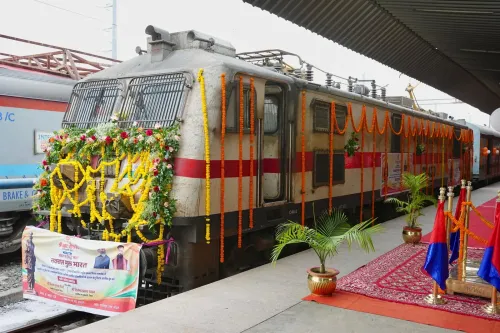
Bihar's Chief Minister flagged off the Patliputra–Ekta Nagar Special Train on Ekta Diwas, sending 1,100 residents from 22 Naxal-free districts to the Statue of Unity in Gujarat — combining a tourism gesture with a pointed statement about the state's security transformation.
Key Takeaways
Bihar's Chief Minister flagged off the Patliputra–Ekta Nagar Special Train on 29 October 2026 , Ekta Diwas.
The train carries 1,100 participants drawn exclusively from 22 Naxal-free districts of Bihar.
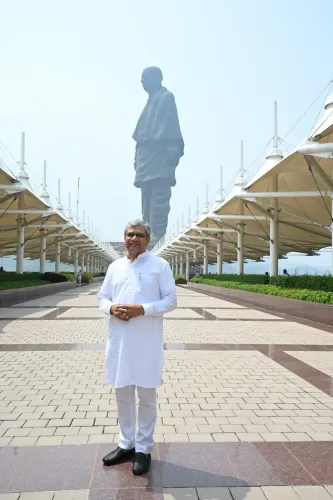
The destination is Ekta Nagar (Kevadia), Gujarat , home to the Statue of Unity , the world's tallest statue at 182 metres.
The Statue of Unity commemorates Sardar Vallabhbhai Patel and was inaugurated in October 2018 .
The initiative links Bihar's LWE security gains to a cultural tourism narrative around national integration.
Participants are expected to arrive at Ekta Nagar around 31 October , Patel's birth anniversary.
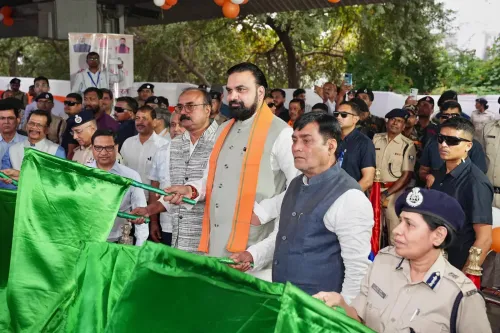
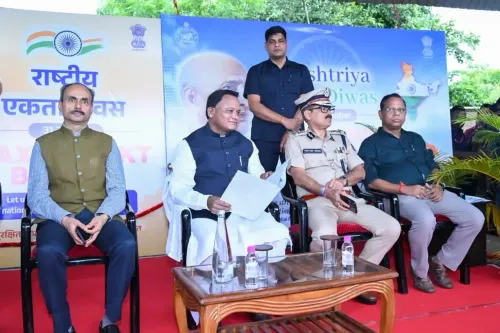
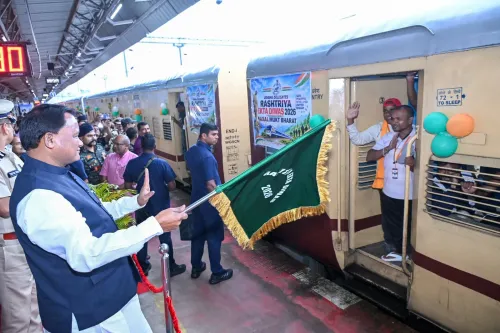
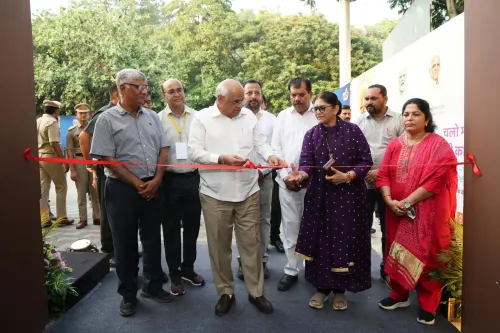
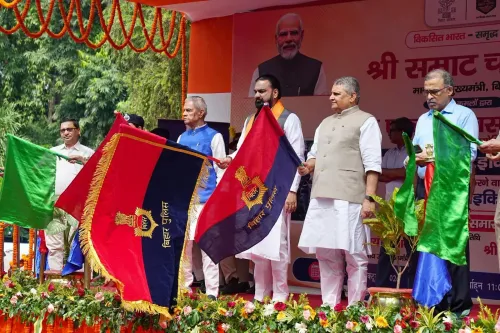
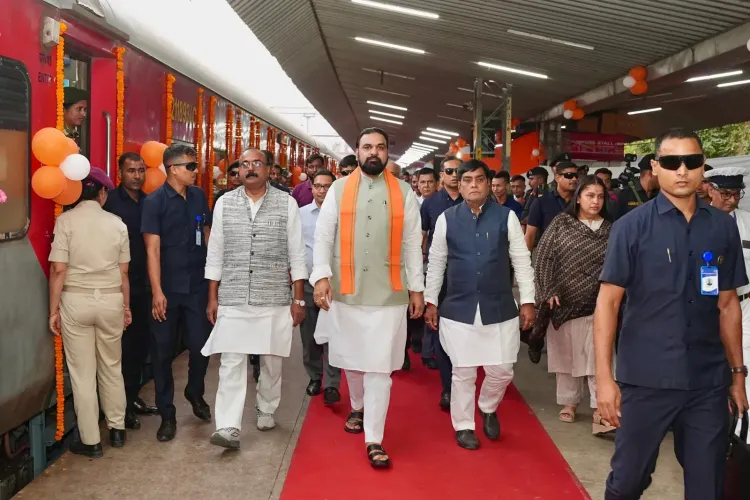
On Ekta Diwas (Unity Day), 29 October 2026, Bihar's Chief Minister flagged off the Patliputra–Ekta Nagar Special Train from Patna, carrying 1,100 participants drawn from 22 Naxal-free districts of Bihar to Ekta Nagar (Kevadia), Gujarat — home to the world's tallest statue. The Chief Minister's Office of Bihar announced the flag-off, framing the journey as a symbol of both security gains and national unity.
A train journey that maps Bihar's security transformation
The choice of participants is deliberate and pointed. By drawing all 1,100 travellers exclusively from Naxal-free districts, the state government is turning a tourism trip into a public testimony — these are communities that once lived under the shadow of Left-Wing Extremism (LWE) and are now boarding a government-organised train to celebrate national integration. The message is as much about what Bihar has overcome as it is about where the train is headed.
State administrations across eastern India have periodically arranged such visits to the Statue of Unity around Ekta Diwas, using cultural tourism as a soft-power complement to security operations. Bihar's version this year amplifies that template by explicitly tying the beneficiary pool to the LWE rollback story.
Ekta Nagar and the Statue of Unity as a political landmark
Ekta Nagar, formerly known as Kevadia, was renamed and developed around the Statue of Unity — the 182-metre bronze likeness of Sardar Vallabhbhai Patel inaugurated in October 2018 on the banks of the Narmada river in Gujarat. At roughly twice the height of the Statue of Liberty, it is the world's tallest statue and was conceived as a monument to national integration, mirroring Patel's role in unifying India's princely states after Independence.
Arriving on or around 31 October — Patel's birth anniversary and the official date of Ekta Diwas — the Bihar contingent will join what is typically a large, state-organised national programme at the site. The pairing of a Naxal-free Bihar with Patel's unity symbol is a narrative the current state administration has evidently chosen with care.
What 22 Naxal-free districts signal about Bihar's LWE landscape
Left-Wing Extremism once stretched across a significant swath of Bihar's southern and central belt, part of the broader 'Red Corridor' running through Jharkhand, Chhattisgarh, and Odisha. Sustained joint operations by central and state forces, combined with development outreach, have progressively shrunk Naxal influence. The state's claim of 22 Naxal-free districts — if sustained — would represent one of the more substantial security turnarounds in the region in recent years.
Putting residents of those districts on a train to Ekta Nagar is a deliberate closing of a loop: the promise of peaceful, open participation in national life, made real with a train ticket and a flag-off ceremony.
For 1,100 people from Bihar's once-troubled heartland, the journey to the Iron Man's statue is also a quiet announcement — that the geography of fear is shrinking, and the geography of possibility is growing.
Point of View
Converting a security statistic into a lived experience. It fits a broader NDA-aligned pattern of using the Statue of Unity as a pilgrimage destination for governance milestones — part monument tourism, part ideological messaging around Patel's legacy of integration. For Bihar, which has historically straddled the LWE fault-line, the '22 Naxal-free districts' claim is also a pre-election credibility marker. The soft power of a train journey, if the numbers hold up to scrutiny, could prove more persuasive than any press release.
NationPress
29 Oct 2026
Frequently Asked Questions
What is the Patliputra–Ekta Nagar Special Train?
It is a special train flagged off on Ekta Diwas, 29 October 2026, from Patliputra (Patna), Bihar, carrying 1,100 participants from 22 Naxal-free districts of Bihar to Ekta Nagar (Kevadia) in Gujarat, which houses the Statue of Unity.
What is Ekta Diwas and why is it celebrated on 31 October?
Ekta Diwas, or National Unity Day, is observed on 31 October each year to mark the birth anniversary of Sardar Vallabhbhai Patel, who unified India's princely states after Independence. The flag-off on 29 October ensures participants arrive at Ekta Nagar in time for the main event.
Why are participants specifically from Naxal-free districts of Bihar?
The Bihar government chose residents of its 22 Naxal-free districts to highlight the state's security transformation, using the cultural visit to the Statue of Unity as a symbol of communities transitioning from Left-Wing Extremism to peaceful national participation.
Where is Ekta Nagar and what is the Statue of Unity?
Ekta Nagar, formerly Kevadia, is located in Gujarat on the banks of the Narmada river. The Statue of Unity is a 182-metre bronze statue of Sardar Vallabhbhai Patel — the world's tallest statue — inaugurated in October 2018 to commemorate his role in national integration.
How many districts in Bihar are now declared Naxal-free?
According to the Chief Minister's Office of Bihar, 22 districts in the state have been declared Naxal-free, a figure cited in the context of the Unity Day train initiative.