CM Samrat Choudhary sends 1,100 from Naxal-free Bihar to Ekta Nagar
Synopsis
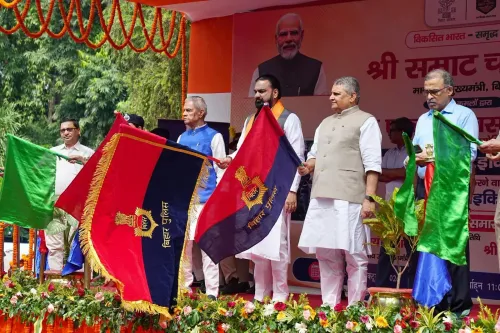
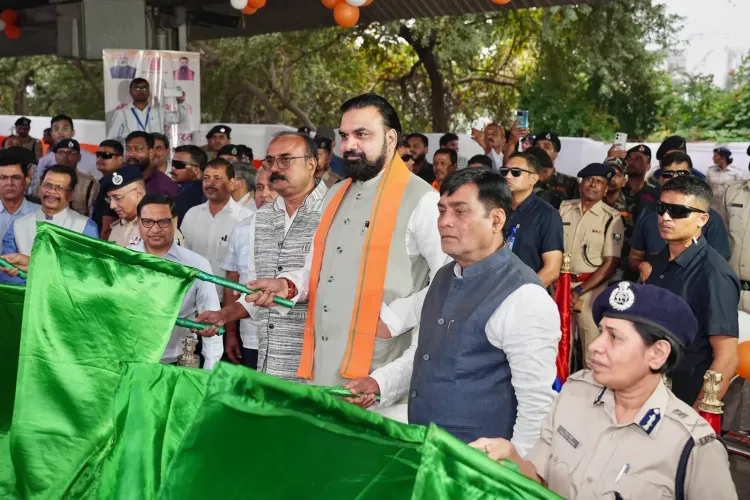
Bihar CM Samrat Choudhary flagged off 1,100 residents from 22 Naxal-free districts to Ekta Nagar, Gujarat, for National Unity Day — framing the journey as proof of Bihar's transformation from red-corridor territory to a secure, integrated state.
Key Takeaways
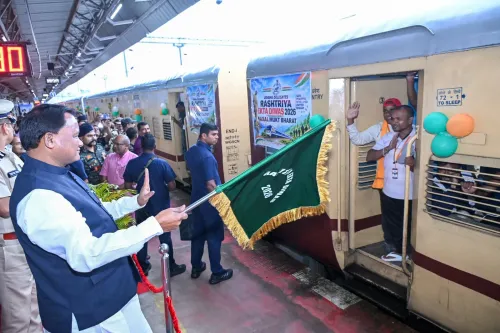
1,100 participants from 22 Naxal-free districts of Bihar departed from Patliputra Junction on 28 October 2026 .
The delegation is headed to Ekta Nagar (Kevadia, Gujarat) for National Unity Day celebrations on 31 October .
CM Samrat Choudhary framed the initiative under the Ek Bharat Shreshtha Bharat scheme, launched in 2015 .
National Unity Day marks the birth anniversary of Sardar Vallabhbhai Patel and has been observed annually since 2014 .
The move is part of Bihar's broader strategy of pairing security progress in former Naxal zones with high-visibility civic outreach.
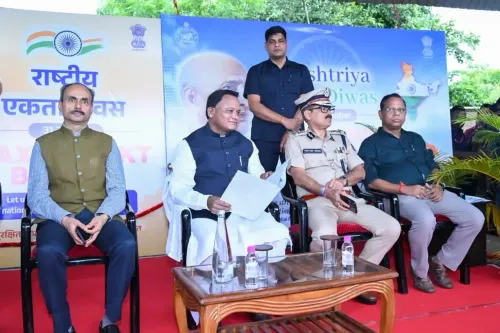
A train rolled out of Patliputra Junction on Wednesday, 28 October 2026, carrying a signal that Bihar's political leadership wants the country to read loud and clear: 1,100 participants from 22 Naxal-free districts of Bihar are headed to Ekta Nagar (Kevadia, Gujarat) for the National Unity Day celebrations — districts that, not long ago, were synonymous with left-wing extremism and fear.
Bihar Chief Minister Samrat Choudhary flagged off the delegation, framing the journey as both a civic milestone and a political statement. In his post, he described the initiative as a symbol of the 'Ek Bharat, Shreshtha Bharat' (One India, Excellent India) resolve, and of Bihar's new identity as a Naxal-free, secure, and prosperous state.
Why Ekta Nagar, why now
National Unity Day falls on 31 October every year — the birth anniversary of Sardar Vallabhbhai Patel, instituted as an annual observance in 2014. The centrepiece of the celebrations is the Statue of Unity at Ekta Nagar, Kevadia, Gujarat, the towering memorial dedicated to Patel. Sending participants from former insurgency zones to a monument that celebrates India's unification carries obvious symbolism — and the Bihar government is leaning into it fully.
The Ek Bharat Shreshtha Bharat scheme, launched in 2015, was designed precisely for this kind of cross-state cultural exchange. Over a decade, it has become a standard vehicle through which state governments project governance progress on a national stage. Bihar's use of the scheme here is pointed: the participants are not from prosperous urban centres, but from districts that were, until recently, red-corridor terrain.
Recasting the red corridor's image
Bihar has steadily worked to declare districts free of left-wing extremism over successive years, pairing security operations with development outreach. The strategy is deliberate — each declaration of a Naxal-free district is followed by efforts to rebrand that region as open for investment, tourism, and mainstream civic life. Sending 1,100 residents from these areas to a national celebration is a continuation of that playbook: visibility as validation.
For the young people boarding that train at Patliputra Junction, the trip to the Statue of Unity is also, practically, a first encounter with a major national landmark — and with the idea that they belong to the same civic mainstream as any other Indian. That quiet normalization is the whole point.
With more districts expected to be declared Naxal-free in the coming years, similar drives ahead of future National Unity Day events are likely to grow in scale — Bihar's way of measuring its own security progress by who it can now afford to send on a train.
Point of View
Photogenic symbol. For the BJP-led Bihar government, it reinforces a double narrative: law-and-order success under the current dispensation, and alignment with the Centre's 'Ek Bharat' cultural integration agenda. The choice of Ekta Nagar, a site built around Patel's legacy of national unification, is not incidental — it draws a straight line from Bihar's internal security gains to a pan-India story of cohesion. Expect the scale of such delegations to grow as more districts are declared Naxal-free, each one adding another data point to Bihar's re-branding effort ahead of future electoral cycles.
NationPress
28 Oct 2026
Frequently Asked Questions
Why did Bihar CM Samrat Choudhary flag off participants to Ekta Nagar?
CM Samrat Choudhary sent 1,100 participants from 22 Naxal-free districts of Bihar to Ekta Nagar, Kevadia, Gujarat, to attend National Unity Day celebrations on 31 October 2026, under the Ek Bharat Shreshtha Bharat initiative.
What is National Unity Day and when is it observed?
National Unity Day is observed on 31 October every year to mark the birth anniversary of Sardar Vallabhbhai Patel. It was instituted as an annual observance in 2014.
What is Ekta Nagar in Kevadia, Gujarat?
Ekta Nagar is the site in Kevadia, Gujarat, that houses the Statue of Unity, the world's tallest statue dedicated to Sardar Vallabhbhai Patel, and serves as the focal point for National Unity Day events.
What is the Ek Bharat Shreshtha Bharat scheme?
Ek Bharat Shreshtha Bharat is a central government initiative launched in 2015 to promote national integration through cultural and civic exchanges between different states of India.
How many Naxal-free districts does Bihar have?
According to Bihar CM Samrat Choudhary's post on 28 October 2026, Bihar has 22 Naxal-free districts, whose residents formed the delegation sent to Ekta Nagar for National Unity Day.