CM Bhajan Lal Sharma Rallies BJP Workers in Diggi for Panchayat Polls
Synopsis
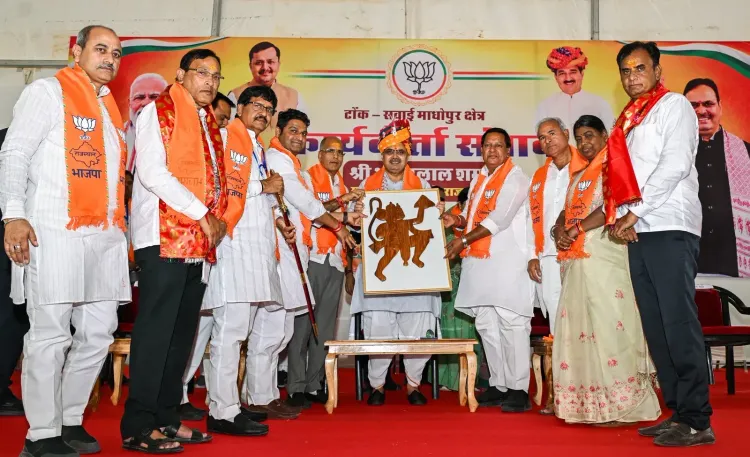
Rajasthan CM Bhajan Lal Sharma held a grassroots dialogue with BJP workers from Tonk and Sawai Madhopur in Diggi on 28 October 2026, reviewing gram panchayat election strategy and reaffirming the party's booth-level organisational drive.
Key Takeaways
CM Bhajan Lal Sharma visited Diggi, Malpura tehsil, Tonk on 28 October 2026 for a party worker meeting.
Workers from both Tonk and Sawai Madhopur districts participated in the organisational session.
The meeting focused on gram panchayat election preparations and strengthening BJP's booth-level network.
Sharma stressed the role of workers in delivering state government welfare schemes to villagers.
The outreach follows the BJP's post-assembly-election practice of tehsil-level reviews ahead of local body polls.
No official gram panchayat election schedule has been announced yet, but the BJP's ground preparation is visibly underway.
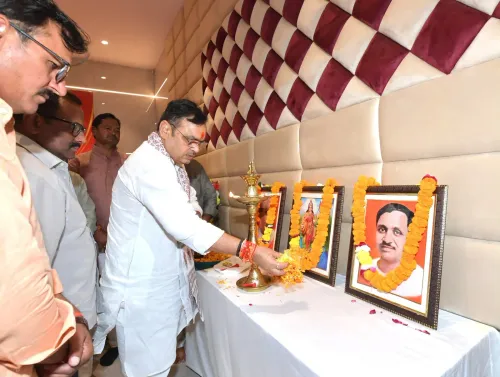
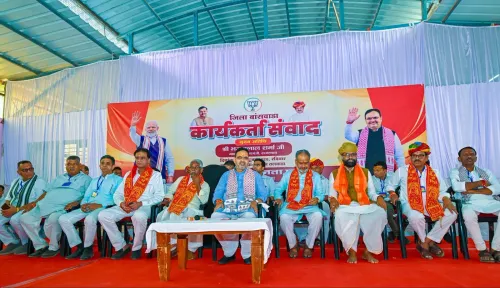
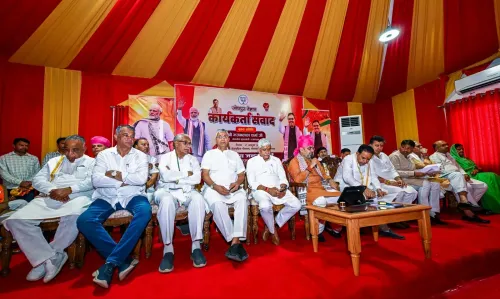
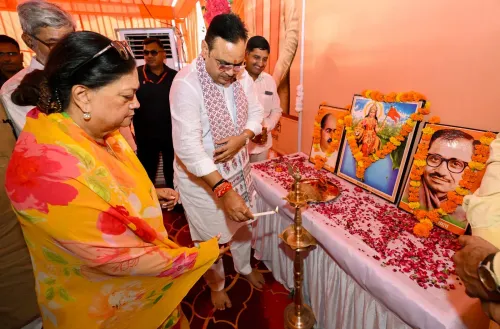
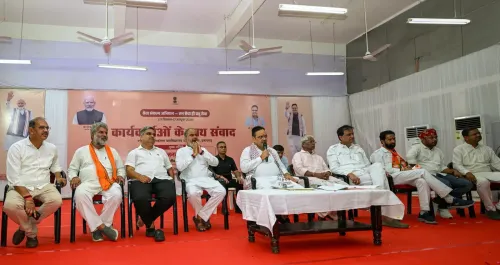
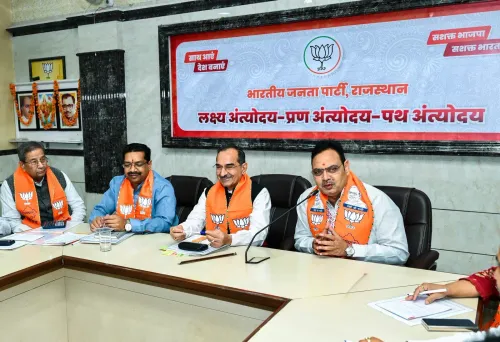
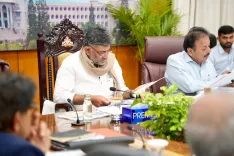
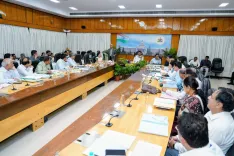
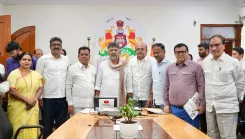
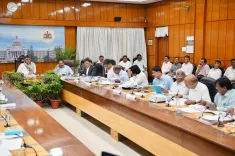
With gram panchayat elections on the horizon, Rajasthan Chief Minister Bhajan Lal Sharma travelled to Diggi in Malpura tehsil, Tonk district, on Wednesday, 28 October 2026, to hold a ground-level organisational meeting with BJP workers drawn from Tonk and Sawai Madhopur — two districts that together cover some of Rajasthan's most contested rural constituencies.
What the CM told workers in Diggi
Sharma described the interaction as an 'aatmiya samvad' — a heartfelt dialogue — with workers he called 'karmatha, nishthavan aur samarpita' (hardworking, loyal, and dedicated). The conversation centred on two things: preparing for the upcoming gram panchayat elections and tightening the party's organisational machinery at the grassroots level.
Addressing the gathering, he said workers are 'the greatest strength of the organisation' and credited their 'tireless effort, dedication to public service, and unbreakable loyalty' with continuously empowering the party. Elected representatives and senior party functionaries were also present at the event.
Booth-level mobilisation and scheme delivery go hand in hand
The meeting was not just about electoral arithmetic. Sharma made a deliberate point of linking panchayat-poll preparation with the delivery of the state government's welfare schemes — urging workers to ensure benefits reach the last citizen in their villages. It is a dual-mandate pitch the BJP has deployed consistently across its state governments: the party worker as both organiser and on-the-ground implementer of government programmes.
The BJP4Rajasthan unit has been running a series of such tehsil-level reviews since the party formed the Rajasthan government under Sharma in December 2023. The pattern — chief minister or senior leader descends to tehsil level, meets local workers, reviews booth strength — is a signature BJP method of keeping its grassroots machinery primed between major elections.
Why Tonk and Sawai Madhopur matter
Tonk, which encompasses Malpura tehsil and the town of Diggi, is a district where the BJP has historically competed hard against the Congress. Sawai Madhopur, bordering Tonk to the east, carries its own significance as a semi-urban belt with a large rural voter base — exactly the demographic that decides gram panchayat outcomes. Bringing workers from both districts into the same room signals the party is treating these two geographies as a coordinated zone for the upcoming local-body cycle.
The gram panchayat elections are periodic five-year polls that elect village-level representatives across Rajasthan. While the official schedule has not yet been announced, the CM's ground-level push indicates the state BJP is not waiting for a notification to begin its preparation.
When rural Rajasthan goes to the gram sabha ballot, the outcome will be the first real test of whether Sharma's government has converted its 2023 assembly mandate into durable village-level support — and meetings like Diggi's are where that test begins.
Point of View
Turns a worker meeting into a media moment, and simultaneously audits booth-level readiness. The explicit linking of scheme delivery with electoral mobilisation reflects a broader BJP strategy of governing and campaigning as one continuous exercise. For a party that won Rajasthan in 2023 partly by promising better welfare delivery, gram panchayat elections are the first empirical test of that promise at the village level. How robustly workers translate government programmes into voter loyalty will determine whether the 2023 mandate has genuine roots or remains a top-down wave.
NationPress
28 Oct 2026
Frequently Asked Questions
Why did CM Bhajan Lal Sharma visit Diggi in Malpura?
Sharma visited Diggi in Malpura tehsil, Tonk, on 28 October 2026 to hold a ground-level meeting with BJP workers from Tonk and Sawai Madhopur districts, focusing on gram panchayat election preparations and party organisational strengthening.
When are the next gram panchayat elections in Rajasthan?
An official schedule for Rajasthan's next gram panchayat elections has not been announced, but the BJP has begun preparations with district- and tehsil-level organisational meetings.
What is Bhajan Lal Sharma's role in Rajasthan?
Bhajan Lal Sharma is the Chief Minister of Rajasthan. He assumed office in December 2023 after the BJP secured a majority in the state assembly elections.
What did Bhajan Lal Sharma say about BJP workers at the Diggi meeting?
Sharma called workers 'the greatest strength of the organisation' and credited their tireless effort and dedication to public service with continuously empowering the party and ensuring government welfare schemes reach ordinary citizens.
Which districts were represented at the BJP meeting in Diggi?
Workers from Tonk and Sawai Madhopur districts attended the meeting held in Diggi, Malpura tehsil, on 28 October 2026.