CM Bhajan Lal Sharma Rallies Banswara Workers for Panchayat Polls
Synopsis
Rajasthan CM Bhajan Lal Sharma held a worker strategy meeting in Banswara on 18 October 2026, focusing on gram panchayat election preparation, rural outreach, and last-mile welfare delivery in the state's tribal belt.
Key Takeaways
CM Bhajan Lal Sharma met BJP grassroots workers in Banswara district on 18 October 2026 to prepare for upcoming gram panchayat elections.
The meeting focused on strengthening booth-level organisation, deepening rural public contact, and delivering welfare schemes to the last beneficiary.
Tribal Area Development Minister Babulal Kharadi and Revenue Minister Hemant Meena were both present, reflecting Banswara's tribal and land-governance significance.
Banswara is a predominantly Scheduled Tribe district in southern Rajasthan, making it a strategically important constituency for panchayat-level politics.
The BJP won 115 seats in Rajasthan's December 2023 assembly elections; gram panchayat polls are the next major test of its ground-level support.
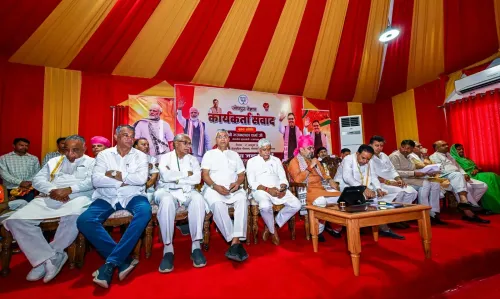
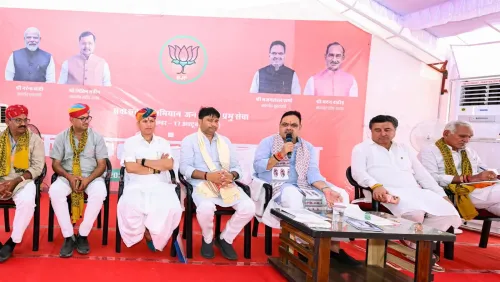
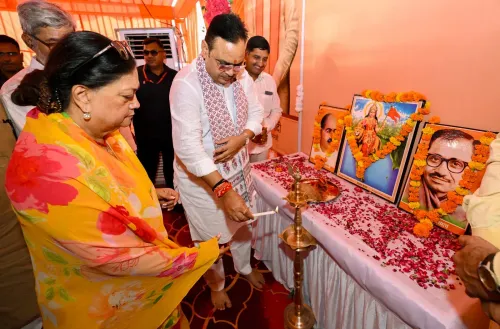
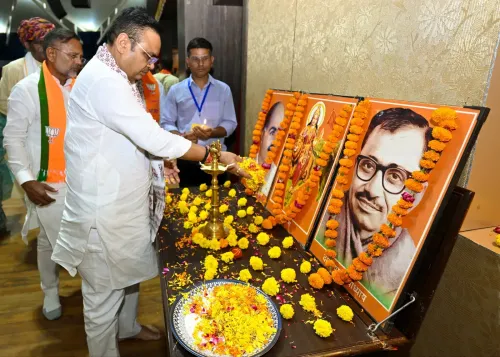
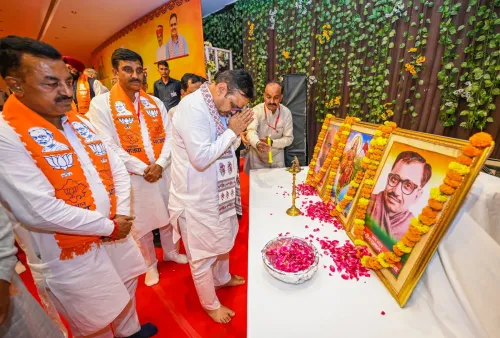
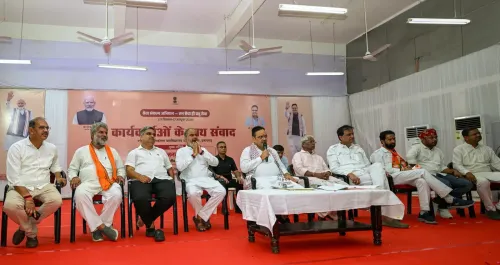
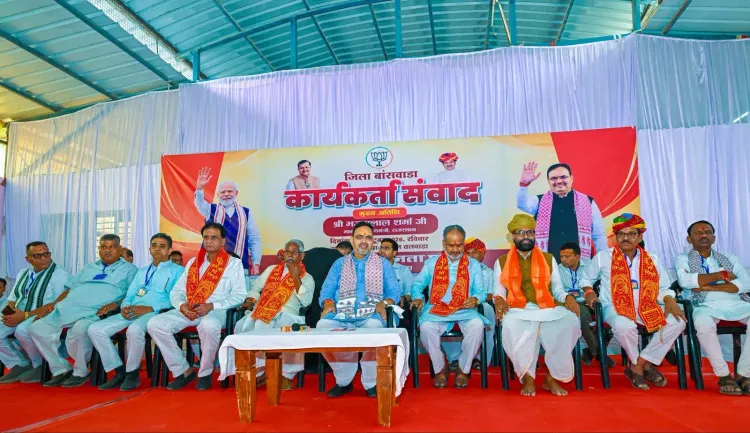
With gram panchayat elections on the horizon, Rajasthan Chief Minister Bhajan Lal Sharma travelled to Banswara district on Sunday, 18 October 2026 to sit with grassroots BJP workers — mapping strategy, sharpening booth-level organisation, and sending a clear signal that the party intends to fight the upcoming village-level polls from the ground up.
What the Banswara Meeting Was Actually About
CM Sharma's meeting was not a rally or a press conference — it was a closed-door session with karmatha karyakartas (dedicated ground workers), the kind of exercise that shapes election results long before a vote is cast. The discussion centred on three specific priorities: preparing the organisational machinery for the upcoming gram panchayat elections, strengthening public outreach in rural and tribal areas, and ensuring that welfare scheme benefits reach 'samaj ke antim vyakti tak' — the last person in society.
'Workers are the strength of the organisation,' Sharma wrote in his post. 'Their dedication and commitment to public service is our power. Through this collective effort, we must fulfil the resolve to empower gram panchayats, accelerate development in rural areas, and deliver the benefits of welfare schemes to the last person in society.'
Banswara's Weight in Rajasthan's Tribal Belt
Banswara is not incidental to this outreach — it is among Rajasthan's most significant tribal districts, with a predominantly Scheduled Tribe population concentrated in the southern belt of the state. For the BJP, consolidating this territory ahead of panchayat polls carries real strategic value: local body elections often serve as a barometer for how a ruling party's governance is landing on the ground, particularly in communities that have historically been harder to reach with state-delivered welfare.
Joining CM Sharma at the meeting were Tribal Area Development and Home Defence Minister Babulal Kharadi and Revenue and Colonisation Minister Hemant Meena, alongside other elected representatives and prominent local figures. The presence of two cabinet ministers with direct relevance to tribal and land-rights issues — Kharadi's portfolio covers tribal development, Meena's covers revenue — signals that the Banswara session was as much about governance delivery as it was about electoral preparation.
BJP Rajasthan's Post-2023 Playbook
The BJP swept to power in Rajasthan's December 2023 assembly elections with 115 seats, installing Sharma as Chief Minister. Since then, the party's state unit has leaned heavily on ministerial-level worker meetings to extend its reach into districts — particularly tribal ones — where booth-level presence and last-mile scheme delivery remain ongoing challenges.
Gram panchayat elections in Rajasthan are held every five years under the Rajasthan Panchayati Raj Act, and the state election commission's notification of the schedule will determine how quickly Sunday's groundwork must convert into a full campaign machinery. What is already clear is that the BJP is not waiting for the schedule — it is building.
For a party that won a state on development promises, the panchayat tier is where those promises either hold up or fall apart. Sunday's meeting in Banswara was the CM's way of making sure they hold up — one village at a time.
Point of View
The party signals that tribal Rajasthan is a priority zone, not an afterthought. Panchayat elections also function as a mid-term referendum on the ruling government's rural delivery record, meaning the stakes for the BJP extend well beyond village councils. The meeting's emphasis on reaching 'the last person in society' is both a governance commitment and an electoral proposition — and voters in Banswara will judge whether the two align.
NationPress
18 Oct 2026
Frequently Asked Questions
Why did CM Bhajan Lal Sharma visit Banswara?
CM Bhajan Lal Sharma visited Banswara on 18 October 2026 to meet BJP ground workers and strategise for the upcoming gram panchayat elections, focusing on strengthening rural organisation and public outreach in the tribal district.
When are the gram panchayat elections in Rajasthan?
The exact schedule for Rajasthan's upcoming gram panchayat elections is yet to be notified by the Rajasthan State Election Commission. These elections are held every five years under the Rajasthan Panchayati Raj Act.
Who is Babulal Kharadi?
Babulal Kharadi is the Rajasthan cabinet minister holding the Tribal Area Development and Home Defence portfolio in CM Bhajan Lal Sharma's BJP government, and he was present at the Banswara worker meeting on 18 October 2026.
What is Banswara known for in Rajasthan politics?
Banswara is a predominantly Scheduled Tribe district in southern Rajasthan, making it a key constituency in any political outreach targeting tribal communities and rural welfare delivery.
How many seats did BJP win in the 2023 Rajasthan assembly elections?
The BJP won 115 seats in the December 2023 Rajasthan assembly elections, forming the government with Bhajan Lal Sharma as Chief Minister.