Bihar CM Office flags rail link between two sacred sites
Synopsis
The Chief Minister's Office of Bihar announced on 18 November 2026 that rail connectivity between two sacred sites will provide major relief to pilgrims and general travellers, continuing the state's focus on linking religious destinations through rail expansion.
Key Takeaways
Bihar's CMO announced a rail link between two unnamed sacred sites on 18 November 2026 .
The connection is intended to ease travel for pilgrims and ordinary passengers .
Indian Railways is the national agency responsible for executing such corridor projects.
Eastern India and Bihar have been a sustained focus of central and state rail-expansion efforts.
Specific site names, project budget, and inauguration timeline have not yet been disclosed.
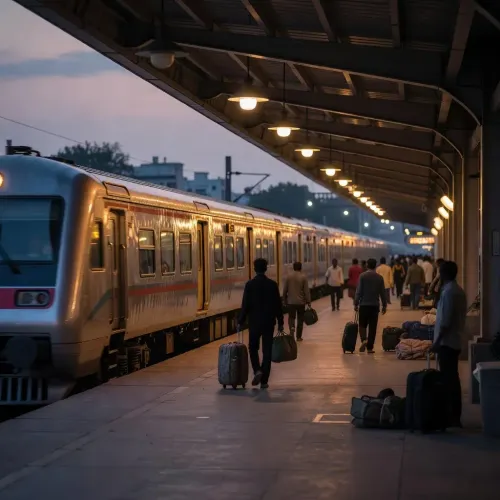
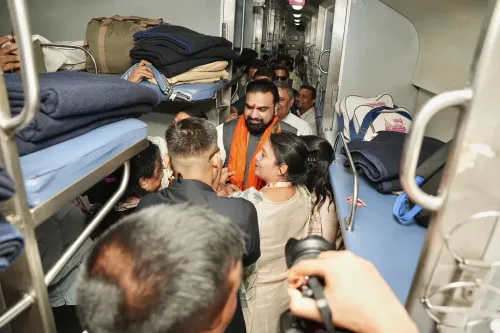
A new rail connection between two sacred sites in Bihar is set to ease travel for pilgrims and ordinary passengers alike, the Chief Minister's Office of Bihar signalled on Wednesday, 18 November 2026 — underscoring the state's push to weave religious destinations into the broader rail network of eastern India.
The post, a reply from the official CMO handle, stated: 'in donon pavitra sthalon ke beech rail sampark sthapit hone se shraddhaaluon evam aam yatriyom ko aavagaman mein badi suvidha milegi' — 'establishing rail connectivity between these two sacred places will provide great convenience to pilgrims and ordinary travellers in their movement.'
Bihar's pattern of linking pilgrimage towns by rail
The announcement fits a well-established playbook: successive Bihar governments have periodically championed rail projects that stitch together the state's dense cluster of religious and heritage destinations. Indian Railways, as the national operator, remains the executing agency for any such corridor, with route alignment, land acquisition, and project timelines determined through coordination between the central and state governments.
Eastern India — and Bihar in particular — has been a consistent focus of rail-expansion efforts, partly because the region hosts some of the subcontinent's most-visited pilgrimage circuits and partly because baseline connectivity has historically lagged behind western and southern states.
What pilgrims and passengers stand to gain
Direct rail access between sacred sites typically reduces journey times dramatically, cutting out multi-modal hops involving shared auto-rickshaws, buses, and long walks that can turn a day-trip into an overnight ordeal. For elderly pilgrims and those travelling with families, a dedicated or improved rail link is not a convenience — it is a threshold question of access.
Broader passenger traffic also benefits: improved connectivity on pilgrimage corridors tends to stimulate local economies, expand hotel and hospitality capacity, and draw in tourism investment along the route.
The specific sites, the project's budget, and any inauguration timeline have not been disclosed in the post. Official details from Indian Railways or the Bihar government are awaited.
Bihar's sacred geography is vast — from Bodh Gaya and Rajgir to Vaishali and Darbhanga — and every new rail thread woven across it carries the weight of millions of annual journeys. The question now is which two points on that map are about to get closer.
Point of View
Though brief, signals that a rail project linking two pilgrimage destinations is at a stage worth flagging publicly — often a precursor to a formal inauguration announcement. For Bihar's government, such connectivity projects serve a dual purpose: delivering tangible infrastructure to a devout electorate while aligning the state with the Centre's broader pilgrimage-tourism push. The absence of specifics — no site names, no cost, no timeline — suggests the announcement may be tied to a larger event or joint declaration yet to be formalised. Pilgrimage infrastructure has become a potent political signifier in India, and Bihar, home to some of Buddhism's and Hinduism's holiest ground, is acutely aware of that currency.
NationPress
18 Nov 2026
Frequently Asked Questions
Which two sacred sites in Bihar will be connected by the new rail link?
The CMO's post does not name the two sites. Official details from Indian Railways or the Bihar government are yet to be disclosed.
Who is responsible for building the Bihar pilgrimage rail corridor?
Indian Railways, as the national rail operator, is the executing agency for such projects, in coordination with the Bihar state government.
How will the rail link help pilgrims in Bihar?
Direct rail connectivity between sacred sites reduces journey times and eliminates the need for multiple modes of transport, making access easier especially for elderly pilgrims and families.
When will the Bihar sacred-site rail link be inaugurated?
No inauguration date has been announced. The timeline and project details are awaited from Indian Railways and the Bihar government.
What is Bihar's track record on pilgrimage rail projects?
Bihar governments have consistently championed rail projects linking religious and heritage sites, fitting within wider central efforts to upgrade connectivity in eastern India.