Bihar CM Office: Tiranga Symbolises India's Unity and Sovereignty

Synopsis
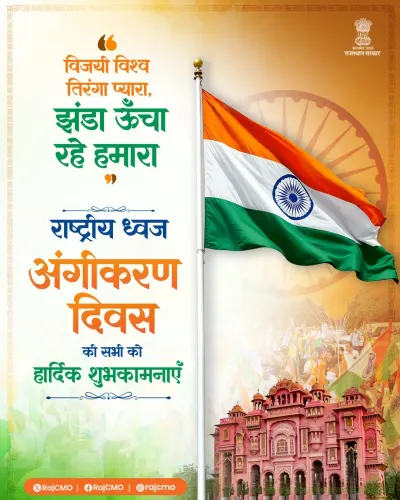
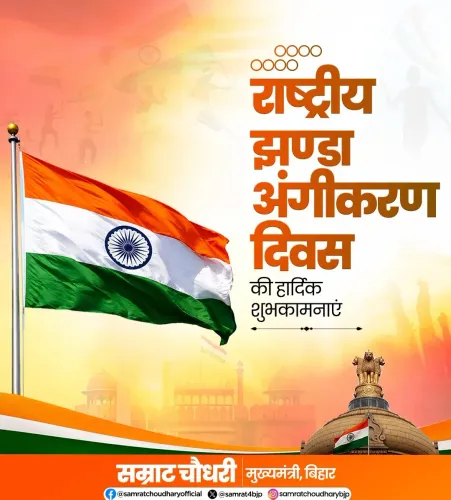
The Chief Minister's Office of Bihar, ahead of Independence Day 2026, issued a statement calling the Tiranga a symbol of India's integrity, sovereignty, unity, and democracy, urging citizens — especially youth — to protect its dignity and honour.
Key Takeaways
The Chief Minister's Office of Bihar posted the message on 10 August 2026 , days before Independence Day.
The Tiranga was described as a symbol of India's integrity, sovereignty, unity, democracy, and national self-respect .
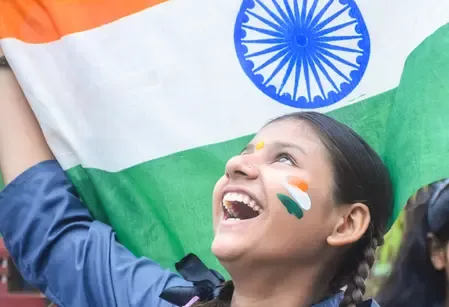
The statement specifically called on the younger generation to bear the responsibility of protecting the flag's dignity.
India's national flag was adopted by the Constituent Assembly on 22 July 1947 .
The Flag Code of India was amended in 2002 to allow public display of the Tiranga by all citizens.
Flag-hoisting ceremonies are scheduled across Bihar and other states on 15 August 2026 .
As Independence Day 2026 draws near, the Chief Minister's Office of Bihar amplified a message that cuts to the heart of national identity — the Tiranga is not just a flag; it is the living emblem of everything the republic stands for.
The post quoted an address in which the speaker described the tricolour as a symbol of India's integrity, sovereignty, unity, democracy, and national self-respect. The message placed the responsibility of protecting the flag's dignity squarely on every citizen — and especially on the younger generation.
Why the Tiranga carries constitutional weight
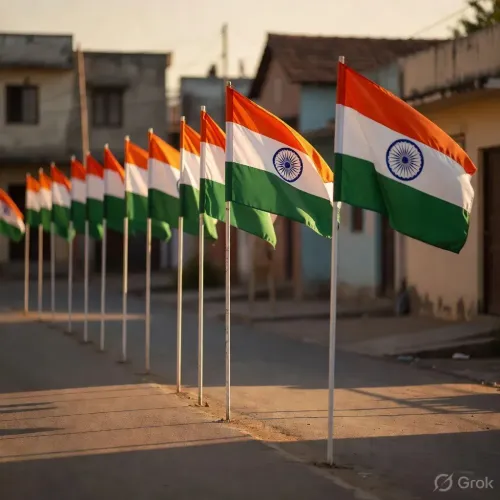
The national flag was adopted by the Constituent Assembly on 22 July 1947, just weeks before independence. Its three bands of saffron, white, and green — anchored by the Ashoka Chakra — were chosen to represent courage, peace, and prosperity respectively. The Flag Code of India, amended in 2002, later opened its public display to ordinary citizens, turning the Tiranga from a largely official symbol into one every Indian could fly.
A message aimed at Bihar's youth ahead of 15 August
The timing is deliberate. With 15 August 2026 flag-hoisting ceremonies scheduled across Bihar and every other state, official accounts have ramped up patriotic messaging — a pattern consistent with Independence Day and Republic Day communications from government offices nationwide. The Bihar CMO's emphasis on youth duty signals an intent to frame the occasion not as passive celebration, but as active civic responsibility.
The call to guard the flag's honour — 'tiraṅge kī garimā evaṃ sammān kī rakṣā karnā' (to protect the dignity and respect of the Tiranga) — is a reminder that constitutional symbols derive their power from the citizens who uphold them, generation after generation.
On the eve of another Independence Day, Bihar's official voice is asking the same question every republic must periodically ask itself: who teaches the next generation what the flag actually means?
Point of View
The statement taps into a broader policy thrust — visible across multiple states — of embedding civic nationalism in younger demographics. The invocation of 'national self-respect' alongside formal constitutional values like sovereignty and democracy suggests an effort to fuse emotional patriotism with institutional duty. Whether this translates into tangible civic programming or remains ceremonial rhetoric will be the real measure of its intent.
NationPress
10 Aug 2026
Frequently Asked Questions
What did the Bihar CM Office say about the Tiranga?
The Bihar Chief Minister's Office shared a statement describing the Tiranga as a symbol of India's integrity, sovereignty, unity, democracy, and national self-respect, and called on citizens — especially youth — to protect its dignity.
When was India's national flag adopted?
India's national flag, the Tiranga, was adopted by the Constituent Assembly on 22 July 1947 , weeks before independence on 15 August 1947.
What is the Flag Code of India?
The Flag Code of India governs the display and use of the national flag. It was amended in 2002 to allow all citizens to fly the Tiranga publicly, not just on official occasions.
Why is the Bihar government talking about the Tiranga in August 2026?
The statement comes ahead of Independence Day on 15 August 2026 , when flag-hoisting ceremonies are held across Bihar and the country. Government offices routinely issue patriotic messages around this period.
What responsibility does the Bihar CMO statement place on youth?
The statement specifically identifies the younger generation as having a special duty to protect the dignity and honour of the national flag, framing it as a civic and national responsibility.