Bihar CM Office Orders 15-km Checkpoint Vigil to Curb Smuggling
Synopsis
The Chief Minister's Office of Bihar on 3 July 2026 directed security agencies to enforce surveillance within a 15-km radius of all border checkposts and hold regular coordination meetings among district administration, police, and the BSF to prevent fertiliser and narcotics smuggling along the Bihar-Nepal frontier.
Key Takeaways
The Chief Minister's Office of Bihar issued directives on 3 July 2026 for border security tightening.
Surveillance is mandated within a 15-kilometre radius of every checkpost, extending beyond the checkpoint perimeter itself.
Authorities are directed to remain vigilant about suspicious activities in border zones.
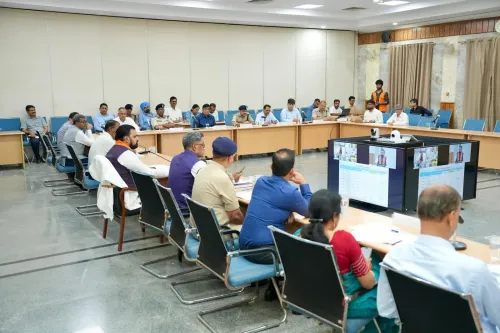
Regular coordination meetings are to be held among district administration , state police , and the Border Security Force .
The directives target two specific threats: fertiliser diversion and narcotics trafficking across the Bihar-Nepal border .
The move aligns with a broader pattern of north-Indian states periodically reinforcing inter-agency frameworks along open borders with Nepal .
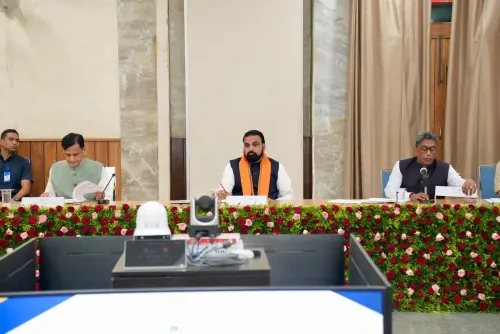
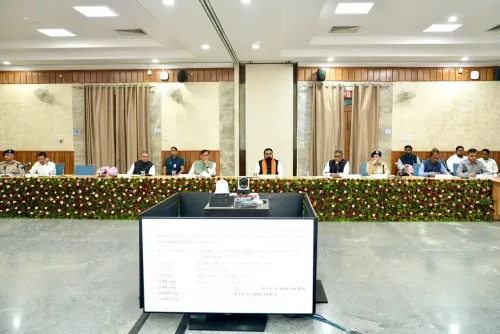
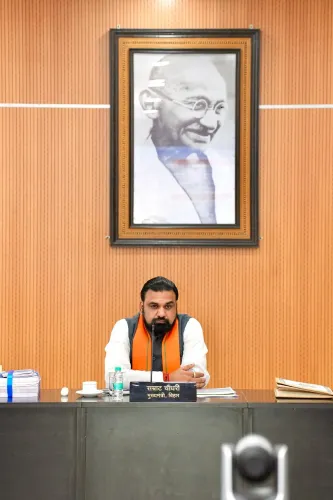
The Chief Minister's Office of Bihar on Friday, 3 July 2026 issued directives for heightened surveillance within a 15-kilometre radius of all checkposts along the state's border, with a specific focus on preventing the smuggling of fertilisers and narcotics and strengthening coordination among district administration, police, and the Border Security Force (BSF).
Context
The official post from @officecmbihar states that instructions were issued to 'ensure monitoring within a 15-km perimeter of all checkposts and maintain vigilance on suspicious activities' (सभी चेकपोस्टों से 15 किमी की परिधि में मॉनिटरिंग सुनिश्चित करने तथा संदिग्ध गतिविधियों पर सतर्कता बरतने). The directive also calls for 'regular coordination meetings among the district administration, police, and the Border Security Force for the prevention of fertiliser and narcotic trafficking' (उर्वरक एवं मादक पदार्थों की तस्करी की रोकथाम के लिए जिला प्रशासन, पुलिस एवं सीमा सुरक्षा बल के बीच नियमित समन्वय बैठकें).
The Bihar-Nepal border operates under an open-border arrangement, making it one of the more porous international frontiers in the country. Cross-border movement of people and goods is frequent, and the diversion of subsidised fertilisers as well as the movement of narcotics have been persistent concerns for state and central agencies alike.
Policy Backdrop
The Bihar government under Chief Minister Nitish Kumar has periodically issued inter-agency coordination instructions along the Nepal frontier to address smuggling. These latest directives represent a geographic tightening of existing vigilance protocols by mandating surveillance not just at the checkpost itself but across a defined 15-km radius.
State governments sharing open borders with Nepal — including those in Uttar Pradesh and Uttarakhand — routinely strengthen checkpoint monitoring in line with central guidance on border management. The emphasis on regular, structured coordination meetings between district administration, police, and the BSF mirrors similar frameworks adopted elsewhere along the northern frontier.
Stakeholders and Impact
The directives directly affect residents and administrative machinery in Bihar's border districts, which include Sitamarhi, Madhubani, Supaul, Araria, Kishanganj, and West Champaran, among others. Farmers and traders operating near the border will face increased scrutiny, while security personnel from the BSF and state police will be required to participate in regular joint meetings.
The move is also significant for communities where subsidised fertilisers meant for Indian farmers are at risk of being diverted across the border for profit. Curbing such diversion has both an economic and a food-security dimension for the state's large agrarian population.
What's Next
The effectiveness of the directive will depend on whether the mandated coordination meetings are convened on a regular and documented basis. Observers will watch for any subsequent data from the Bihar government on seizure volumes, arrests, or formal inter-agency meeting schedules that demonstrate follow-through on these instructions.
Should the 15-km monitoring protocol be operationalised consistently, it could serve as a model for other border districts in the state and inform broader central guidelines on managing open-border vulnerabilities.
Point of View
State police, and district administration have historically undermined enforcement. Politically, the announcement reinforces Nitish Kumar's long-cultivated law-and-order image ahead of a period when border governance is under heightened national scrutiny. Whether the directive translates into measurable outcomes will depend on implementation fidelity — a gap that has dogged similar announcements in the past.
NationPress
2 Oct 2026
Frequently Asked Questions
Why is the Bihar government increasing surveillance near border checkposts?
The Bihar government has directed 15-km radius monitoring around all checkposts to prevent the smuggling of subsidised fertilisers and narcotics across the open Bihar-Nepal border, where cross-border diversion has been a persistent problem.
What is the role of the BSF in Bihar's border security?
The Border Security Force is a central armed police force deployed on India's international borders; in Bihar, it works alongside state police and district administration to prevent cross-border smuggling and maintain security along the Nepal frontier.
Which districts in Bihar share a border with Nepal?
Several Bihar districts share a border with Nepal, including Sitamarhi, Madhubani, Supaul, Araria, Kishanganj, and West Champaran, all of which are affected by open-border smuggling concerns.
What is fertiliser smuggling on the Bihar-Nepal border?
Fertiliser smuggling refers to the diversion of subsidised fertilisers meant for Indian farmers across the Nepal border, where they can be sold at a profit, depriving Indian farmers of their entitled supply and causing economic loss.
Has Bihar issued such border coordination directives before?
Yes, the Bihar government under Chief Minister Nitish Kumar has periodically issued instructions for inter-agency coordination along the Nepal frontier; the latest directive tightens the geographic scope by mandating a 15-km surveillance perimeter around checkposts.