BJP's Government Formation in Bengal is Certain, Claims Assam CM Sarma

Synopsis
Assam CM Himanta Biswa Sarma is adamant that the BJP will secure victory in the upcoming West Bengal Assembly elections, confidently asserting a 100% guarantee of their government formation.
Key Takeaways
Assam CM Sarma claims the BJP will definitely form the government in West Bengal.
The elections will occur in two phases, a significant change from previous multi-phase formats.
First phase polling is scheduled for April 23, with counting on May 4.
The rejection of the women's reservation bill has drawn strong political reactions.
This election represents a noteworthy shift in West Bengal's voting pattern.
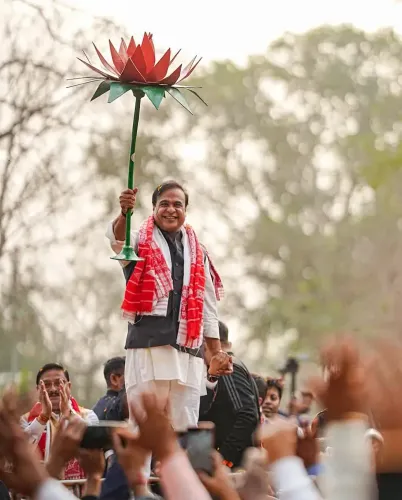
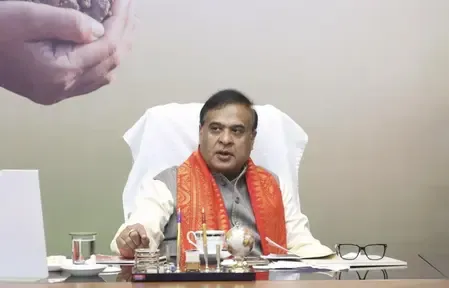
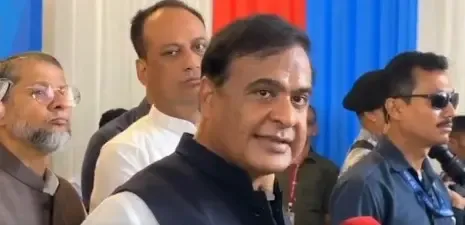
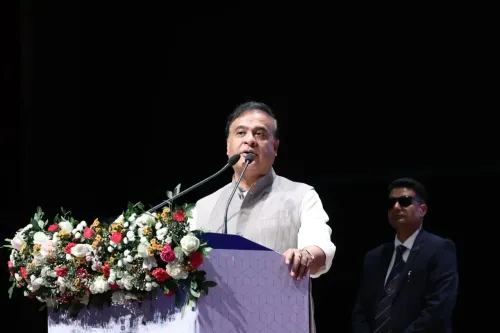
Gourbazar, April 20 (NationPress) As the West Bengal Assembly elections draw near, Assam Chief Minister Himanta Biswa Sarma confidently declared on Monday that the BJP is poised to establish the government in the state this time around. He emphasized his belief in the party's potential, affirming that the result is "100 percent confirmed".
While campaigning for the BJP in Gaur Gourbazar, located in the West Bardhaman district, CM Sarma stated, "This time BJP is going to form a government, 100 percent confirmed."
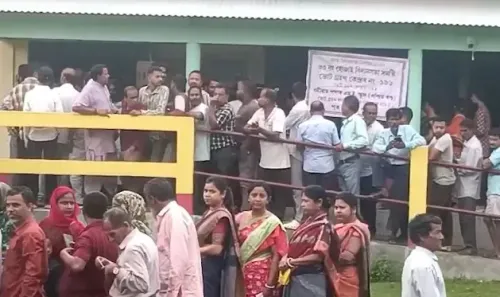
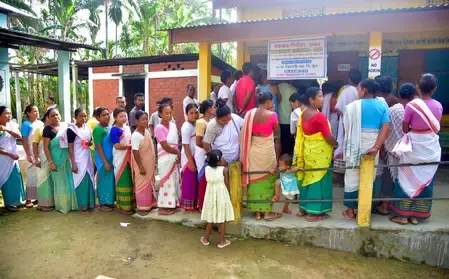
The upcoming elections in West Bengal will take place in a streamlined two-phase format, covering all 294 constituencies—a notable change from the multi-phase polling typical in previous elections. The first phase of voting is set for April 23, with the second phase following on April 29. Vote counting is scheduled for May 4.
The first phase will see polling conducted across 152 constituencies in 16 districts, while the remaining 142 constituencies in seven districts will vote in the second phase, concluding the electoral process for the state.
This year's election signifies a major alteration in West Bengal’s electoral landscape. After a single-phase election in 2001, the state has predominantly engaged in multi-phase polling, including the extensive eight-phase election conducted in 2021. The decision to limit the voting to just two phases is attributed to improved administrative planning and enhanced security protocols.
In response to the Lok Sabha's rejection of the Constitution (131st Amendment) Bill, CM Sarma made pointed political comments, stating, "Women are very sad, and they will take revenge on Mamata Banerjee, the DMK, and the Congress."
The proposed bill, concerning women's reservation, did not secure the required two-thirds majority in the Lok Sabha, with 298 Members of Parliament voting in favor and 230 against it.
Following this failure, two additional bills, including one addressing delimitation and increasing Lok Sabha seats, were not brought to a vote, as the government indicated they were closely tied to the women's reservation legislation. The Lok Sabha debate saw the Centre advocating strongly for 33 percent reservation for women in both Parliament and state Assemblies.
Point of View
The assertion by Assam's CM reflects a significant moment in West Bengal's political narrative. While confidence in party prospects is high, the actual outcome will depend on voter sentiment and turnout in the upcoming elections.
NationPress
19 Sept 2026
Frequently Asked Questions
What is the date for the first phase of voting in West Bengal?
The first phase of voting in West Bengal will take place on April 23.
How many constituencies will vote in the second phase?
In the second phase, 142 constituencies across seven districts will go to the polls.
What was the response to the rejection of the women's reservation bill?
CM Sarma expressed that women are disappointed and indicated potential political repercussions for Mamata Banerjee and other parties.
Why is the 2023 election format significant?
This election marks a departure from the multi-phase polling typically seen, with a streamlined two-phase voting process implemented.
What is the date for vote counting?
Counting of votes is scheduled for May 4.