BJP Unveils 2012 US Directives in Response to Criticism Over Russian Oil Deal

Synopsis
As political tensions rise over India's oil dealings with Russia, the BJP counters Opposition claims by revealing directives from US officials that pressured India to limit Iranian oil imports in 2012. This historical context adds fuel to the ongoing debate about foreign influence on India's energy policies.
Key Takeaways
BJP's counterattack: The BJP utilizes historical US directives to address current criticisms.
Opposition's stance: The Opposition claims the Indian government has surrendered to foreign influence.
Political dynamics: Ongoing tensions highlight the complexities of India's foreign oil policies.
New Delhi, March 6 (NationPress) Facing intense accusations of yielding to foreign powers, the Bharatiya Janata Party (BJP) responded on Friday to the Opposition's criticisms regarding the crude oil agreement by unveiling historical 'instructions' from two previous US Secretaries of State, including Hillary Clinton. These directives urged several nations, including India, to significantly reduce their oil imports from Iran.
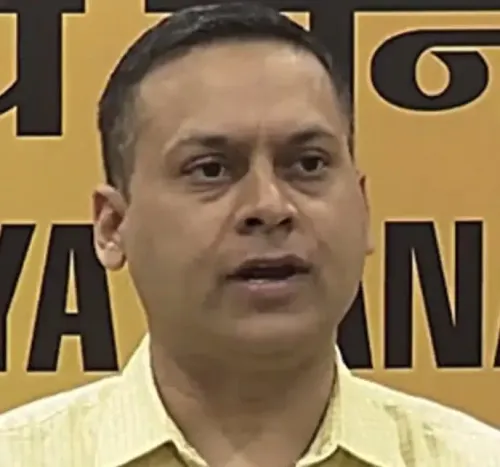
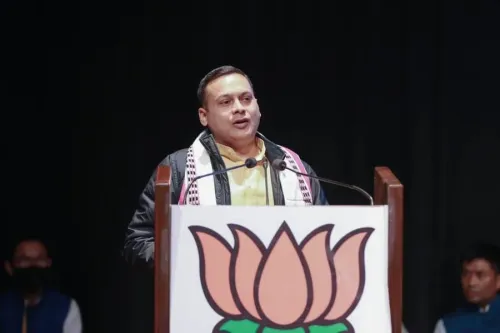
BJP IT cell leader Amit Malviya took to social media to highlight how, in 2012 (under the Congress-led UPA government), seven Southeast Asian countries, including India, curtailed their crude oil purchases from Iran for a period of 180 days, seemingly at the behest of the United States, with threats of sanctions looming if they failed to comply. He also provided archival references to these directives from the US Secretary of State during 2012 and 2013 to reinforce his argument.
Malviya's revelations emerge amid a fierce political uproar in response to allegations that the Indian government has capitulated to the Trump administration by acquiring lower-cost crude oil from Russia, a nation historically regarded as a reliable ally.
Following a statement from US Treasury Secretary Scott Bessent, who announced a temporary 30-day waiver allowing Indian refiners to procure Russian oil due to the instability in the Middle East, the Opposition intensified its assault on Prime Minister Narendra Modi and his administration. They characterized this as a 'complete surrender' by the Modi government, while the BJP retaliated by criticizing the Opposition for its past 'historical mistakes.' Various Congress members even circulated a video of Rahul Gandhi from a recent Parliament address, in which he asserted that India's oil acquisitions are now dictated by the United States and could be curtailed at any moment.
In defense, Amit Malviya shared two instances from 2012 and 2013, wherein the US Secretary of State unilaterally mandated reductions in oil deliveries from Iran to at least 11 nations, including India.
Malviya referenced a press statement from June 11, 2012, by then US Secretary of State Hillary Clinton, stating, “Today, I have determined that seven economies—India, Malaysia, Republic of Korea, South Africa, Sri Lanka, Turkey, and Taiwan—have significantly decreased their crude oil imports from Iran. They join the 11 countries for which I made this determination in March. Consequently, I will report to Congress that sanctions as per Section 1245(d)(1) of the National Defense Authorization Act for Fiscal Year 2012 will not be enforced against their financial institutions for a potentially renewable period of 180 days.”
In another tweet, he quoted John Kerry, then US Secretary of State in 2013, stating, “I am pleased to announce that China, India, Malaysia, Republic of Korea, Singapore, South Africa, Sri Lanka, Turkey, and Taiwan have once again qualified for an exemption from sanctions outlined in section 1245 of the National Defense Authorization Act (NDAA) for Fiscal Year 2012, based on their substantial reductions in crude oil purchases from Iran or for maintaining those purchases at zero.”
Uncovering these 'uncomfortable truths' from the past is likely to escalate the ongoing political dispute between the BJP and the Opposition.
The Opposition argues that the Indian government's foreign policy failures have enabled the US to dictate terms to India. However, the BJP's recent disclosures serve as a strong counter-narrative, reflecting the Opposition's previous 'duplicity.'
Point of View
This unfolding political drama illustrates the complexities of India's foreign policy, especially concerning energy imports. The BJP's attempts to highlight historical precedents reflect a strategic maneuver to counteract the Opposition's criticisms, emphasizing the necessity of viewing current events through a broader historical lens.
NationPress
19 Sept 2026
Frequently Asked Questions
What did the BJP reveal about US directives?
The BJP disclosed that in 2012, the US mandated several countries, including India, to reduce crude oil imports from Iran, which they claim is relevant to current accusations regarding oil deals with Russia.
How did the Opposition react to the BJP's oil dealings?
The Opposition has characterized the BJP's acquisition of cheaper Russian oil as a 'total surrender' to foreign powers, criticizing the government's foreign policy.
What historical context is relevant to the current oil debate?
The BJP referred to directives from US Secretaries of State in 2012 and 2013 that pressured countries to limit their Iranian oil imports, aiming to counter the Opposition's narrative.
Who are the key political figures involved in this dispute?
Key figures include Prime Minister Narendra Modi, BJP IT cell chief Amit Malviya, and Congress leader Rahul Gandhi.
What is the significance of the 30-day waiver announced by the US?
The US Treasury Secretary announced a temporary waiver allowing Indian refiners to purchase Russian oil, which has intensified political tensions domestically.