Rajasthan local body polls: BJP wins unopposed in 25 civic bodies, Bharatpur mayor row erupts
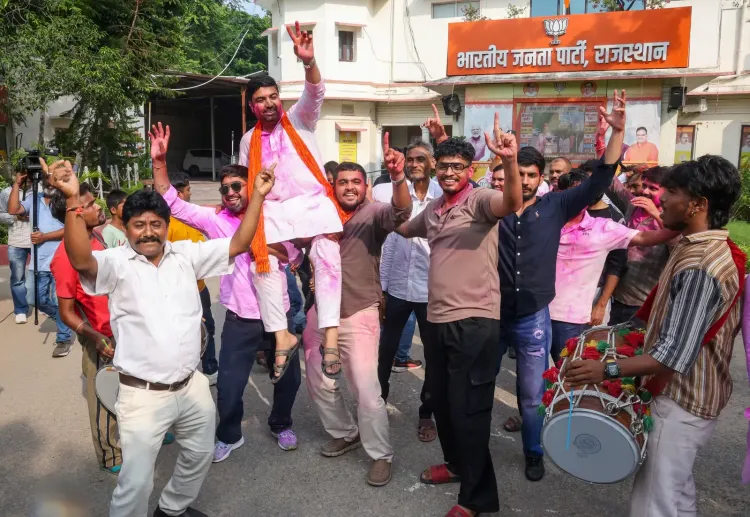
Synopsis
In a politically charged twist, the BJP has won the Bharatpur mayor's post unopposed — despite Independents holding the most seats in the 65-ward corporation. An Independent candidate's last-minute withdrawal, reportedly after a two-hour meeting with a state minister, has drawn sharp Congress allegations of coercion, turning what should have been an arithmetic contest into a governance controversy in Chief Minister Bhajan Lal Sharma's home district.
Key Takeaways
BJP candidates have been elected unopposed as mayors, chairpersons, or presidents in 25 urban local bodies across Rajasthan as of 18 September 2026 .
In Bharatpur Municipal Corporation , Independent candidates won the most seats ( 36 of 65 wards ), yet the BJP's Anuradha Singh is set to become mayor unopposed after rival Vichitra Singh withdrew her nomination.
Congress leaders Ashok Gehlot and Govind Singh Dotasra have alleged administrative pressure forced the withdrawal; the BJP has rejected the charge.
In Bhilwara Municipal Corporation , the BJP won a clear majority — 45 of 70 seats — and Jaswant Kanwar was elected mayor unopposed.
Across 309 urban local bodies , the BJP claims to be the largest party in 148 bodies ; the Congress in 104 .
Bharatpur is the home district of Chief Minister Bhajan Lal Sharma , amplifying the political significance of the mayoral outcome.
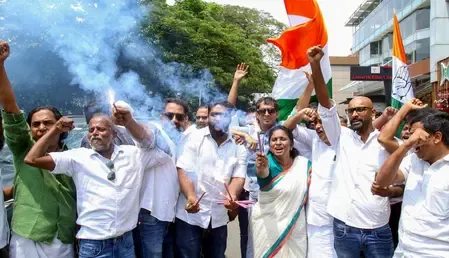
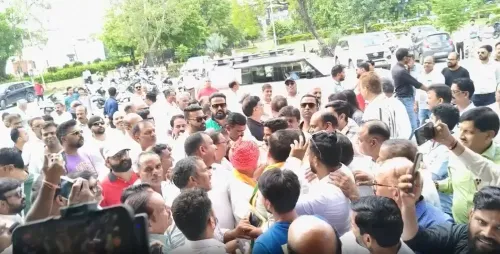
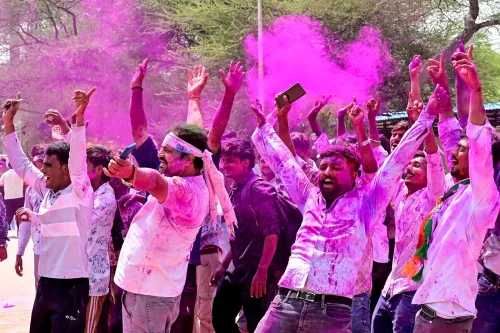
The Bharatiya Janata Party (BJP) has claimed unopposed victories for its candidates as mayors, chairpersons, sabhapatis, and presidents in 25 urban local bodies across Rajasthan on 18 September 2026, following the conclusion of councillor elections in the state's 309 urban local bodies. The developments have thrust the Bharatpur Municipal Corporation into the political spotlight, with the Indian National Congress (Congress) alleging pressure was applied to force the withdrawal of a rival mayoral candidate.
The Bharatpur Equation
The Bharatpur Municipal Corporation, which covers 65 wards, produced a fractured verdict in the recent civic elections. Independent candidates emerged as the single largest group, winning 36 wards, while the BJP secured 20 seats and the Congress won 7. The Bahujan Samaj Party (BSP) and the Rashtriya Loktantrik Party (RLP) each won one seat. No party commanded an outright majority, making Independent councillors the pivotal bloc in the mayoral contest.
The BJP fielded Anuradha Singh as its mayoral candidate. Vichitra Singh, an Independent councillor from Ward 17, also entered the race, reportedly with Congress backing, setting the stage for a keenly contested election. However, on 18 September, Vichitra Singh withdrew her nomination, leaving Anuradha Singh as the sole candidate and effectively delivering the mayoral post to the BJP unopposed.
The outcome carries particular political weight because Bharatpur is the home district of Chief Minister Bhajan Lal Sharma. For the BJP to secure the mayor's post in a corporation where it won fewer seats than the Independent bloc is widely regarded as a significant political coup.
Circumstances of the Withdrawal
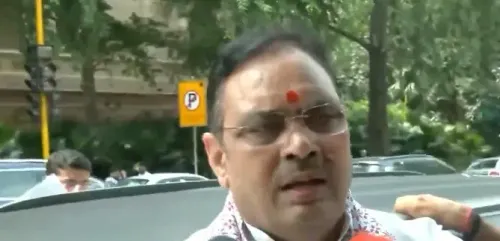
The conditions under which Vichitra Singh withdrew her nomination have become the central point of contention. According to reports, she met Rajasthan Minister of State for Home Jawahar Singh Bedham for a meeting that reportedly lasted nearly two hours before she withdrew her candidature. Bedham subsequently met Vichitra Singh's husband, former Bharatpur Mayor Shiv Singh Bhont.
After withdrawing, Vichitra Singh stated that she wanted to contribute to Bharatpur's development and had taken the decision with that objective in mind. The BJP has maintained its position that the withdrawal was a voluntary decision.
Congress Alleges Pressure, BJP Rejects Charge
Congress leaders have flatly rejected the BJP's account. Former Chief Minister Ashok Gehlot and Rajasthan Congress president Govind Singh Dotasra have separately alleged that the BJP government deployed administrative machinery to pressure the Independent candidate into stepping aside. Both leaders have questioned the circumstances surrounding the pre-withdrawal meetings. The BJP has rejected these allegations.
Notably, this is not the first time allegations of administrative influence over local body elections have surfaced in Rajasthan. The Bharatpur episode has reignited a broader debate about the use of state machinery in shaping civic election outcomes — a charge that parties across the political spectrum have levelled at incumbents before them.
Bhilwara: A Cleaner Sweep
The political arithmetic in the Bhilwara Municipal Corporation was markedly different. In the 70-ward body, the BJP won 45 seats — a clear majority. The Congress won 10 seats and Independent candidates secured 15. The party nominated Jaswant Kanwar, winner from Ward 9, as its mayoral candidate. Independent candidate Santosh Kanwar withdrew her nomination on 17 September, and the Congress did not field a mayoral candidate, resulting in Jaswant Kanwar being elected mayor unopposed.
Unlike Bharatpur, where the BJP had to navigate an Independent-majority council, the Bhilwara outcome reflected a straightforward numerical majority — the party's unopposed victory there is largely uncontested politically.
The Broader Picture Across Rajasthan
The BJP says its candidates have been elected unopposed to the top posts in 25 urban local bodies across the state. Across the 309 urban local bodies that went to polls, the BJP claims to have emerged as the largest party in 148 bodies, while the Congress was the largest party in 104. The remaining bodies have produced mixed outcomes, with Independents and smaller parties holding significant representation.
The results highlight a recurring pattern in Rajasthan's civic elections: Independent councillors frequently emerge as kingmakers in urban bodies, particularly in smaller towns and tier-2 cities. This comes amid the state government's stated push to consolidate its presence in local institutions ahead of future electoral cycles.
With the election of mayors, chairpersons, and presidents now underway, the focus across Rajasthan shifts from ward-level mandates to the political negotiations and alignments that will determine civic leadership for the coming term.
Point of View
The post-election courtship of Independents becomes a contact sport, and the line between persuasion and coercion is rarely policed. The BJP's ability to convert a numerical deficit — 20 seats against 36 for Independents — into an unopposed mayoral win is tactically impressive, but the circumstances invite scrutiny that the party will need to manage. Gehlot and Dotasra's allegations are politically motivated, but the reported two-hour pre-withdrawal meeting between the candidate and a state home minister is precisely the kind of optic that undermines confidence in local democratic processes. The deeper story from these results is about the structural fragility of Rajasthan's civic bodies: with Independents holding the balance in a significant number of councils, governance will depend less on electoral mandates than on the durability of post-poll alignments.
NationPress
18 Sept 2026
Frequently Asked Questions
Why is the BJP's Bharatpur mayoral win controversial?
The BJP won the Bharatpur mayor's post unopposed despite not holding the most seats — Independent candidates won 36 of 65 wards compared to the BJP's 20. The only other candidate, Independent councillor Vichitra Singh, withdrew her nomination on 18 September reportedly after a two-hour meeting with Rajasthan Minister of State for Home Jawahar Singh Bedham, prompting Congress leaders to allege political pressure.
What did Vichitra Singh say about her withdrawal?
Vichitra Singh stated that she withdrew her nomination because she wanted to contribute to Bharatpur's development and made the decision with that objective in mind. The BJP has maintained the withdrawal was voluntary; Congress has disputed this account.
How did Bhilwara's mayoral election differ from Bharatpur's?
In Bhilwara, the BJP held a clear majority, winning 45 of 70 corporation wards, making its mayoral win straightforward. In Bharatpur, the BJP had only 20 of 65 seats and relied on the withdrawal of the Independent candidate to secure the mayor's post unopposed.
How many urban local bodies did BJP win across Rajasthan?
According to the BJP, its candidates have been elected unopposed as chairperson, sabhapati, or president in 25 urban local bodies across Rajasthan. The party says it emerged as the largest party in 148 of the 309 urban local bodies that held elections, compared to 104 for the Congress.
Why does the Bharatpur result matter politically?
Bharatpur is the home district of Chief Minister Bhajan Lal Sharma, making any civic outcome there carry symbolic weight for the BJP government. Securing the mayoral post despite not having the largest councillor bloc is seen as a significant consolidation of the party's hold on local institutions in a politically sensitive constituency.