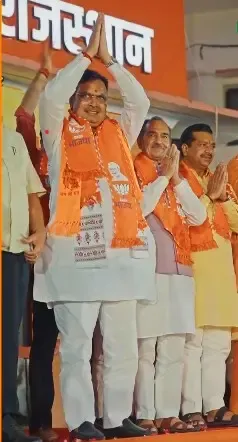
BJP wins 197 of 301 Rajasthan civic bodies, credits 'Bhajanlal Model'
Synopsis
The BJP has swept Rajasthan's urban local body elections, winning 197 of 301 declared civic bodies and crediting a new 'Bhajanlal Model' of direct CM involvement. But with a wafer-thin 0.94-percentage-point vote share lead over Congress and Independents acting as kingmakers in Pali, Ajmer, Alwar and Bharatpur, the picture is far more contested than the headline numbers suggest — and three crucial Mayoral elections in Jaipur, Jodhpur and Kota are still to come on 25 September.
Key Takeaways
BJP formed boards in 197 of 301 declared urban local bodies in Rajasthan ; Congress secured 94 .
The party credits the 'Bhajanlal Model' — CM Bhajan Lal Sharma's direct role in candidate selection, roadshow campaigns, and booth-level coordination.
Jodhpur division saw BJP win 35 of 41 bodies ( 87% ), a significant result in former CM Ashok Gehlot's stronghold.
BJP's statewide vote share was 35.18% against Congress's 34.24% — a gap of just 0.94 percentage points .
Independents were decisive in Pali, Ajmer, Alwar and Bharatpur , enabling BJP Mayoral wins despite Congress leading Councillor counts.
Mayoral elections in Jaipur, Jodhpur and Kota are scheduled for 25 September 2026 , leaving the final picture unsettled.
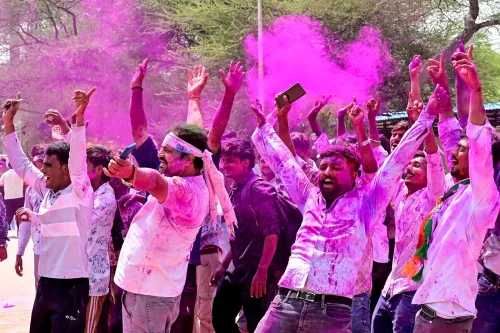
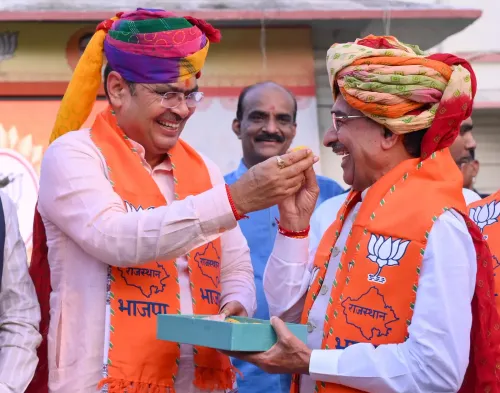
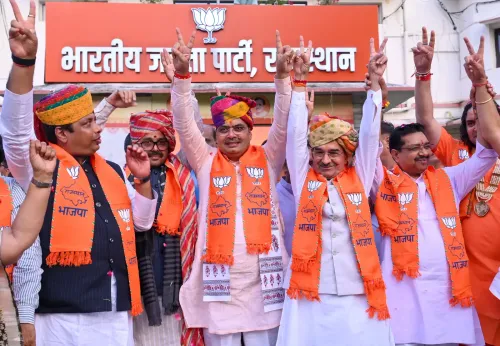
The Bharatiya Janata Party (BJP) on Tuesday, 22 September 2026, declared a commanding performance in Rajasthan's urban local body elections, claiming control of 197 of 301 civic bodies for which results had been declared — and attributing the sweep to what it calls the 'Bhajanlal Model', a campaign strategy built around grassroots issues, organisational coordination, and the direct involvement of Chief Minister Bhajan Lal Sharma. The Indian National Congress (Congress) formed boards in 94 bodies, with the remaining going to other parties and Independents.
What the Bhajanlal Model Entails
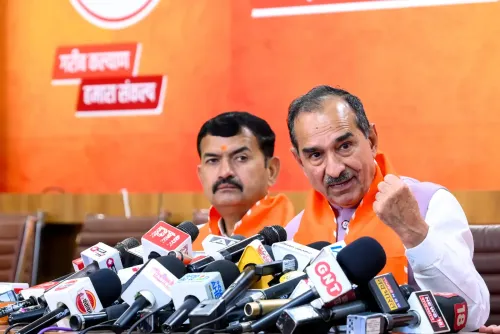
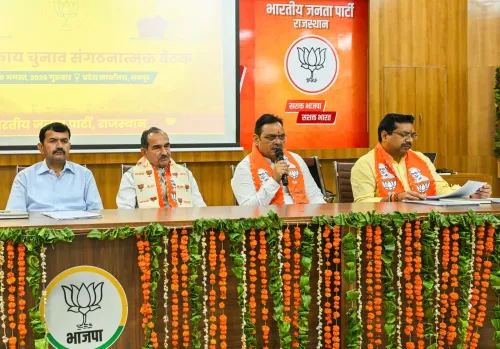
According to BJP officials, Chief Minister Sharma remained hands-on throughout the electoral cycle — from candidate surveys and ticket distribution to active campaigning in major cities. The party adopted a roadshow-style campaign model in Rajasthan's civic body elections for the first time, combining state government messaging with booth-level party machinery. State BJP President Madan Rathore described the results as reflecting public support for both Prime Minister Narendra Modi's national vision and the state government's governance agenda.
Division-Wise Performance
The BJP has highlighted several divisions as standout performances. In Jodhpur division, the party claimed 35 of 41 urban local bodies — an 87% success rate — with Congress securing five. This result carries particular symbolic weight: Jodhpur is the home turf of former Congress Chief Minister Ashok Gehlot. The BJP attributed its dominance there to booth-level preparation and a focus on local issues.
In Bharatpur division, which includes Chief Minister Sharma's home district, the BJP formed boards in 24 of 32 bodies. Ajmer division saw the BJP claim 36 of 52 bodies (approximately 69%). In Bikaner division, the BJP led in 24 of 37 bodies against Congress's 10. Udaipur division saw BJP form boards in 18 of 28 bodies, with Congress securing nine.
Unusual Results at Municipal Corporation Level
The corporation-level results produced several counter-intuitive outcomes driven by Independent MLAs and cross-party support. In Pali Municipal Corporation, Congress emerged as the largest party in Councillor elections with 29 seats to BJP's 21, yet BJP's Namita Bubakiya won the Mayoral contest with external support. In Bharatpur Municipal Corporation, Independents won 36 of 65 wards — a majority on their own — while BJP won 20 and Congress just seven. Despite this, BJP's Anuradha Singh was elected Mayor unopposed.
In Ajmer Municipal Corporation, Congress was the largest Councillor grouping, yet BJP's Anamika Sharma won the Mayoral election with Independent backing. Congress, however, retained Bikaner Municipal Corporation: Congress candidate Anil Kalla defeated BJP's Surendra Singh Shekhawat by 50 votes to 30. In Udaipur, BJP's Paras Singhvi defeated Congress's Poonam Kanwar by 55 votes to 25.
Statewide Vote Share and the Independent Factor
In the Councillor elections across 10,235 declared wards, BJP won 4,179 seats against Congress's 3,613 and Independents' 2,273. The statewide vote share gap was narrow: BJP at 35.18% versus Congress at 34.24% — a margin of just 0.94 percentage points. Independents proved decisive in multiple bodies, including Pali, Ajmer, Alwar, and Bharatpur, shaping board formations and Mayoral outcomes in ways that raw seat tallies do not reflect.
What Comes Next
The political picture of Rajasthan's urban local bodies is still evolving. Mayoral elections in Jaipur, Jodhpur, and Kota — along with the Kota Municipal Corporation and Suket Municipality board elections — are scheduled for 25 September 2026. In Jaipur, BJP's Sunil Kothari will face Congress's Sunita Mawar in the Mayoral contest. The outcome in these three major cities will determine the final contour of the BJP's civic mandate in the state.
Point of View
But the 0.94-percentage-point popular vote gap tells a more contested story — this was not a rout. What the results truly demonstrate is the decisive role of Independents: in Pali, Ajmer, Alwar and Bharatpur, BJP won Mayoral contests despite trailing in Councillor seats, entirely because of Independent support it was able to marshal. The 'Bhajanlal Model' label is a political branding exercise, but the underlying mechanics — tight CM control over ticket selection and a roadshow campaign format — do represent a structural departure from the decentralised approach that cost BJP in earlier urban cycles. The real test comes on 25 September, when Jaipur, Jodhpur and Kota go to the Mayoral vote: losing any of these three symbolic cities would puncture the narrative significantly.
NationPress
22 Sept 2026
Frequently Asked Questions
What were the results of the Rajasthan urban local body elections 2026?
The BJP emerged as the largest party, forming boards in 197 of 301 declared urban local bodies, while Congress secured 94. In the Councillor elections across 10,235 wards, BJP won 4,179 seats against Congress's 3,613 and Independents' 2,273.
What is the 'Bhajanlal Model' that BJP is crediting for its Rajasthan civic poll performance?
The 'Bhajanlal Model' refers to a BJP campaign strategy centred on Chief Minister Bhajan Lal Sharma's direct involvement — from candidate surveys and ticket distribution to roadshow-style campaigning and booth-level coordination. The party says it deployed this model in Rajasthan's civic elections for the first time.
How did BJP perform in Jodhpur division, and why does it matter?
BJP claimed 35 of 41 urban local bodies in Jodhpur division, citing an 87% success rate. The result is politically significant because Jodhpur is the home turf of former Congress Chief Minister Ashok Gehlot, making BJP's dominance there a symbolic as well as numerical win.
When are the remaining Mayoral elections in Rajasthan scheduled?
Mayoral elections in Jaipur, Jodhpur and Kota — as well as board elections for Kota Municipal Corporation and Suket Municipality — are scheduled for 25 September 2026. In Jaipur, BJP's Sunil Kothari will contest against Congress's Sunita Mawar.
What role did Independents play in Rajasthan's civic poll outcomes?
Independents proved decisive in multiple municipal corporations. In Bharatpur, they won 36 of 65 wards outright, yet BJP's candidate was elected Mayor unopposed. In Pali and Ajmer, BJP won Mayoral contests despite Congress leading Councillor counts, aided by Independent support.