Rajasthan civic poll results: BJP leads seats, but 0.94% vote gap with Congress signals 2028 battle
Synopsis
The BJP won more seats in Rajasthan's urban local body elections, but a vote share gap of just 0.94 percentage points over Congress — and 145 of 309 civic bodies without a clear majority — means the real contest is just beginning. With Independent councillors now holding the balance in cities like Jodhpur, the post-poll scramble could shape political momentum heading into the 2028 Assembly elections.
Key Takeaways
BJP secured 35.30% of the vote against 34.36% for Congress — a gap of just 0.94 percentage points .
BJP won clear majorities in 85 civic bodies; Congress in 45 ; 145 of 309 urban local bodies have no clear majority.
Independent candidates collectively polled 27.47% of the vote and hold the balance of power in hung bodies.
In Jodhpur municipal corporation, BJP and Congress each won 44 councillors , leaving Independents as kingmakers.
BJP holds majorities in Jaipur , Kota , Udaipur , and Bhilwara corporations; Congress controls Bikaner .
Results are being read as an early indicator — and a warning — ahead of the 2028 Rajasthan Assembly elections .
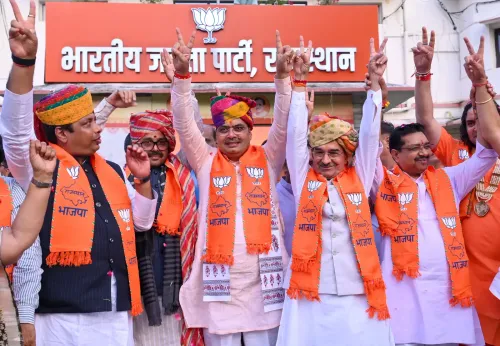
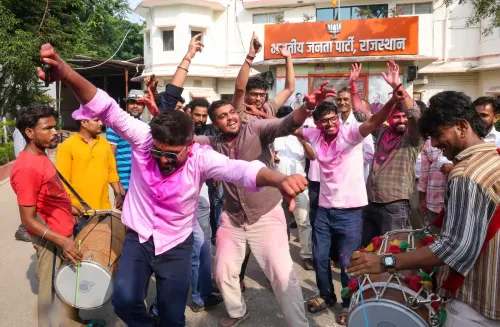
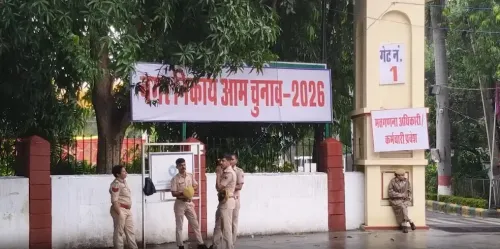
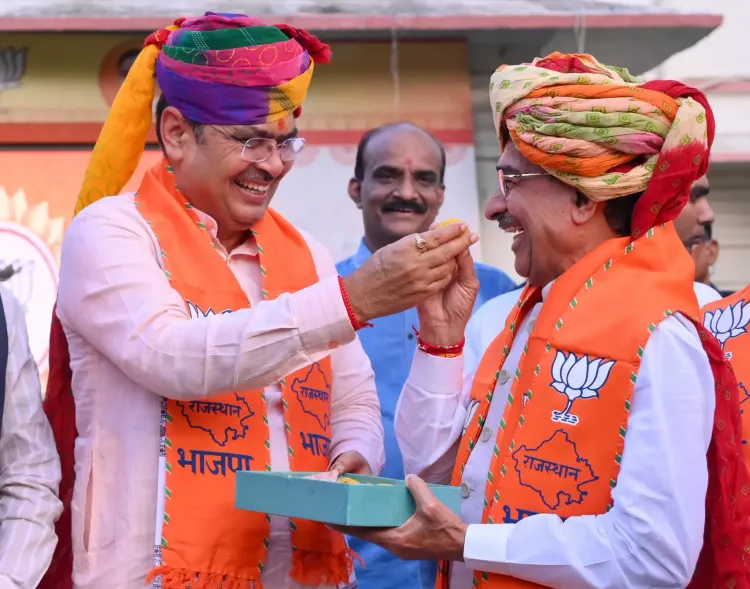
Rajasthan's urban local body election results, declared on 15 September 2026, have delivered a politically layered verdict: the Bharatiya Janata Party (BJP) has won more seats and secured clear majorities in more civic bodies, yet its vote share of 35.30% stands only 0.94 percentage points ahead of the Indian National Congress (Congress) at 34.36% — a margin that has set the tone for a charged run-up to the 2028 Rajasthan Assembly elections.
The Headline Numbers and What Lies Beneath
Across Rajasthan's 309 urban local bodies, the BJP secured clear majorities in 85 civic bodies, compared with 45 for Congress. Independents and smaller parties crossed the majority mark in a further 34 bodies. That leaves 145 urban local bodies — nearly half the total — without a clear majority, transforming the post-election landscape into an active political bargaining exercise.
Independent candidates collectively polled 27.47% of the vote, underscoring how deeply fragmented and candidate-driven local politics remain in the state. Among the smaller parties, the Rashtriya Loktantrik Party (RLP) secured 0.95%, the Aam Aadmi Party (AAP) 0.47%, the Communist Party of India (Marxist) (CPI-M) 0.32%, the Bahujan Samaj Party (BSP) 0.29%, and the Bharatiya Adivasi Party (BAP) 0.13%.
The Municipal Corporation Battleground
Of Rajasthan's 10 municipal corporations, the BJP has secured clear majorities in Jaipur, Kota, Udaipur, and Bhilwara. Congress holds a majority in Bikaner. But five corporations — Bharatpur, Pali, Alwar, Ajmer, and Jodhpur — remain politically unsettled.
Jodhpur presents the starkest example of the new political arithmetic: the BJP and Congress have won 44 councillors each, leaving Independents in a potentially decisive role. In Alwar, the BJP leads but falls short of a majority. In Ajmer and Pali, Congress is ahead but still requires additional support. Bharatpur similarly hinges on Independent councillors.
The Independent Factor: Kingmakers at the Local Level
Beyond the corporations, there is no clear BJP or Congress majority in 18 municipal councils and 122 municipalities. The Independent councillor has, in effect, emerged as one of the most consequential political actors in Rajasthan's post-election landscape. Both parties now face an intensive scramble to bring Independents into their fold — a process that analysts note is as much about projecting political momentum as it is about municipal governance.
For the BJP, converting its seat advantage into stable civic administrations would reinforce its claim of organisational dominance in Rajasthan's urban centres. For Congress, winning over Independents in a significant number of hung bodies would allow it to argue that the BJP's margin is far narrower than the seat tally implies. This comes amid the broader context of Rajasthan's cyclical electoral pattern, in which power has alternated between the two parties at every Assembly election since 1993.
What the Results Signal for 2028
These elections were conducted against the backdrop of the 'One State-One Election' concept, but their political implications extend well beyond municipal administration. The results have produced neither a decisive BJP sweep nor a definitive Congress revival — instead, a BJP advantage, a closely trailing Congress, and 145 civic bodies where the final political shape is yet to emerge.
Notably, the vote share gap of under 1 percentage point is arguably the single most politically significant number to come out of these results. It suggests that Rajasthan's urban electorate has not consolidated firmly behind either major party — a reading that will inform campaign strategy, alliance calculations, and resource allocation for both sides as the 2028 Assembly elections approach. The post-poll negotiations in hung bodies could serve as early laboratories for the broader political strategies both parties are likely to deploy.
Point of View
But Congress has retained its urban base far more effectively than the headlines suggest — and in a state where Assembly elections have swung every cycle since 1993, that base is not a consolation prize. The more underreported angle is the 27.47% Independent vote: a number that large signals voter dissatisfaction with both parties at the local level, not merely candidate-driven fragmentation. If both the BJP and Congress end up in a prolonged Independent-poaching exercise, they risk normalising transactional politics at the grassroots — the very layer that shapes booth-level turnout in Assembly elections.
NationPress
15 Sept 2026
Frequently Asked Questions
Who won the Rajasthan urban local body elections 2026?
The BJP emerged as the larger winner, securing clear majorities in 85 civic bodies against 45 for Congress. However, the BJP's vote share of 35.30% leads Congress's 34.36% by just 0.94 percentage points, and 145 of 309 bodies have no clear majority.
Why is the 0.94% vote share gap significant?
A margin of under 1 percentage point between the two major parties indicates that Rajasthan's urban electorate has not consolidated firmly behind the BJP despite its seat advantage. Analysts view this as a critical early signal ahead of the 2028 Rajasthan Assembly elections.
Which municipal corporations have a hung verdict?
Five of Rajasthan's 10 municipal corporations — Jodhpur, Bharatpur, Alwar, Ajmer, and Pali — have no clear majority. Jodhpur is the most evenly split, with the BJP and Congress winning 44 councillors each.
What role will Independent councillors play?
Independent candidates polled 27.47% of the vote collectively and hold the balance of power in 145 hung civic bodies, including several major municipal corporations. Both the BJP and Congress are expected to court them intensively to form stable boards.
How do these civic results relate to the 2028 Rajasthan Assembly elections?
The civic polls were seen as an early barometer of Rajasthan's urban political mood ahead of the 2028 Assembly elections. The narrow vote share gap and large number of hung bodies suggest neither party has a commanding lead, making the post-election coalition-building in civic bodies a potential rehearsal for state-level strategy.