BJP wins Assam with 82 seats; two ministers beat CM Sarma's margin
Synopsis
Two BJP ministers — Kaushik Rai with 99,401 votes and Pijush Hazarika with 93,548 — outpaced Chief Minister Himanta Biswa Sarma's own 89,434-vote margin in Jalukbari. With 82 of 126 seats, the BJP's Assam sweep cut across tribal, rural, and urban belts, leaving Congress stranded at 19.
Key Takeaways
BJP won 82 of 126 seats in the Assam Assembly elections , securing a decisive majority.
Minister Kaushik Rai posted the state's highest winning margin — 99,401 votes — in Lakhipur , Cachar district.
Minister Pijush Hazarika won Jagiroad by 93,548 votes , the second-largest margin statewide.
CM Himanta Biswa Sarma retained Jalukbari with a margin of 89,434 votes , finishing third among the top five margins.
Congress won only 19 seats ; BPF and AGP secured 10 seats each .
Bhuban Pegu won the tribal-reserved Jonai seat in Dhemaji district by 80,124 votes .
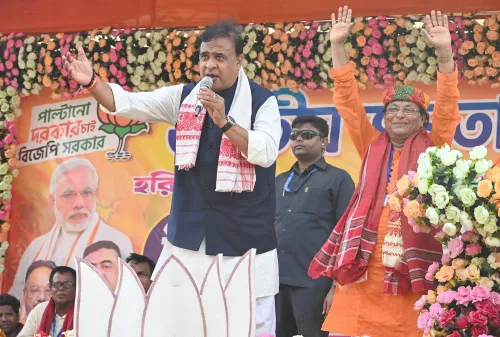
The Bharatiya Janata Party (BJP) registered a sweeping victory in the Assam Assembly elections, capturing 82 out of 126 seats and returning to power with a decisive mandate across urban, rural, and tribal constituencies. Notably, two sitting ministers outpaced Chief Minister Himanta Biswa Sarma in winning margins, underlining the party's broad-based dominance across the state.
Record Winning Margins Across Assam
Assam Minister Kaushik Rai led all candidates with the highest winning margin in the state, defeating his rival by 99,401 votes in the Lakhipur constituency of Cachar district in Barak Valley. Lakhipur, a Bengali-majority belt, has historically seen multi-cornered contests; Rai's commanding victory signals a clear consolidation of support, driven by development issues and connectivity demands that have long dominated local electoral discourse.
In second place, Minister Pijush Hazarika won the Jagiroad seat in Morigaon district by a margin of 93,548 votes. Jagiroad, known for its industrial base near the Nagaon Paper Mill area and its mix of rural and semi-urban voters, reflects the BJP's continued stranglehold over central Assam, bolstered by infrastructure investment and welfare outreach.
CM Sarma Retains Jalukbari with Commanding Lead
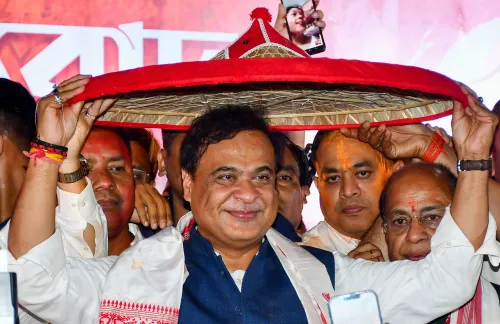
Chief Minister Himanta Biswa Sarma retained his Jalukbari seat in Guwahati by a margin of 89,434 votes, finishing third among the top five margins statewide. Jalukbari, a long-established BJP stronghold in urban Assam, reaffirmed Sarma's personal popularity and the party's firm grip on city voters, with governance, civic improvements, and policy initiatives cited as key factors.
Strong Showing in Barak Valley and Tribal Belt
In Ramakrishna Nagar, also situated in the Barak Valley in southern Assam, Bijoy Malakar won by 83,765 votes. The constituency has a significant rural population, and the BJP's performance there points to sustained grassroots support on welfare schemes and local development.
In the tribal-dominated Jonai constituency of Dhemaji district — a Scheduled Tribe (ST) reserved seat along the Assam-Arunachal Pradesh border — Bhuban Pegu emerged victorious with a margin of 80,124 votes. According to party sources, Pegu's win reflects the BJP's growing outreach among tribal communities through targeted welfare measures and border-area infrastructure development.
Final Seat Tally and Opposition Standing
The BJP's 82-seat haul in the 126-seat Assam Assembly left the opposition fragmented. The Indian National Congress (Congress) finished a distant second with 19 seats. Regional outfits — the Bodoland People's Front (BPF) and the Asom Gana Parishad (AGP) — secured 10 seats each. The All India United Democratic Front (AIUDF) and Raijor Dal managed 2 seats each, while the All India Trinamool Congress (TMC) opened its Assam account with a single seat.
The results, cutting across urban Guwahati, the Bengali-majority Barak Valley, and the tribal districts along the northeastern frontier, reinforce the BJP's position as the dominant political force in Assam — and set the stage for Sarma's continued stewardship of the state.
Point of View
But the margin data is the more revealing detail. That two ministers outscored the Chief Minister in vote gaps suggests the party's electoral machinery is no longer dependent on a single personality. Sarma remains the political face, but Rai's near-lakh margin in a Bengali-majority, historically contested Barak Valley seat is a structural signal: the BJP has moved beyond its traditional Brahmaputra Valley base. For Congress, 19 seats in a 126-seat house is not an opposition — it is a rump. The real question is whether any regional force can coalesce into a credible challenger before the next cycle.
NationPress
19 Sept 2026
Frequently Asked Questions
How many seats did BJP win in the Assam Assembly elections?
The BJP won 82 out of 126 seats in the Assam Assembly elections, securing a decisive majority. Congress finished a distant second with 19 seats.
Who recorded the highest winning margin in the Assam elections?
Assam Minister Kaushik Rai recorded the highest winning margin of 99,401 votes in the Lakhipur constituency of Cachar district. He was followed by Minister Pijush Hazarika with 93,548 votes in Jagiroad.
By how many votes did CM Himanta Biswa Sarma win his seat?
Chief Minister Himanta Biswa Sarma retained the Jalukbari seat in Guwahati by a margin of 89,434 votes, placing third among the top five winning margins in the state.
Which parties won seats apart from BJP in Assam?
Congress won 19 seats, while BPF and AGP secured 10 seats each. AIUDF and Raijor Dal won 2 seats each, and the Trinamool Congress won 1 seat.
What does Bhuban Pegu's win in Jonai signify?
Bhuban Pegu won the ST-reserved Jonai seat in Dhemaji district by 80,124 votes, reflecting the BJP's growing outreach among tribal communities through welfare schemes and infrastructure development in border areas near Arunachal Pradesh.