Is Congress Transforming into a 'Jamaati' Party?
Synopsis
In a bold assertion, BJP's Sudhanshu Trivedi claims Congress is evolving into a 'Jamaati' entity, risking national unity. His comments come amidst allegations of the party’s appeasement politics and questionable alliances. Discover the implications of these accusations and their potential impact on India's political landscape.
Key Takeaways
Trivedi's strong condemnation of Congress.
Accusations of appeasement politics and communal ties.
Concerns over national unity and democratic integrity.
Historical parallels drawn with Bangladesh's political landscape.
Call to action for Keralites to unite.
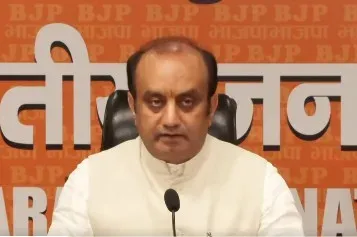
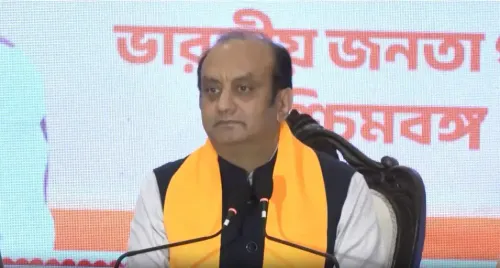
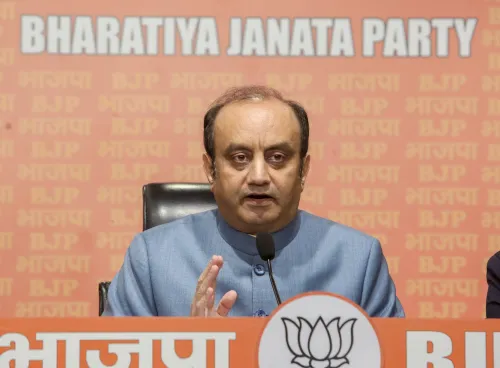
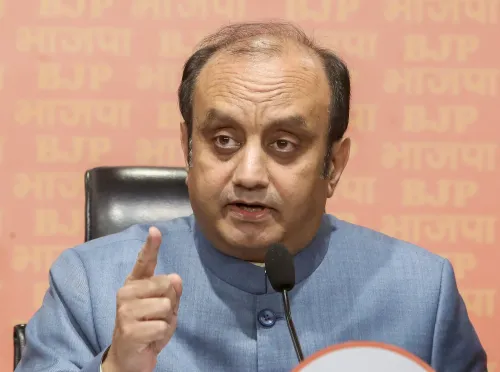
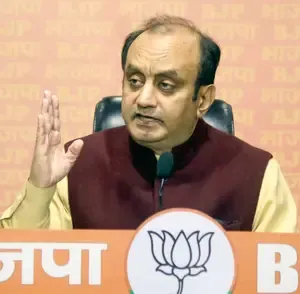
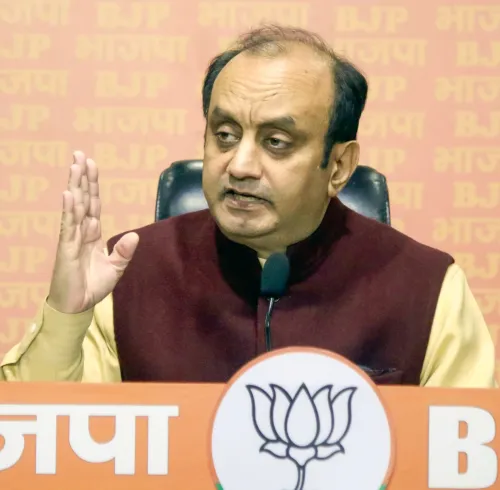
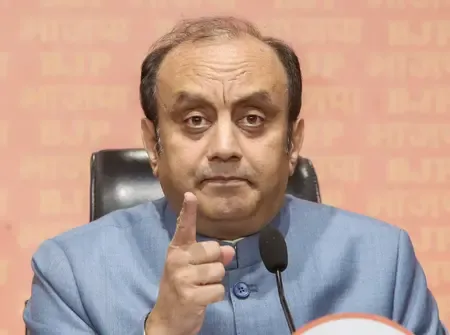
New Delhi, Feb 7 (NationPress) Sudhanshu Trivedi, the national spokesperson for the Bharatiya Janata Party (BJP) and a member of the Rajya Sabha, launched a forceful critique against the Congress party on Saturday. He accused Congress of becoming a 'Jamaati Congress' through its alliances with communal groups, which he claims could jeopardize national integrity and democratic principles.
During a media briefing at the BJP headquarters, Trivedi took aim at the budget of the West Bengal government, arguing that it places undue emphasis on 'Maulvis, Muezzins, and Madrasas', diverging from the Trinamool Congress's own motto of 'Maa, Maati, Manush.'
He asserted that this reflects the INDI alliance's unwavering commitment to appeasement politics, marking a new low in divisive tactics.
Trivedi referenced comments made by Congress leader VD Satheesan of Kerala, who showed willingness to accept support from Jamaat-e-Islami.
He pointed out that the Congress in Kerala is already allied with the Indian Union Muslim League, which he associates with Muhammad Ali Jinnah's pre-Partition Muslim League.
Notable figures such as PK Pokker Sahib Bahadur and Mohammad Ismail, linked to Jinnah's Madras Presidency unit, helped establish this modern entity, where Jinnah was lauded as 'Quaid-e-Azam' and Ismail as 'Quaid-e-Millat.'
Reiterating Prime Minister Narendra Modi's previous characterization of Congress as a 'Muslim League-Maoist party', Trivedi contended that the party has now surpassed that, aligning itself with Jamaat-e-Islami—a group he describes as promoting an ideology aimed at transforming India into an Islamic state.
'While the Muslim League was at least a political party, Jamaat is a communal organisation,' he stated emphatically.
He cited previous instances, such as Congress's coalition with Pirzada Abbas Siddiqui's Indian Secular Front during the West Bengal Assembly elections, and Telangana Chief Minister Revanth Reddy's controversial remarks equating the strength of Congress with that of Muslims.
In Kerala, Trivedi noted that this has escalated to suggest that Jamaat's influence supports Congress, raising questions about the potential consequences for Keralites in exchange for such backing.
He also mentioned Rahul Gandhi's choice to contest from Kerala and his overseas defense of the Muslim League as 'completely secular.'
Additionally, he referred to a 2023 statement by a general secretary of the Social Democratic Party of India in Karnataka about a past 'understanding' with the banned Popular Front of India in 2018, highlighting ongoing patterns of 'divisive appeasement' that have reached extremes of minorityism, posing significant challenges for Kerala.
Trivedi warned of long-term dangers, drawing comparisons to Bangladesh, where the Bangladesh Nationalist Party's 2001 alliance with Jamaat-e-Islami legitimized it but ultimately led to it becoming the BNP's most formidable opponent.
He urged Congress to learn from this example to avoid similar missteps. Quoting Rajya Sabha Leader of the House and former BJP president Jagat Prakash Nadda, Trivedi warned against becoming 'hostages to the intellect of an immature child,' calling upon Keralites to unite to avert a crisis in the state.
Point of View
I believe it's crucial to analyze the claims made by Sudhanshu Trivedi about Congress. While his assertions highlight a growing concern over communal politics, it's essential for the electorate to evaluate these accusations critically. The evolving political dynamics in India warrant scrutiny, and the focus should remain on fostering unity and addressing the needs of all citizens, regardless of their affiliations.
NationPress
27 Sept 2026
Frequently Asked Questions
What is the main accusation against Congress?
BJP spokesperson Sudhanshu Trivedi accuses Congress of becoming a 'Jamaati Congress' by forming alliances with communal organizations, which he argues threatens national unity.
What implications does this have for national politics?
Trivedi's comments suggest that such alliances could undermine democratic values and lead to divisive politics, impacting the political landscape in India.
Why is this issue significant?
The accusations reflect broader concerns regarding communalism in Indian politics and the potential consequences of appeasement strategies.