Blackbucks Return to Chhattisgarh: PM Modi Highlights Historic Wildlife Revival
Synopsis
Blackbucks, declared locally extinct in Chhattisgarh in 2017, have returned to the wild through a five-year reintroduction programme at Barnawapara Sanctuary — a milestone PM Modi spotlighted in Mann Ki Baat. Simultaneously, community 'Hathi Mitra Dals' using drones and WhatsApp are slashing human-elephant conflict, offering India a replicable conservation blueprint.
Key Takeaways
Blackbucks were declared locally extinct in Chhattisgarh in 2017 and have now been successfully reintroduced at Barnawapara Wildlife Sanctuary through a five-year programme.
Individuals were translocated from the National Zoological Park, New Delhi and Kanan Pendari Zoological Garden, Bilaspur to rebuild the population.
PM Narendra Modi highlighted the blackbuck revival and other conservation milestones during his Mann Ki Baat address on April 27, 2025 .
Great Indian Bustard chicks were successfully hatched in Gujarat using fertile eggs transported from Rajasthan in a pioneering interstate conservation effort.
Community volunteer groups called 'Hathi Mitra Dals' use drones and WhatsApp alerts to monitor elephant movements and reduce human-elephant conflict in affected regions.
India's conservation efforts align with its commitments under the Kunming-Montreal Global Biodiversity Framework , with these ground-level successes serving as key evidence of national progress.
Raipur, April 26: The blackbuck, once declared locally extinct in Chhattisgarh, has made a remarkable comeback to the state's open grasslands — a conservation milestone that Prime Minister Narendra Modi celebrated during his monthly 'Mann Ki Baat' radio address on Sunday, April 27, 2025. The revival, driven by a structured five-year reintroduction programme, signals a turning point for wildlife restoration in Central India.
Blackbuck Revival: From Local Extinction to a Thriving Population
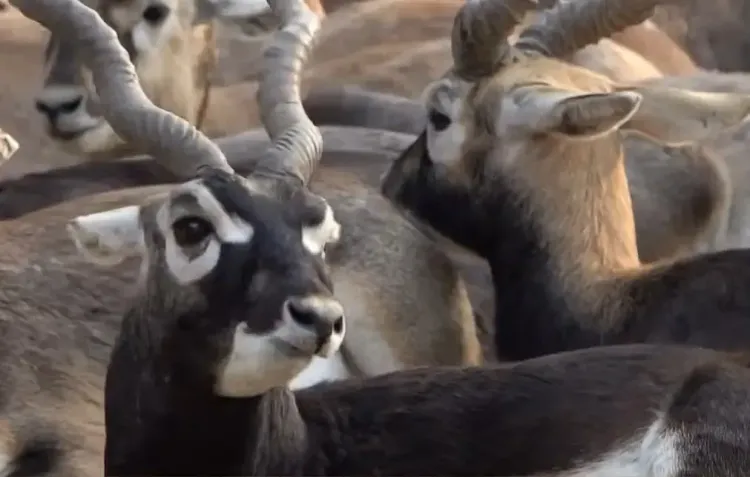
The blackbuck — locally called the 'black deer' — was declared locally extinct in Chhattisgarh in 2017. Responding to the crisis, the Chhattisgarh State Forest Department launched a strategic reintroduction plan centred at the Barnawapara Wildlife Sanctuary.
Individuals were translocated from two key facilities: the National Zoological Park in New Delhi and the Kanan Pendari Zoological Garden in Bilaspur. Over five years of sustained effort, the programme has yielded a growing, self-sustaining population now roaming freely across the state's natural landscapes.
The success is underpinned by specialised grassland management and rigorous veterinary surveillance — a model that conservationists say can be replicated across other states facing similar biodiversity losses. This is not merely an ecological win; it represents the restoration of a vanishing biological heritage that communities in the region have historically revered.
PM Modi's Mann Ki Baat: Conservation Wins Across India
Addressing the nation, PM Modi used the blackbuck's return as a centrepiece of a broader narrative around India's accelerating conservation momentum. He pointed to similar breakthroughs unfolding across the country, signalling a national policy shift towards proactive biodiversity protection.
One of the most significant examples he cited was the Great Indian Bustard, a critically endangered species now seeing renewed hope through advanced captive breeding initiatives. A landmark development involved the successful hatching of chicks in Gujarat through a pioneering interstate jumpstart programme, where fertile eggs were transported from Rajasthan to revive the local population — a first-of-its-kind inter-state conservation collaboration in India.
Notably, the Great Indian Bustard population had plummeted to fewer than 150 individuals nationally, making every successful hatch a critical victory. The Supreme Court of India had also previously intervened to restrict overhead power lines in bustard habitats, underscoring the multi-institutional urgency around the species.
Hathi Mitra Dals: Community-Led Model Tackles Human-Elephant Conflict
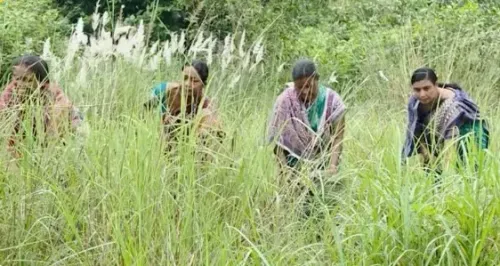
Beyond wildlife reintroduction, PM Modi drew attention to an equally important grassroots innovation — the 'Hathi Mitra Dal' model, where local villagers have organised themselves into dedicated volunteer teams to monitor and manage human-elephant conflict.
Using modern tools including drones and WhatsApp alert networks, these community guardians track elephant movements in real time and issue advance warnings to nearby villages, protecting both crops and human lives. The result has been a measurable decline in conflict incidents and a significant rise in community trust towards conservation efforts.
This bottom-up model is particularly significant given that India records among the highest human-elephant conflict fatalities globally, with hundreds of deaths reported annually. By transforming villagers from victims of conflict into active participants in its resolution, the model addresses a structural failure that top-down government interventions have historically struggled to solve.
Deeper Context: Why This Matters Beyond the Headlines
India's wildlife conservation record has long been a tale of two extremes — celebrated tiger reserves on one hand, and rampant habitat destruction, poaching, and human-wildlife conflict on the other. The Chhattisgarh blackbuck revival and the Hathi Mitra Dal model represent a third path: science-backed reintroduction paired with community ownership.
This comes amid growing pressure on India's forest corridors due to infrastructure expansion, mining, and agricultural encroachment. Chhattisgarh, home to significant tribal populations and mineral-rich forests, has historically been at the intersection of development and conservation tensions. The success of the Barnawapara Wildlife Sanctuary programme offers a replicable blueprint — but its long-term sustainability will depend on continued funding, political will, and genuine community inclusion beyond symbolic participation.
The Mann Ki Baat platform itself amplifies these stories to a national audience of hundreds of millions, giving conservation narratives a visibility they rarely receive in mainstream political discourse. Critics, however, note that policy announcements and on-ground implementation often diverge — and independent monitoring of these programmes remains limited.
What Comes Next: Scaling Conservation Across India
With the blackbuck population stabilising in Barnawapara and elephant corridors becoming better managed through community vigilance, conservationists are now advocating for the replication of these models in other biodiversity hotspots across Madhya Pradesh, Odisha, and Jharkhand.
The Great Indian Bustard inter-state breeding programme is expected to expand further, with government sources indicating potential new partnerships between Rajasthan, Gujarat, and Andhra Pradesh. As India moves towards its biodiversity commitments under the Kunming-Montreal Global Biodiversity Framework, these ground-level successes will be critical evidence of the country's conservation credibility on the world stage.
The return of the blackbuck to Chhattisgarh's plains and the stabilisation of elephant corridors are more than ecological milestones — they are proof that when science, policy, and community action align, India's rich natural heritage can be reclaimed, one species at a time.
Point of View
But it also raises an uncomfortable question: why does India's biodiversity recovery so often depend on reactive rescue missions rather than proactive habitat protection? The Barnawapara success is replicable — but only if the political will that drives a five-year reintroduction programme also resists the mining leases and infrastructure corridors that push species to extinction in the first place. The Hathi Mitra Dal model is inspiring, but community volunteers cannot substitute for adequately funded forest departments. PM Modi's Mann Ki Baat platform is powerful for amplifying these stories — the test is whether the spotlight translates into sustained policy and budgetary commitment, or remains a feel-good narrative ahead of election cycles.
NationPress
18 Sept 2026
Frequently Asked Questions
Why did blackbucks disappear from Chhattisgarh and how did they return?
Blackbucks were declared locally extinct in Chhattisgarh in 2017 due to habitat loss and historical hunting pressure. The state forest department launched a reintroduction programme at Barnawapara Wildlife Sanctuary, translocating individuals from the National Zoological Park in New Delhi and Kanan Pendari Zoo in Bilaspur, leading to a self-sustaining population today.
What is the Hathi Mitra Dal and how does it reduce human-elephant conflict?
Hathi Mitra Dal are community volunteer teams formed by local villagers to monitor elephant movements using drones and WhatsApp alerts. They provide real-time warnings to nearby communities, helping protect crops and lives while reducing retaliatory actions against elephants.
What did PM Modi say about wildlife conservation in Mann Ki Baat April 2025?
PM Modi highlighted the successful return of blackbucks to Chhattisgarh, the Great Indian Bustard chick hatching programme in Gujarat, and the community-led Hathi Mitra Dal model for managing human-elephant conflict. He used these examples to showcase India's growing conservation momentum.
What is the Great Indian Bustard interstate breeding programme?
The programme involves transporting fertile Great Indian Bustard eggs from Rajasthan to Gujarat to hatch and revive local populations — a first-of-its-kind interstate conservation initiative in India. The species has fewer than 150 individuals remaining nationally, making every successful hatch critical.
Where is Barnawapara Wildlife Sanctuary and why is it important?
Barnawapara Wildlife Sanctuary is located in Chhattisgarh, Central India, and is the site of the successful blackbuck reintroduction programme. It is now a model for grassland management and species revival in the region.