Cabinet clears ₹10,000 crore SME Growth Fund to boost small enterprises
Synopsis
The Union Cabinet has greenlit a ₹10,000 crore SME Growth Fund — structured as an AIF — to fill the long-standing equity gap for growth-stage small and medium enterprises. With a deliberate focus on manufacturing clusters in Tier II and Tier III cities, this is one of the most targeted bets yet on turning India's SME base into a generation of globally competitive champions.
Key Takeaways
The Union Cabinet approved a ₹10,000 crore commitment for the SME Growth Fund (SGF) on 6 October 2026 .
The fund is structured as an Alternative Investment Fund (AIF) under the SGF framework.
It targets growth-stage SMEs — filling the equity gap left by existing funds that focus mainly on micro and early-stage enterprises.
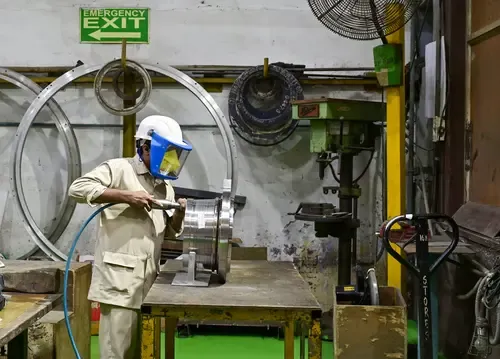
The majority of capital will flow into manufacturing-focused SMEs , including those in Tier II and Tier III industrial clusters.
The initiative was announced in the Union Budget 2026-27 and is a key plank of the Viksit Bharat 2047 vision.
The fund aims to help SMEs scale operations, adopt advanced technologies, expand internationally , and integrate into global value chains.
The Union Cabinet, chaired by Prime Minister Narendra Modi, on Tuesday, 6 October 2026, approved a ₹10,000 crore commitment from the Centre towards the establishment of the SME Growth Fund (SGF) — a dedicated vehicle designed to channel long-term equity capital into India's Small and Medium Enterprises (SMEs). The decision, announced in New Delhi, addresses a structural financing gap that existing funds have left largely unattended.
What the SME Growth Fund Covers
The SGF will be structured as an Alternative Investment Fund (AIF), with the Centre committing an aggregate of ₹10,000 crore under its framework. Unlike most existing equity support vehicles — which predominantly target early-stage and micro enterprises — the SGF is specifically designed for growth-stage small and medium enterprises with demonstrated business viability and scalability.
The bulk of the fund's allocation is expected to flow into manufacturing-focused SMEs. Notably, the SGF will also extend its reach to enterprises operating in industrial clusters in Tier II and Tier III cities, a deliberate push for balanced regional industrial development that goes beyond the metro-centric investment patterns seen in earlier schemes.
Background: The Financing Gap It Aims to Fill
SMEs constitute a critical pillar of the Indian economy, contributing substantially to employment generation, export earnings, and manufacturing output. Yet, while successive government programmes have improved credit access for smaller enterprises, the availability of long-term risk capital — the kind required to scale operations, invest in advanced technology, or undertake international expansion — has remained scarce.
Existing equity funds, according to an official statement, largely cover micro enterprises and early-stage startups, leaving a structural gap precisely at the stage when a company needs patient growth capital to graduate into a larger, globally competitive player. This is the gap the SGF is designed to close.
Budget Linkage and Policy Context
The Cabinet approval formalises a commitment first signalled in the Union Budget 2026-27, which outlined a holistic package for the MSME ecosystem centred on equity support, liquidity enhancement, and professional capacity-building. The SGF is the flagship equity plank of that package.
This comes amid a broader government push to raise India's manufacturing competitiveness and deepen domestic capital markets for growth-stage enterprises — objectives that dovetail with the long-term vision of Viksit Bharat 2047. The initiative is positioned as a key mechanism to create a new generation of Indian companies capable of competing at the global level.
Expected Impact and What Happens Next
By deploying patient capital, the SGF is expected to enable qualifying SMEs to expand production capacity, adopt advanced technologies, enter export markets, integrate into global value chains, and pursue strategic acquisitions. The government anticipates the fund will catalyse the emergence of sectoral champion companies — firms with the scale, innovation capability, and competitiveness to lead their industries domestically and internationally.
Investment in Tier II and Tier III industrial clusters is also projected to reinforce local supply chains and generate high-quality employment in regions historically underserved by institutional capital. Operational and disbursement details under the AIF framework are expected to be notified in the coming weeks, setting the stage for the fund's first round of commitments.
Point of View
000 crore SME Growth Fund is structurally more thoughtful than a headline subsidy — channelling equity rather than debt into growth-stage enterprises addresses a genuine market failure that credit-guarantee schemes alone cannot fix. The real question is fund governance: AIF structures succeed or stall on the quality of fund managers, deal selection rigour, and exit discipline, none of which the announcement specifies. The Tier II and Tier III cluster focus is the most consequential detail, as it could decentralise capital flows in a way that PLI rounds largely failed to do. But without transparent performance benchmarks and independent monitoring, patient capital can become patient inaction.
NationPress
6 Oct 2026
Frequently Asked Questions
What is the SME Growth Fund approved by the Union Cabinet?
The SME Growth Fund (SGF) is a ₹10,000 crore government-backed Alternative Investment Fund approved by the Union Cabinet on 6 October 2026, designed to provide long-term equity capital to growth-stage small and medium enterprises in India. It was first announced in the Union Budget 2026-27 as part of a broader MSME support package.
Why does India need a separate fund for SME equity capital?
Most existing equity support funds in India focus on early-stage and micro enterprises, leaving a structural gap for growth-stage SMEs that need patient risk capital to scale, invest in technology, or expand internationally. The SGF is specifically designed to close this financing gap for enterprises with proven viability that are ready to grow but lack access to long-term institutional equity.
Which SMEs will benefit from the SME Growth Fund?
The fund will primarily target manufacturing-focused SMEs with demonstrated business viability and scalability. It will also invest in SMEs operating in industrial clusters in Tier II and Tier III cities, supporting balanced regional industrial development and local supply chain strengthening.
How does the SME Growth Fund connect to Viksit Bharat 2047?
The government has positioned the SGF as a key pillar of the Viksit Bharat 2047 vision, which aims to make India a developed economy by its centenary of independence. By creating globally competitive SME champions, deepening domestic capital markets, and driving innovation-led industrialisation, the fund is intended to directly advance that long-term national goal.
When will the SME Growth Fund become operational?
The Union Cabinet approved the Centre's ₹10,000 crore commitment on 6 October 2026. Operational and disbursement guidelines under the AIF framework are expected to be notified in the coming weeks, after which the fund will begin its first round of investment commitments.