Delhi L-G, CM launch Seva Sankalp Abhiyan with 4 health schemes for Viksit Dilli
Synopsis
Delhi's BJP government launched four healthcare schemes in one go on 6 October — doubling pay for 6,690 ASHA workers, rolling out free newborn screening for 56 conditions, setting up a dedicated organ transplant coordination centre at GB Pant Hospital, and going digital on nursing home regulation. The breadth of the rollout signals an aggressive first-year health agenda under CM Rekha Gupta.
Key Takeaways
Delhi L-G Taranjit Singh Sandhu and CM Rekha Gupta launched the Seva Sankalp Abhiyan on 6 October 2026 at Tyagraj Stadium.
ASHA worker monthly honorarium doubled from ₹3,000 to ₹6,000 , benefiting 6,690 ASHA sisters in Delhi.
Project ANMOL expanded to provide free newborn screening for 56 health conditions across Delhi.
A dedicated SOTTO (State Organ and Tissue Transplant Organisation) centre launched at GB Pant Hospital to streamline organ donation coordination.
A Nursing Home Management System Portal unveiled to make private nursing home regulation more transparent and accountable.
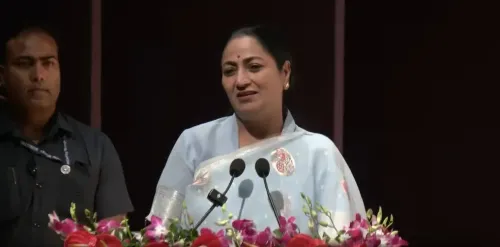
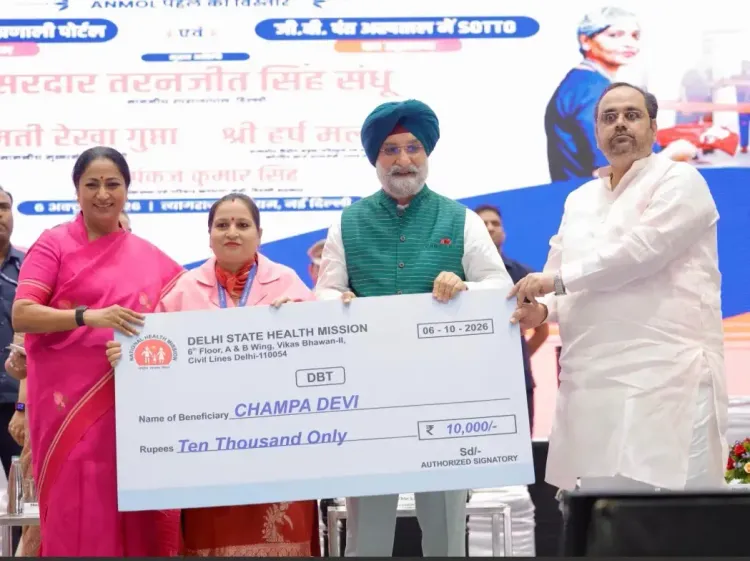
Delhi Lieutenant Governor Taranjit Singh Sandhu and Chief Minister Rekha Gupta on Tuesday, 6 October 2026, jointly launched a cluster of key healthcare initiatives under the 'Seva Sankalp Abhiyan' at Tyagraj Stadium, New Delhi, pledging to build a healthier Viksit Dilli through technology-driven and compassionate public health delivery. The event, held alongside the ASHA Conference-2026, brought together a large number of frontline health workers and senior government officials.
Key Schemes Launched
Four distinct health initiatives were unveiled at the event. First, the monthly honorarium for ASHA (Accredited Social Health Activist) workers was doubled — from ₹3,000 to ₹6,000 — directly benefiting 6,690 ASHA sisters across Delhi who provide door-to-door health services. Second, Project ANMOL (Auxiliary Nurse Midwife Online) was expanded to cover screening for 56 health conditions in newborns, offered entirely free of cost in Delhi, enabling early identification and treatment of diseases. Third, a dedicated State Organ and Tissue Transplant Organisation (SOTTO) centre was inaugurated at GB Pant Hospital, aimed at improving coordination across the organ donation and transplantation chain so that timely assistance reaches patients in critical need. Fourth, a Nursing Home Management System Portal was launched to streamline, simplify, and make more transparent the processes related to private nursing home registration and accountability.
What Officials Said
In a post on social media platform X, Lieutenant Governor Sandhu said he had joined Chief Minister Gupta and Health Minister Dr Pankaj Kumar Singh at Tyagraj Stadium to launch the initiatives, framing them as aligned with Prime Minister Narendra Modi's vision of an inclusive Viksit Bharat. 'Technology, stronger public health systems and compassionate care will drive our efforts towards a healthier #ViksitDilli,' Sandhu wrote.
Chief Minister Gupta also posted on X following the event, stating that the ASHA honorarium hike would 'provide financial support to Delhi's 6,690 ASHA sisters and further strengthen door-to-door health services.' She underlined that the SOTTO launch at GB Pant Hospital would ensure 'better coordination in the entire process of organ donation and transplantation, enabling timely assistance to reach patients in need.'
Why ASHA Workers Matter
ASHA workers form the backbone of India's primary healthcare delivery, especially in urban slums and underserved pockets. In Delhi, the 6,690 registered ASHA workers are responsible for maternal and child health outreach, immunisation tracking, and linking households to government health schemes. Notably, their remuneration has long been a subject of dispute, with worker unions across several states demanding parity with minimum wage benchmarks. The doubling of Delhi's ASHA honorarium is among the more significant state-level revisions in recent months, though it remains below the national benchmark demanded by worker collectives.
Broader Context
The Seva Sankalp Abhiyan reflects the Bharatiya Janata Party (BJP)-led Delhi government's push to distinguish its health governance record after assuming office earlier this year. The simultaneous rollout of four schemes — spanning maternal and newborn care, organ transplantation, workforce welfare, and digital administration — signals an intent to overhaul multiple layers of the public health stack at once. This comes amid ongoing national focus on the Viksit Bharat 2047 framework, under which states are encouraged to align social sector spending with Union-level benchmarks.
What Comes Next
The operationalisation of the SOTTO centre at GB Pant Hospital will be a near-term test of administrative capability, given that organ transplant coordination requires round-the-clock infrastructure and inter-hospital protocols. The expanded ANMOL newborn screening programme will need district-level health units to process and follow up on results for 56 conditions. Officials have not yet specified a timeline for full deployment across all Delhi districts. The Nursing Home Management Portal's effectiveness will depend on adoption rates among private healthcare providers, many of whom have historically resisted digital compliance mandates.
Point of View
But ₹6,000 a month still falls well short of what worker unions across India have demanded as a minimum wage equivalent — the gesture risks being more symbolic than transformative for Delhi's frontline health workforce. The simultaneous launch of four schemes at a single stadium event also raises a familiar governance question: breadth of announcement versus depth of implementation. The SOTTO centre and ANMOL expansion both require sustained district-level infrastructure, not just a launch ceremony. The new BJP-led Delhi administration is clearly attempting to signal a break from its predecessor's health narrative, but the scorecard will be written in delivery timelines, not press conferences.
NationPress
6 Oct 2026
Frequently Asked Questions
What is the Seva Sankalp Abhiyan launched in Delhi?
The Seva Sankalp Abhiyan is a Delhi government healthcare initiative launched on 6 October 2026 by Lieutenant Governor Taranjit Singh Sandhu and Chief Minister Rekha Gupta at Tyagraj Stadium. It encompasses four new schemes covering ASHA worker pay, newborn screening, organ transplant coordination, and nursing home regulation.
How much has the ASHA worker honorarium increased in Delhi?
The monthly honorarium for ASHA workers in Delhi has been doubled from ₹3,000 to ₹6,000, benefiting 6,690 registered ASHA sisters. The increase is intended to strengthen door-to-door health service delivery across the city.
What is Project ANMOL and how does it help newborns in Delhi?
Project ANMOL (Auxiliary Nurse Midwife Online) is an expanded newborn screening programme under which 56 health conditions are screened in newborns completely free of cost in Delhi. The scheme enables early identification and treatment of diseases, improving infant health outcomes.
What is the SOTTO centre launched at GB Pant Hospital?
SOTTO stands for State Organ and Tissue Transplant Organisation. The dedicated centre launched at GB Pant Hospital is designed to improve coordination across the organ donation and transplantation process, ensuring timely assistance reaches patients in critical need.
What does the Nursing Home Management System Portal do?
The Nursing Home Management System Portal is a digital platform launched to simplify and make more transparent the registration and regulatory processes for private nursing homes in Delhi. It is intended to improve accountability in the private healthcare sector.