CM Fadnavis Warns of Political Exploitation of Student Protests
Synopsis
Maharashtra CM Devendra Fadnavis on October 6, 2026, publicly accused unnamed actors of using an ongoing student agitation in Mumbai as political cover, posting a pointed bilingual warning on X in both Marathi and Hindi.
Key Takeaways
CM Devendra Fadnavis posted on October 6, 2026 accusing unnamed individuals of exploiting a student agitation for political ends.
The post was written in both Marathi and Hindi , signalling a deliberate, broad-audience message.
Fadnavis used the idiom 'placing a gun on students' shoulders' — a phrase that separates student grievances from alleged political manipulation behind them.
No specific opposition party, student group, or agitation demand was named in the post.
The statement was filed from Mumbai and carries the hashtags #Maharashtra and #Mumbai .
The framing gives the state government political cover to resist movement pressure while appearing to side with students' genuine interests.
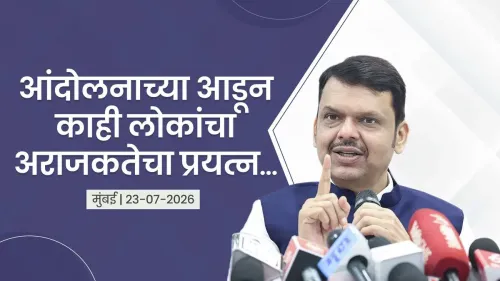
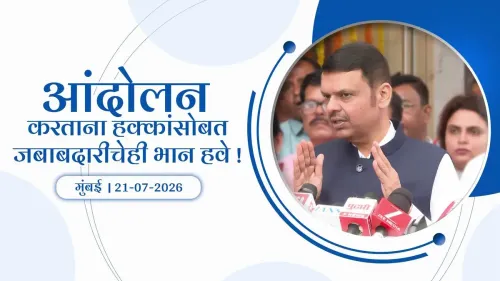
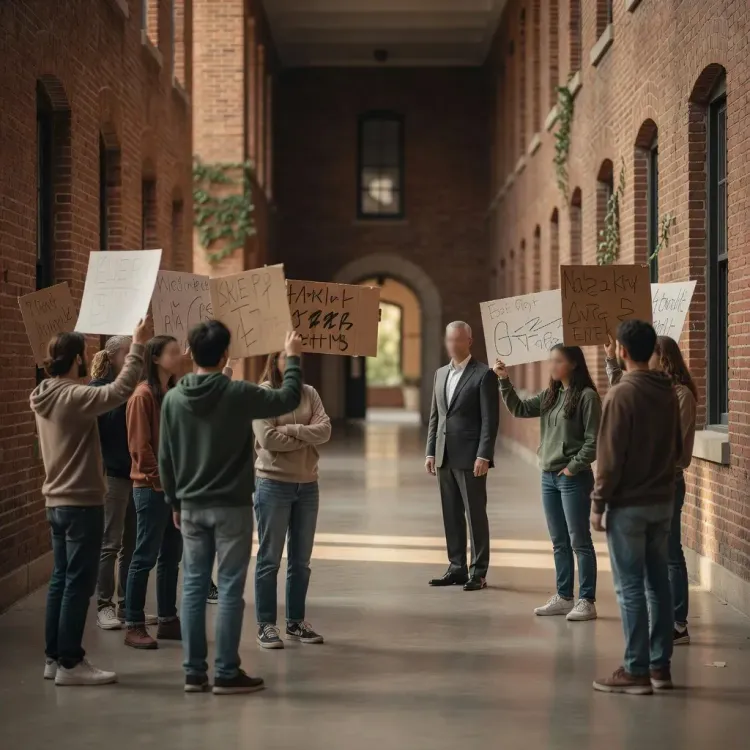
A student agitation in Mumbai has drawn a sharp political charge from the top — Maharashtra Chief Minister Devendra Fadnavis on Tuesday, October 6, 2026, accused unnamed individuals of using students as shields to pursue political agendas, warning that some are 'placing a gun on the shoulders of students to play politics.'
Posting in both Marathi and Hindi, Fadnavis made the accusation pointed but left the targets unnamed. In Marathi: 'आंदोलनात विद्यार्थ्यांच्या खांद्यावर बंदूक ठेवून राजकारण करण्याचा काही जण प्रयत्न करत आहेत' — some people are attempting to use students' shoulders to rest a gun and do politics in the agitation. The Hindi formulation was nearly identical, amplifying the message to a wider audience across the state.
The 'Gun on the Shoulder' Accusation
The phrase is a well-worn but still potent idiom in Indian political discourse — it evokes the image of cynical operators hiding behind innocent participants to fire political salvos while the students bear the risk. By choosing this specific metaphor, Fadnavis is not questioning the students' grievances; he is questioning who is directing the agitation and why. That distinction matters enormously in how the government is likely to respond — engaging with genuine demands while resisting pressure that is politically orchestrated.
The dual-language post, filed from Mumbai on October 6, signals the CM is speaking to both Marathi-speaking constituencies and the broader Hindi-belt audience that follows Maharashtra politics closely — a deliberate, calculated broadcast rather than an off-the-cuff remark.
What This Signals for the Agitation Ahead
When a sitting Chief Minister publicly frames an ongoing student movement as politically hijacked, it typically does two things: it puts opposition parties on the defensive — forcing them to either disavow involvement or defend their role — and it gives the administration political cover to hold firm without immediately conceding to movement demands. It also places pressure on student leaders themselves to demonstrate independence from any political sponsorship.
No specific demands, grievances, or names of student groups were mentioned in the post, and the research block carries no corroborating background on the specific agitation in question. What is clear is that the CM chose a public, multilingual, prime-time platform to fire this warning — a signal that the government sees the situation as politically significant enough to warrant a direct response from the highest office in the state.
The ball is now squarely in the opposition's court: deny involvement and risk looking passive, or own it and face the 'using students' charge head-on.
Point of View
Prime-time post is a calibrated pre-emption: by branding the agitation as politically orchestrated before demands crystallise publicly, the government shifts the narrative from 'what do students want' to 'who is pulling the strings.' This is a familiar BJP playbook in Maharashtra — separating legitimate youth grievances from opposition mobilisation to deny rivals a clean protest platform. The unnamed accusation is also strategically ambiguous, forcing multiple opposition factions to simultaneously wonder whether the charge is aimed at them. Watch for opposition parties to either distance themselves loudly or double down — both responses benefit the CM.
NationPress
6 Oct 2026
Frequently Asked Questions
What did CM Fadnavis say about the student protest in Mumbai?
CM Devendra Fadnavis accused unnamed individuals of 'placing a gun on the shoulders of students to do politics,' alleging that some people are exploiting an ongoing student agitation in Mumbai for political gain. He posted the warning in both Marathi and Hindi on October 6, 2026.
Which student agitation is Fadnavis referring to in his October 2026 post?
Fadnavis did not name the specific student agitation in his post. No corroborated details about the particular movement's demands or the groups involved were specified in his statement.
Why did Fadnavis post in both Marathi and Hindi?
Posting in both languages signals the CM's intent to reach Marathi-speaking Maharashtra constituents as well as the broader Hindi-speaking audience that follows state politics, amplifying the political warning to the widest possible readership.
What does 'placing a gun on students' shoulders' mean in Indian politics?
It is a common Indian political idiom meaning that cynical operators are using student protesters as cover — letting students take the risk and public heat while political actors pursue their own agendas from behind the scenes.
How might this statement affect the student agitation going forward?
By publicly framing the movement as politically hijacked, Fadnavis gives the administration cover to hold firm on demands while pressuring opposition parties to either deny involvement or defend their role — both of which shift attention away from the students' original grievances.