CM Fadnavis warns of anarchist elements in Mumbai protest
Synopsis
Maharashtra Chief Minister Devendra Fadnavis on 23 July 2026 publicly warned that certain individuals had joined a Mumbai agitation not to press genuine demands but to exploit the protest and spread anarchy, signalling the state government's intent to distinguish legitimate protesters from alleged disruptors.
Key Takeaways
Devendra Fadnavis posted the warning on 23 July 2026 at 5:52 PM IST from his official X account.
The statement was issued in both Marathi and Hindi , targeting local and national audiences simultaneously.
The CM drew a clear distinction between genuine protesters and those he accused of joining the agitation to 'create anarchy'.
The post was tagged #Maharashtra and #Mumbai , anchoring the agitation in the state capital.
Maharashtra has a history of government statements separating legitimate protest from alleged disruption, including during the 2018 reservation agitations.
No specific demands of the agitation or identities of the accused elements were named in the post.
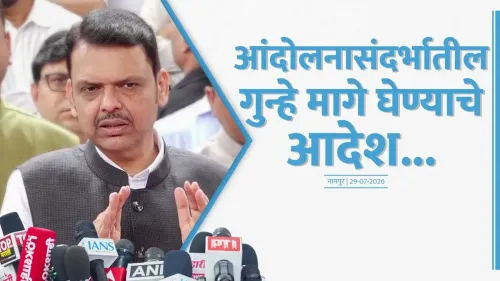
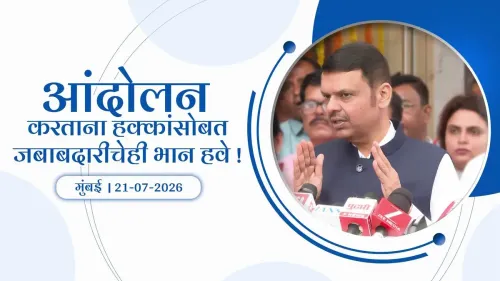
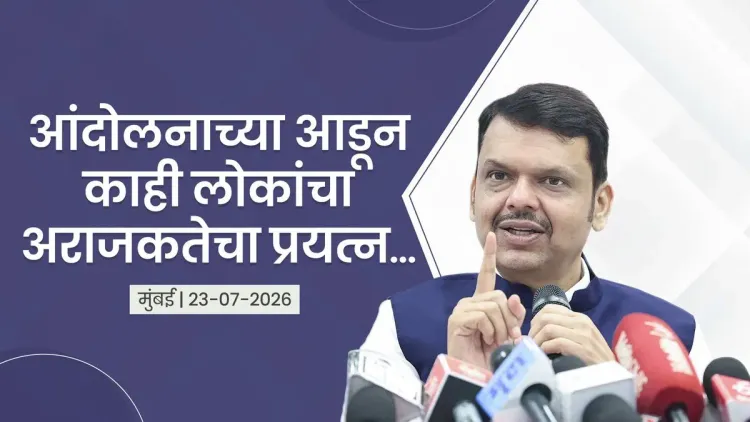
Maharashtra Chief Minister Devendra Fadnavis on Thursday, 23 July 2026 warned that certain individuals had joined an ongoing agitation in Mumbai not to press legitimate demands but to exploit the protest to spread anarchy. The statement, posted on X at 5:52 PM IST, was directed at distinguishing genuine demonstrators from those allegedly seeking to create disorder.
Posting in both Marathi and Hindi, Fadnavis wrote: 'आंदोलनाचा गैरफायदा घेऊन अराजकता कशी निर्माण करता येईल, या मानसिकतेने काही लोक आंदोलनात सहभागी' — translated: 'Some people have joined the agitation with the mindset of exploiting it to create anarchy.' He repeated the message in Hindi for a wider audience, underscoring its deliberate, public-order framing.
Context
The post was tagged #Maharashtra and #Mumbai, placing the agitation squarely in the state capital. While the specific protest referenced on 23 July 2026 has not been independently characterised by the government in this post, the Chief Minister's language signals that authorities are monitoring participation patterns closely. Mumbai, as India's financial centre, has historically been a focal point for large-scale public demonstrations that carry significant economic and administrative consequences.
Policy Backdrop
Maharashtra governments have a documented pattern of issuing public statements that draw a line between legitimate protest and alleged attempts at disruption — a practice seen during reservation-related agitations as far back as 2018. Fadnavis, a senior BJP leader who has served multiple terms in the state's top executive role, has consistently framed law-and-order messaging around the distinction between grievance redressal and manufactured chaos. The bilingual framing of Thursday's post — Marathi for the local constituency, Hindi for a national audience — reflects a deliberate communication strategy aimed at both state residents and a broader political gallery.
Across Indian states, chief ministers and senior leaders routinely use social media to pre-emptively characterise protest dynamics, particularly when agitations occur in high-visibility urban centres. Such statements serve a dual purpose: signalling administrative alertness to security forces and placing political responsibility for any violence on alleged 'outsider' elements rather than the state's own response.
Stakeholders and Impact
The statement directly implicates two sets of actors: the protesters with genuine demands, whom Fadnavis implicitly acknowledges, and a separate group he accuses of harbouring anarchist intent. Law enforcement agencies in Mumbai are the operational audience for such a signal, as it provides political cover for stricter crowd-management measures. Citizens participating in the agitation in good faith may find the broad characterisation contentious, as it does not specify which individuals or organisations are being accused.
For Mumbai's commercial districts and transport networks, any escalation of protest activity carries immediate economic costs, adding urgency to the government's desire to contain disorder before it spreads.
What's Next
Further official clarifications from the Maharashtra government are expected, including possible identification of the agitation's core demands and any security measures being deployed across Mumbai. Whether the state engages with protest leaders for dialogue or moves toward enforcement action will be the key variable to watch in the coming hours and days. The Chief Minister's public framing sets the tone: the administration is positioning itself as willing to hear legitimate grievances while signalling zero tolerance for what it characterises as deliberate attempts to create anarchy.
Point of View
The government establishes a narrative framework that pre-emptively justifies tougher policing. This mirrors a pattern seen across BJP-governed states where social media is used to shape public perception of protests before ground-level responses unfold. The absence of specifics — no named group, no named demand — gives the administration flexibility but also exposes it to criticism of painting all dissent with a broad brush. How the government follows up, whether with dialogue or enforcement, will determine whether this statement is seen as responsible governance or political deflection.
NationPress
21 Oct 2026
Frequently Asked Questions
What did CM Devendra Fadnavis say about the Mumbai protest on 23 July 2026?
Fadnavis warned that some individuals had joined an ongoing agitation in Mumbai with the intent to exploit it and spread anarchy, posting the statement in both Marathi and Hindi on X.
Which protest is Devendra Fadnavis referring to in his 23 July post?
The specific agitation is not named in the post; Fadnavis tagged #Maharashtra and #Mumbai, indicating the protest is taking place in Mumbai, but the exact demands and participants have not been officially identified in this statement.
What does 'anarchist elements in protests' mean in the context of Maharashtra?
It refers to the government's claim that certain individuals join legitimate agitations not to press genuine demands but to deliberately create disorder, a framing Maharashtra governments have used during past agitations including reservation protests in 2018.
How has the Maharashtra government responded to protests in the past?
Maharashtra governments have historically issued public statements distinguishing genuine protesters from alleged disruptors, and have deployed law enforcement to manage large demonstrations in Mumbai while sometimes engaging protest leaders in dialogue.
Why did Fadnavis post his warning in both Marathi and Hindi?
Posting in Marathi addresses the local Maharashtra audience, while Hindi reaches a broader national audience, reflecting a deliberate dual-communication strategy common among senior BJP leaders on high-visibility law-and-order issues.