CAG flags Maharashtra off-budget borrowings at ₹28,325 crore, debt understated
Synopsis
India's CAG has found that Maharashtra quietly accumulated ₹28,325 crore in off-budget borrowings through MSRDC — kept entirely outside official budget documents — pushing the state's true debt to ₹8,87,422 crore, or nearly 20% of GSDP. The findings land squarely in the lap of the Fadnavis government, which inherited the fiscal architecture it helped design.
Key Takeaways
The CAG flagged ₹28,325 crore in off-budget borrowings by Maharashtra as of the end of 2024–25 , excluded from official budget documents.
The Maharashtra State Road Development Corporation (MSRDC) raised these loans from HUDCO , backed by state guarantees, over three fiscal years.
Including hidden borrowings, Maharashtra's adjusted liabilities rise to ₹8,87,422 crore — 19.58% of GSDP.
The state's revenue deficit widened to ₹29,994.76 crore , indicating growing reliance on borrowed funds for day-to-day expenses.
Committed expenditures — salaries, pensions, interest, subsidies — consumed 63.45% of total revenue receipts.
The CAG warned the practice undermines inter-generational equity and keeps the true debt position away from democratic scrutiny.
The Comptroller and Auditor General (CAG) of India has raised serious concerns over Maharashtra's fiscal transparency, revealing that the state's off-budget borrowings surged to ₹28,325 crore by the close of the 2024–25 fiscal year. According to the latest State Finances Audit Report, these liabilities were kept out of official budget documents, effectively understating the state's total debt and bypassing legislative scrutiny.
How the Borrowings Were Structured
The Maharashtra State Road Development Corporation (MSRDC) served as the primary conduit for these off-budget borrowings, raising loans from the Housing and Urban Development Corporation Limited (HUDCO) backed by state government guarantees. The borrowings escalated sharply over three consecutive fiscal years: ₹2,500 crore in 2022–23, ₹7,700 crore in 2023–24, and ₹18,440 crore in 2024–25.
The CAG noted that the Finance Department's own sanction conditions require the state to make annual budgetary provisions for repaying principal and interest on these loans — effectively making them a direct liability on the state exchequer, regardless of how they are classified in official documents.
The Political Context
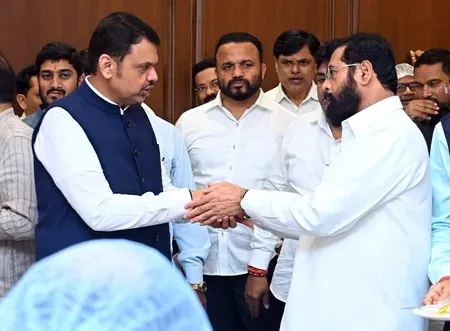
The bulk of the fiscal period under review fell under the chief ministership of Eknath Shinde, with Bharatiya Janata Party (BJP) leader Devendra Fadnavis serving as Finance Minister at the time. Following the November 2024 assembly elections, Fadnavis assumed charge as Chief Minister, while Shinde moved into the role of Deputy Chief Minister. The audit findings are likely to place the ruling alliance under fresh political pressure.
True Debt Burden and GSDP Impact
Maharashtra's official accounts pegged the state's outstanding public debt and other liabilities at ₹8,59,097 crore. Once the hidden off-budget borrowings are factored in, the adjusted figure rises to ₹8,87,422 crore. With the state's Gross State Domestic Product (GSDP) estimated at ₹45,31,518 crore, this revised debt mountain constitutes 19.58 per cent of GSDP.
Under the Maharashtra Fiscal Responsibility and Budgetary Management (MFRBM) Act, 2005, total liabilities must encompass all borrowings under the Consolidated Fund and Public Account. The CAG pointed out that by excluding non-budgetary receipts that are ultimately serviced through the state budget, the government has concealed the true scale of its debt obligations.
Deeper Fiscal Concerns Flagged
Beyond the off-budget borrowings, the CAG highlighted broader systemic weaknesses in Maharashtra's financial management. Although the state kept its overall fiscal deficit within the MFRBM ceiling at 2.74 per cent of GSDP, its revenue deficit widened sharply to ₹29,994.76 crore — a signal that the state is increasingly borrowing to fund routine administrative expenses rather than capital investment.
Committed expenditures — comprising government salaries, pensions, interest payments, and subsidies — consumed a substantial 63.45 per cent of total revenue receipts, leaving limited fiscal space for development spending. The audit also flagged the practice of parking large unspent balances in Virtual Personal Deposit Accounts and Drawing and Disbursing Officers' (DDO) bank accounts, warning that this manoeuvre artificially inflates reported annual expenditure and deficit figures.
The CAG's report warned that creating such undisclosed liabilities raises serious questions about inter-generational equity, keeping the state's true debt position away from democratic scrutiny. The findings are expected to intensify demands for greater transparency in Maharashtra's fiscal reporting going forward.
Point of View
325 crore in MSRDC-routed debt is not a clerical omission — it is a structural workaround that erodes the very purpose of fiscal responsibility legislation. What makes this particularly pointed is that Devendra Fadnavis, who presided over the Finance Ministry during the bulk of this borrowing spree, now sits in the Chief Minister's chair. The political accountability loop is unusually short. More troubling still is the revenue deficit trajectory: a state that cannot fund its own salaries and pensions without borrowing is not investing in growth — it is mortgaging future taxpayers to pay today's bills.
NationPress
9 Oct 2026
Frequently Asked Questions
What did the CAG find in Maharashtra's State Finances Audit Report?
The CAG found that Maharashtra accumulated ₹28,325 crore in off-budget borrowings by the end of 2024–25 , which were excluded from official budget documents. This understated the state's total debt and bypassed legislative oversight, violating the spirit of the MFRBM Act, 2005.
How were Maharashtra's off-budget borrowings structured?
The borrowings were routed through the Maharashtra State Road Development Corporation (MSRDC) , which raised loans from HUDCO backed by state government guarantees. The amounts were ₹2,500 crore in 2022–23, ₹7,700 crore in 2023–24, and ₹18,440 crore in 2024–25.
What is Maharashtra's true debt burden after the CAG adjustment?
After including the off-budget borrowings, Maharashtra's adjusted liabilities stand at ₹8,87,422 crore , compared to the officially reported ₹8,59,097 crore . This revised figure equals 19.58% of the state's GSDP of ₹45,31,518 crore.
Who was in charge of Maharashtra's finances during the period under review?
The bulk of the period covered by the audit fell under Chief Minister Eknath Shinde , with Devendra Fadnavis serving as Finance Minister. After the November 2024 assembly elections, Fadnavis became Chief Minister and Shinde became Deputy Chief Minister.
What other fiscal concerns did the CAG raise about Maharashtra?
Beyond hidden debt, the CAG flagged a widening revenue deficit of ₹29,994.76 crore , committed expenditures consuming 63.45% of revenue receipts, and the artificial inflation of expenditure figures through unspent balances parked in Virtual Personal Deposit Accounts and DDO bank accounts.