Calcutta HC stays railway land evictions in 25 cases till June 30

Synopsis
The Calcutta High Court has put the brakes on railway eviction drives across West Bengal, staying proceedings in 25 clubbed cases until June 30. With land ownership itself in dispute and prior permissions unacknowledged, the court has turned the spotlight back on the railways — asking them to prove the land is theirs before a single shop is demolished.
Key Takeaways
The Calcutta High Court on 17 June stayed railway eviction proceedings in 25 cases until 30 June .
The stay covers stations including Ballygunge , Jadavpur , Baruipur , Dankuni , Habra , and others across West Bengal .
Justice Hiranmay Bhattacharyya directed railways to physically verify land records and submit reports before any evictions proceed.
Railways must also clarify the status of persons previously permitted to operate at these locations.
The drives had already been carried out at Howrah , Sealdah , Jadavpur , Dum Dum , and Habra stations before the court order.
Hawkers and shopkeepers had filed 25 individual petitions, later clubbed into one, citing illegal demolitions and loss of livelihood.
The Calcutta High Court on Wednesday, 17 June stayed eviction proceedings in 25 cases challenging railway land clearance drives across West Bengal, barring any demolitions until 30 June. The interim order covers multiple locations adjacent to railway stations and comes amid mounting protests from hawkers and shopkeepers who claim they are losing their livelihoods overnight.
Key Developments
The stay applies to eviction notices issued by railway authorities at stations including Ballygunge, Bamangachi, Baruipur, Dankuni, Guma, Banga, Durganagar, Mathurapur, and Jadavpur. The court made clear that none of the existing notices can be implemented until the matter is heard further.
The 25 individual petitions challenging the drives were subsequently clubbed into a single petition before the bench.
What the Court Directed
Justice Hiranmay Bhattacharyya directed railway authorities to conduct physical verification of all disputed locations and submit land records to the court. Where petitioners allege that the land in question does not actually belong to the railways, the burden now falls on the railways to establish ownership before any eviction can proceed.
In cases where individuals were previously permitted by the railways to operate at these locations, the railways must submit a separate status report clarifying their standing. The court also indicated that the question of alternative arrangements for affected persons must be addressed before any evictions are carried out.
Background: The Eviction Drives
The legal challenge follows a series of bulldozer-led demolition drives by railway authorities across stations in the state. Most recently, at Habra railway station in North 24 Parganas district, authorities had given shop owners until 15 June to vacate. When they did not comply, bulldozers were deployed to demolish the establishments one by one.
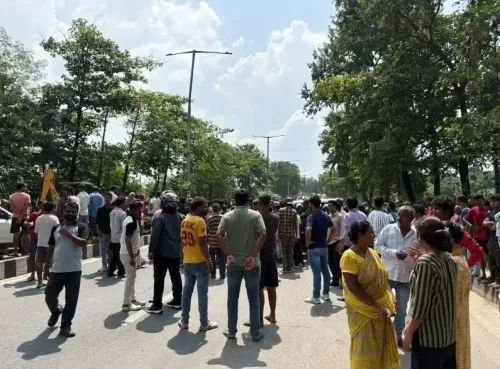
Earlier drives had been carried out at Howrah and Sealdah stations in Kolkata, as well as at Jadavpur and Dum Dum stations. A section of affected shopkeepers alleged that the manner of demolition was illegal, and hawkers held protests and processions at several locations claiming sudden loss of livelihood.
What Happens Next
Railway authorities must now submit land verification reports and status clarifications to the court before 30 June. The High Court's order effectively puts all pending eviction notices on hold across the covered stations. How the railways respond — particularly on the question of land ownership and prior permissions — will likely determine whether the stay is extended or evictions are allowed to resume after the deadline.
Point of View
The legal and moral basis for sudden eviction weakens considerably. How the railways respond to the court's demands will be a test of whether these drives were procedurally sound or administratively rushed.
NationPress
19 Sept 2026
Frequently Asked Questions
What did the Calcutta High Court order regarding railway evictions?
The Calcutta High Court stayed eviction proceedings in 25 cases related to alleged encroachments on railway land until 30 June. The court barred railway authorities from implementing any eviction notices at the covered locations until further hearing.
Which stations are covered under the Calcutta High Court stay order?
The stay covers areas adjacent to railway stations including Ballygunge, Bamangachi, Baruipur, Dankuni, Guma, Banga, Durganagar, Mathurapur, and Jadavpur, among others in West Bengal.
Why are petitioners challenging the railway eviction notices?
Petitioners, including hawkers and shopkeepers, allege that the eviction drives were carried out illegally and that the land targeted may not actually belong to the railways. Some also claim they had prior permission from railway authorities to operate at these locations.
What has the court asked the railways to do before June 30?
Justice Hiranmay Bhattacharyya directed railways to conduct physical verification of all disputed locations, submit land records, clarify the status of persons previously permitted to operate there, and consider alternative arrangements for affected persons before any evictions proceed.
What eviction drives had already taken place before the court order?
Railway authorities had carried out bulldozer-led demolitions at Habra station in North 24 Parganas, as well as at Howrah, Sealdah, Jadavpur, and Dum Dum stations in Kolkata, before the High Court issued its stay order.