CAQM Squads Catch 34 Road Dust Violations Across Delhi Zones
Synopsis
CAQM's five flying squads flagged 34 road dust violations across Civil Lines, Karol Bagh, and West Delhi zones in a single day, exposing gaps in MCD's dust control operations. With summer amplifying particulate pollution, the Commission has ordered immediate mechanised sweeping, water sprinkling, and C&D waste removal under its ongoing 'Operation Clean Air' drive.
Key Takeaways
34 road dust violations were detected by five CAQM flying squads during inspections in Delhi on Wednesday, April 23, 2025 .
Violations were found across 13 road stretches in three MCD zones: Civil Lines , Karol Bagh , and West Delhi .
The violations primarily involved visible road dust and construction & demolition (C&D) waste accumulation at multiple locations.
CAQM directed MCD to enforce mechanised sweeping , water sprinkling , and prompt C&D waste removal immediately.
The inspections are part of 'Operation Clean Air' , which will continue regularly across Delhi-NCR to combat localised air pollution.
The Commission reiterated the importance of GRAP compliance and inter-agency coordination to manage PM2.5 and PM10 pollution levels.
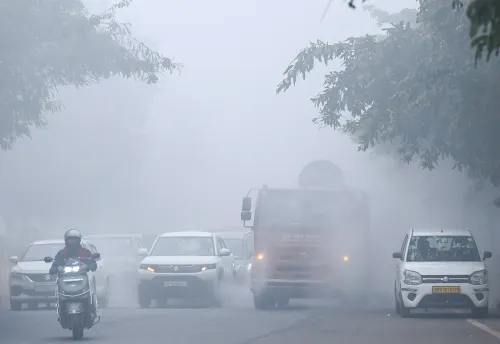
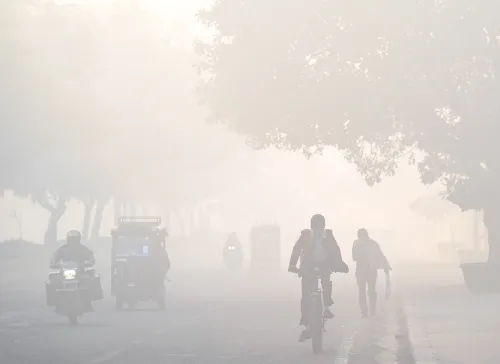
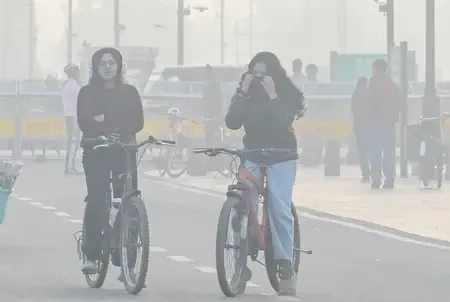
New Delhi, April 23: Five flying squads deployed by the Commission for Air Quality Management (CAQM) detected 34 visible road dust violations across three municipal zones of Delhi on Wednesday, April 23, during a structured field inspection under 'Operation Clean Air'. The violations, spread across Civil Lines, Karol Bagh, and West Delhi zones under the jurisdiction of the Municipal Corporation of Delhi (MCD), point to serious gaps in routine dust management and construction waste disposal. The CAQM has since directed the MCD to immediately strengthen on-ground enforcement of dust suppression protocols.
Where the Violations Were Found
The inspection teams identified road dust violations on 13 major road stretches across the three Delhi zones. These included Mahakavi Goswami Tulsidas Marg, Keshopur Road, Najafgarh Road, Vedic Marg, Satguru Ram Singh Marg, Ring Road (Punjabi Bagh), Baba Ramdev Marg, Malkaganj Road, Ramlal Kapoor Marg, Shanti Swaroop Tyagi Marg, Azadpur Road, Bhalswa Dairy Road, and Faiz Road.
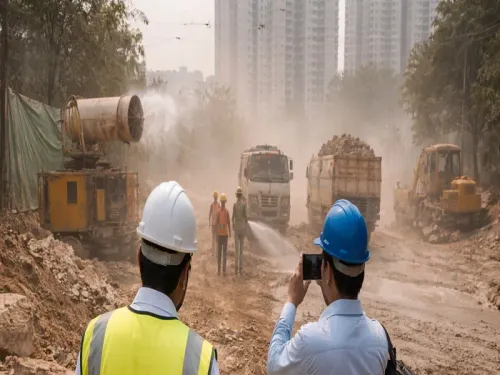
The violations primarily involved high levels of visible road dust and the accumulation of construction and demolition (C&D) waste at multiple sites. These conditions, according to the CAQM, directly indicate failures in scheduled road sweeping, inadequate water sprinkling, and delays in C&D waste removal.
What CAQM Has Directed MCD to Do
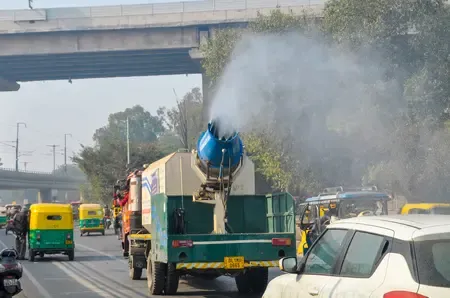
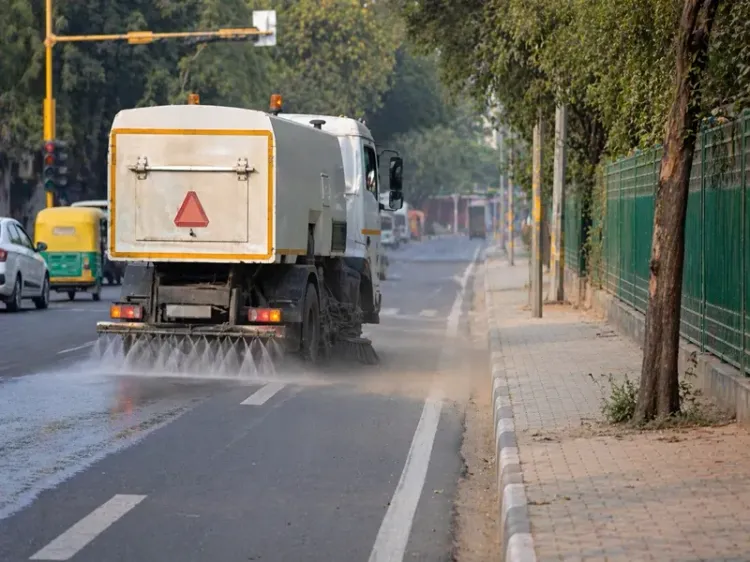
The CAQM has issued firm directions to the MCD to ensure regular mechanised road sweeping, effective and consistent water sprinkling operations, and the prompt removal of C&D waste from all public roads. The Commission has also called for strict enforcement against unauthorised dumping across the inspected zones.
The CAQM further instructed concerned agencies to fix accountability for lapses, upgrade monitoring mechanisms, and ensure full compliance with prescribed statutory guidelines. The Commission emphasised that road dust and poorly managed C&D waste are among the most significant contributors to particulate matter (PM2.5 and PM10) pollution in urban Delhi.
Operation Clean Air: Broader Context
This inspection drive is part of the CAQM's ongoing 'Operation Clean Air' initiative, a sustained enforcement campaign targeting localised air pollution sources across the Delhi-NCR region. The Commission reiterated that such drives will continue regularly to identify and address pollution hotspots before they escalate.
Notably, Delhi has historically ranked among the world's most polluted capital cities, with road dust alone estimated to contribute 28–38% of PM10 levels during non-winter months, according to environmental studies. The CAQM's intensified enforcement comes at a time when pre-monsoon dry weather conditions amplify dust resuspension, making road-level interventions especially critical.
The Commission also underscored the importance of close inter-agency coordination to ensure effective implementation of the Graded Response Action Plan (GRAP) — a tiered emergency response framework that activates pollution control measures based on the Air Quality Index (AQI) levels recorded in Delhi-NCR.
Why This Matters for Delhi Residents
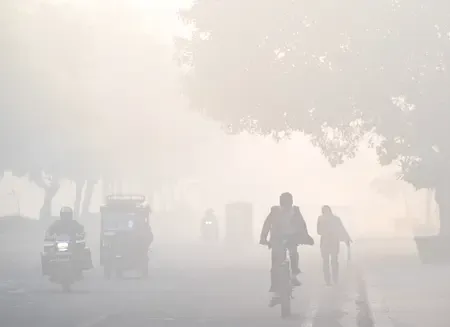
For millions of Delhi residents, particularly those living along arterial roads and near construction zones, unchecked road dust translates directly into elevated exposure to PM2.5 and PM10 particulates — pollutants linked to respiratory diseases, cardiovascular conditions, and reduced life expectancy. Children, the elderly, and those with pre-existing conditions are most vulnerable.
The MCD's track record on mechanised sweeping has faced criticism from environmental advocates, with audits in previous years flagging underutilisation of sweeping machines and irregular water tanker deployment. Critics argue that without fixed accountability and real-time monitoring, such inspection findings risk becoming routine paperwork rather than catalysts for systemic change.
What Comes Next
The CAQM has made clear that enforcement drives under 'Operation Clean Air' will intensify in the coming weeks, with flying squads continuing to assess compliance across all Delhi-NCR zones. Agencies that fail to meet prescribed standards could face escalating regulatory action under CAQM's statutory powers. With summer conditions driving up dust levels and the monsoon still months away, the pressure on the MCD to demonstrate measurable improvement is mounting rapidly.
Point of View
Pre-monsoon dust levels spike, inspections happen, directions are issued — and the cycle repeats. The real question isn't whether CAQM can find violations; it's why the MCD consistently fails to prevent them without external pressure. Until accountability is fixed at the ward and zone level — with consequences for officers, not just agencies — 'Operation Clean Air' risks becoming performative enforcement rather than a structural fix for Delhi's air crisis.
NationPress
19 Sept 2026
Frequently Asked Questions
What did CAQM find during its Delhi inspection on April 23, 2025?
CAQM's five flying squads detected 34 visible road dust violations across Civil Lines, Karol Bagh, and West Delhi zones under MCD jurisdiction. The violations included high levels of road dust and accumulation of construction and demolition waste on 13 major road stretches.
Which roads in Delhi were found to have road dust violations?
Violations were recorded on roads including Najafgarh Road, Ring Road (Punjabi Bagh), Azadpur Road, Bhalswa Dairy Road, Faiz Road, Malkaganj Road, and several others across three Delhi zones. These roads showed high visible dust levels and C&D waste accumulation.
What action has CAQM directed MCD to take after the inspection?
CAQM has directed MCD to ensure regular mechanised road sweeping, consistent water sprinkling, prompt C&D waste removal, and strict enforcement against unauthorised dumping. The Commission also called for fixing accountability for lapses and strengthening monitoring mechanisms.
What is Operation Clean Air and how does it work?
Operation Clean Air is CAQM's ongoing enforcement initiative that deploys flying squads to inspect roads and construction sites across Delhi-NCR for air pollution violations. The squads identify localised pollution sources and direct municipal agencies to take corrective action under statutory CAQM guidelines.
How does road dust contribute to Delhi's air pollution?
Road dust is one of the largest contributors to PM10 particulate pollution in Delhi, especially during dry pre-monsoon months, with studies estimating it accounts for 28–38% of PM10 levels. Unmanaged construction and demolition waste further worsens particulate pollution in urban areas.