CBI Challenges Kejriwal's Affidavit in Delhi Excise Policy Case
Synopsis
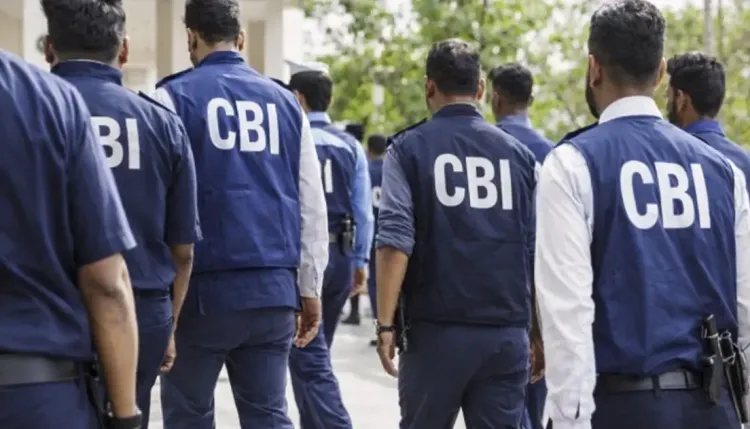
In a significant move, the CBI has contested Arvind Kejriwal's supplementary affidavit aimed at recusing Justice Sharma from the Delhi excise policy case, labeling it a tactic to undermine judicial integrity.
Key Takeaways
The CBI has labeled Kejriwal's affidavit as a belated afterthought.
Concerns have been raised about judicial integrity and external pressures.
The implications of conflict of interest claims could affect the entire judiciary.
The agency asserts that information in the affidavit was misrepresented.
The case is critical for the future of the Delhi excise policy and related legal proceedings.
New Delhi, April 16 (NationPress) The Central Bureau of Investigation (CBI) has objected to the supplementary affidavit submitted by Arvind Kejriwal, the national convenor of the Aam Aadmi Party (AAP), which supports his request for the recusal of Justice Swarana Kanta Sharma from adjudicating the Delhi excise policy case. The CBI characterized this document as a “belated afterthought” intended to tarnish institutions and apply undue pressure on the judiciary.
In its written statements presented to the Delhi High Court, the investigative agency asserted that Kejriwal’s affidavit dated April 14 was filed after the conclusion of arguments and the reservation of judgment regarding the recusal request. This act was seen as an attempt to “further malign the institutions and individuals.”
“This written submission has been filed solely to counter a late effort to further harm the reputation of institutions and individuals through the affidavit dated 14.04.2026, which is evidently an afterthought,” the CBI remarked.
The CBI accused Kejriwal of attempting to “embarrass, malign, browbeat, and pressure” the court, arguing that allowing such claims would have grave consequences for the integrity of the judiciary.
“This case should be viewed as a test case in the broader interest of institutional integrity, the dignity of courts nationwide, and an opportunity to eliminate such dubious practices at the outset,” the agency contended.
Refuting Kejriwal’s claims of a conflict of interest related to the inclusion of Justice Sharma’s immediate family members as government panel lawyers, the CBI argued that accepting such claims would effectively disqualify judges across the nation from handling cases involving governments or public sector bodies solely because their relatives are associated with legal panels.
“If such a plea is accepted, all judges throughout the country would be disqualified from hearing matters pertaining to any government or political figure, regardless of their stature, if their relatives are part of any government panel, whether at the Central or State level,” the CBI stated.
The agency further asserted that the information cited in Kejriwal’s affidavit had been “deliberately misrepresented” on social media and was founded on a misinterpretation of docket allocation records under the RTI Act.
According to the CBI, the RTI information only disclosed the “number of dockets” assigned to panel lawyers, not the number of cases allocated to them.
“The figures being maliciously circulated on social media, suggesting ‘the number of cases assigned,’ are fundamentally incorrect since they actually represent ‘number of dockets,’” the CBI clarified.
The agency also proposed that the RTI mechanism had been employed at Kejriwal’s instigation as part of a coordinated effort to pressure the Delhi High Court, citing the timing of the RTI request, subsequent social media activities, and retweets from Kejriwal and AAP leaders.
Moreover, it alleged that Kejriwal had previously initiated proceedings in the Supreme Court to seek the transfer of the case from Justice Sharma but later abandoned them, claiming this was merely a tactic to exert pressure and defame the institution.
“It is evident that the respondent no. 18 knows it is impossible to uphold and effectively defend the discharge order… and is thus doing everything possible to prevent the matter from being heard on its merits,” the CBI stated.
The additional affidavit has been submitted concerning the pending recusal request made by Kejriwal and other defendants, seeking to transfer the hearing on the CBI’s revision plea to a different Bench.
Previously, after listening to extensive arguments from Kejriwal, who appeared personally, and Solicitor General Tushar Mehta representing the CBI, the Delhi High Court had reserved its judgment on the recusal request.
The recusal request emerged from the CBI’s revision petition challenging a trial court ruling that discharged Kejriwal, former Deputy Chief Minister Manish Sisodia, and other defendants in the alleged corruption case linked to the now-repealed Delhi Excise Policy 2021–22.
Point of View
The CBI's stance against Kejriwal's affidavit highlights the ongoing complexities surrounding judicial integrity. As political figures engage in legal battles, it is crucial to assess the broader implications for governmental institutions and the judiciary.
NationPress
19 Sept 2026
Frequently Asked Questions
What is the basis for the CBI's opposition to Kejriwal's affidavit?
The CBI argues that Kejriwal's affidavit is a belated attempt to malign institutions and apply pressure on the judiciary, submitted after the arguments had concluded.
What allegations does the CBI make regarding Kejriwal's conduct?
The CBI alleges that Kejriwal is trying to embarrass and pressure the court, which could undermine the integrity of the judicial system.
How does the CBI respond to claims of conflict of interest involving Justice Sharma?
The CBI contends that accepting such conflict of interest claims would disqualify numerous judges from hearing cases involving governments, which is impractical.
What are the implications of the CBI's claims about the RTI information?
The CBI claims that the information cited by Kejriwal has been misrepresented, and the figures discussed do not accurately reflect the number of cases assigned.
What is the current status of the recusal application?
The Delhi High Court has reserved its judgment on the recusal plea after hearing arguments from both Kejriwal and the CBI.