PM-RKVY: Centre releases ₹1,200 crore to 10 states for farm scheme
Synopsis
The Centre has released over ₹1,200 crore across 10 states under PM-RKVY in a single sitting, with West Bengal topping allocations at ₹290 crore. Agriculture Minister Shivraj Singh Chouhan paired the fund release with a new monthly review architecture, a soil health campaign, and a 48-hour MSP payment guarantee — signalling a shift from policy announcements to execution accountability.
Key Takeaways
Agriculture Minister Shivraj Singh Chouhan released over ₹1,200 crore to 10 states under PM-RKVY on 29 September .
West Bengal received the largest allocation at ₹290 crore ; Punjab the smallest at ₹43 crore .
Agriculture growth rate has reportedly risen from 3% to 4.5% since 2015 ; annual foodgrain production gains doubled to 84 lakh tonnes .
A new monthly virtual review mechanism with states and district-level meetings will be introduced to track implementation.
100% assured MSP procurement of tur, urad, and masoor with 48-hour payment guaranteed to farmers.
Nationwide 'Khet Bachao Abhiyan' to run from 22 October to 30 November to promote soil health and balanced fertiliser use.
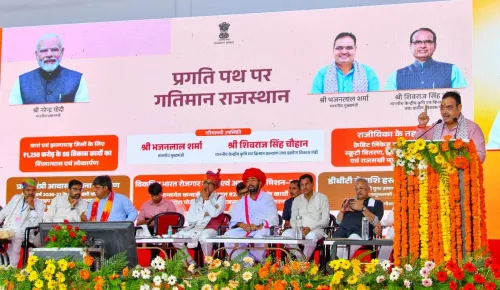
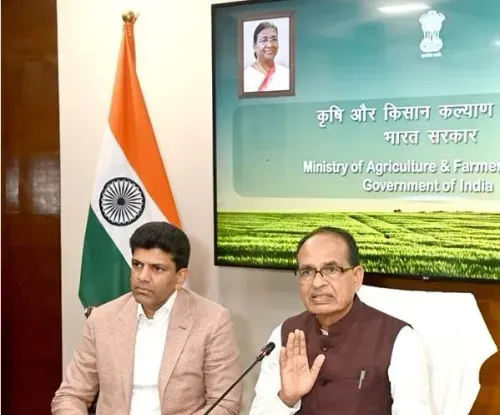
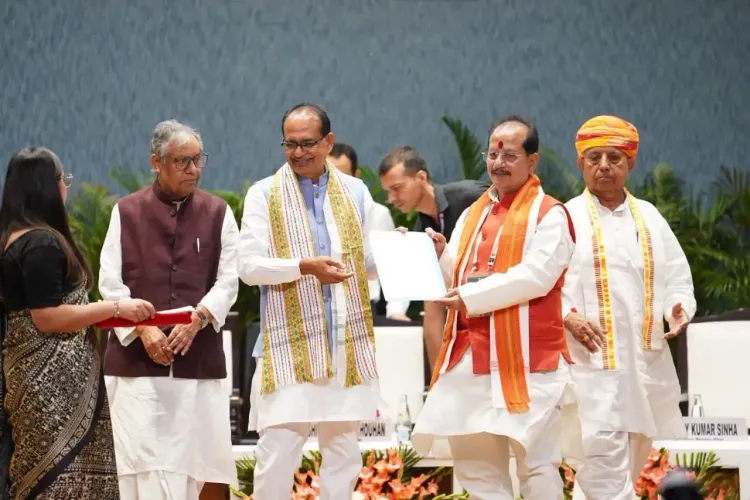
Agriculture Minister Shivraj Singh Chouhan on Tuesday, 29 September handed over financial sanction letters totalling more than ₹1,200 crore to agriculture ministers of 10 states under the Prime Minister Rashtriya Krishi Vikas Yojana (PM-RKVY), signalling the Centre's push to accelerate on-ground implementation of the flagship agricultural development scheme.
State-wise Allocation Breakdown
The disbursement was distributed across states as follows: West Bengal received the largest share at ₹290 crore, followed by Haryana at ₹198 crore and Chhattisgarh at ₹181 crore. Arunachal Pradesh was allocated ₹154 crore, Bihar ₹114 crore, and Karnataka ₹104 crore. Smaller allocations went to Mizoram (₹75 crore), Himachal Pradesh (₹64 crore), Jharkhand (₹58 crore), and Punjab (₹43 crore).
What Chouhan Said at the Meeting
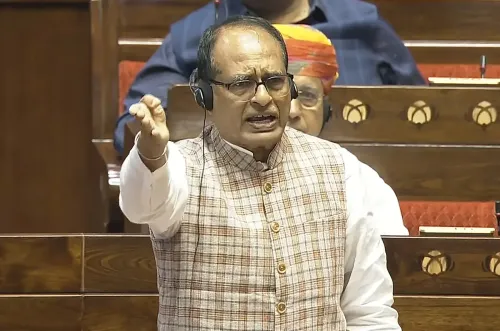
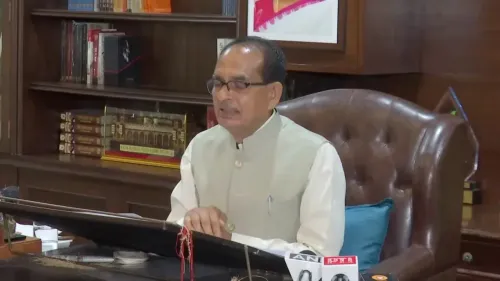
Chairing a national review meeting attended by agriculture ministers and senior officials from the recipient states, Chouhan emphasised that the Union Government was moving beyond policy formulation toward ensuring 'timely availability of resources so that implementation can begin on the ground without delay.'
Highlighting the country's agricultural trajectory, Chouhan noted that since 2015, the agriculture growth rate has climbed from 3% to 4.5%. Average annual foodgrain production increases have reportedly more than doubled — rising from around 40 lakh tonnes earlier to 84 lakh tonnes per year. He further stated that rabi foodgrain production recorded an unprecedented increase of 205 lakh tonnes in just two years, from 2023-24 to 2025-26.
New Review Mechanism and State Agriculture Teams
Chouhan announced a new cooperative federalism mechanism: regular monthly virtual review meetings with states, modelled on weekly Centre-level reviews, to continuously assess scheme progress. At the state level, a dedicated State Agriculture Team will be constituted, bringing together the Agriculture Minister, Agriculture Secretary, state agricultural universities, ICAR institutions, Krishi Vigyan Kendras (KVKs), ATMA, and Farmer Producer Organisations (FPOs). Monthly district-level meetings will also be held in parallel.
Soil Health, Rabi Season and Farmer Pricing
Chouhan called for a nationwide 'Khet Bachao Abhiyan' from 22 October to 30 November this year, aimed at promoting balanced fertiliser use based on Soil Health Cards to protect soil fertility and beneficial insects. He also advocated large-scale pulse cultivation in rice fallow areas of eastern India — particularly in Jharkhand, Bihar, Odisha, and West Bengal — after the paddy harvest.
On farmer income, Chouhan said the government would ensure 100% assured procurement of tur, urad, and masoor at Minimum Support Price (MSP), with payment guaranteed within 48 hours. He added that India would leverage emerging opportunities under new international Free Trade Agreements (FTAs) to connect Indian agricultural produce — fruits, vegetables, and foodgrains — with global markets, in line with Prime Minister Narendra Modi's vision of positioning India as a major 'food basket' for the world.
With the rabi season underway, Chouhan directed states to base crop and seed recommendations on soil moisture and water availability, and to take strict legal action against fake fertilisers, spurious seeds, and sub-standard pesticides. The next phase of PM-RKVY implementation will be closely watched as states begin translating these funds into field-level programmes.
Point of View
200 crore disbursement is meaningful in scale, but the more consequential move is the monthly virtual review mechanism — if enforced, it creates a paper trail of state-level accountability that earlier iterations of RKVY lacked. The 48-hour MSP payment pledge for tur, urad, and masoor is politically significant ahead of rabi sowing, but its credibility depends entirely on procurement infrastructure that remains uneven across states. The agriculture growth rate improvement from 3% to 4.5% since 2015 is a genuine positive, but the sector's vulnerability to monsoon variability means structural gains can reverse quickly. The push into international FTAs as a farmer income lever is ambitious — but the gap between trade agreement text and farmgate price realisation is historically wide in India.
NationPress
29 Sept 2026
Frequently Asked Questions
What is PM-RKVY and which states received funds?
PM-RKVY, or the Prime Minister Rashtriya Krishi Vikas Yojana, is a central scheme aimed at boosting agricultural development across India. On 29 September, the Centre released over ₹1,200 crore to 10 states — West Bengal, Haryana, Chhattisgarh, Arunachal Pradesh, Bihar, Karnataka, Mizoram, Himachal Pradesh, Jharkhand, and Punjab.
How much did each state receive under PM-RKVY?
West Bengal received the largest allocation at ₹290 crore, followed by Haryana (₹198 crore), Chhattisgarh (₹181 crore), Arunachal Pradesh (₹154 crore), Bihar (₹114 crore), Karnataka (₹104 crore), Mizoram (₹75 crore), Himachal Pradesh (₹64 crore), Jharkhand (₹58 crore), and Punjab (₹43 crore).
What is the 'Khet Bachao Abhiyan' announced by Shivraj Singh Chouhan?
The 'Khet Bachao Abhiyan' is a nationwide soil health campaign announced by Agriculture Minister Shivraj Singh Chouhan, scheduled to run from 22 October to 30 November 2025. It aims to promote balanced fertiliser use based on Soil Health Cards to protect soil fertility and beneficial insects, with scientists and key agricultural stakeholders participating.
What is the government's MSP payment guarantee for pulses?
The Centre has committed to 100% assured government procurement of tur, urad, and masoor at Minimum Support Price (MSP), with payment to farmers guaranteed within 48 hours of procurement. This applies for the current agricultural season.
What new review mechanism has been introduced for PM-RKVY implementation?
Agriculture Minister Chouhan announced monthly virtual review meetings between the Centre and states to track scheme progress, modelled on existing weekly Centre-level reviews. Each state will also constitute a State Agriculture Team comprising the Agriculture Minister, Agriculture Secretary, state agricultural universities, ICAR institutions, KVKs, ATMA, and FPOs, with district-level monthly meetings running in parallel.