Is the Centre Challenging the Kerala HC's Ruling on 'Haal'?
Click to start listening
Synopsis
The Union Government's appeal against the Kerala HC's ruling on 'Haal' raises important questions about censorship and interfaith representation in cinema. With the case set for further hearing, the implications for filmmakers and the film industry are significant.
Key Takeaways
- Union Government appeals against Kerala HC ruling.
- Impact on the Malayalam film 'Haal' is significant.
- Court examines procedural gaps in CBFC appeals.
- Future of film certification and censorship at stake.
- Next hearing scheduled for December 8.
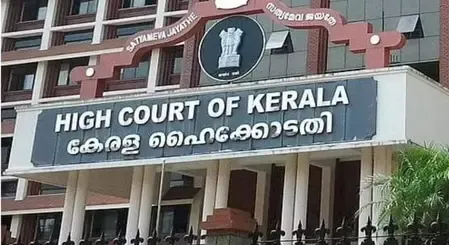
Kochi, Dec 4 (NationPress) The Union Government has initiated an appeal to the Kerala High Court on Thursday, contesting a recent judgment from a single bench that annulled the 'A' certificate and ordered cuts for the Malayalam film 'Haal'.
This appeal has been filed by the Union Government in conjunction with the Regional Officer, Chairman, and Revising Committee of the Central Board of Film Certification (CBFC).
Notably, this marks the second challenge to the aforementioned verdict.
Previously, the Kerala Catholic Congress had also approached the court regarding this matter.
In its argument, the Centre asserted that the Single Bench should not have entertained the filmmaker's petition under Article 226 of the Constitution when a statutory appeal mechanism is available under the Cinematograph Act.
The government maintained that the CBFC's A-certificate was warranted, considering the “overall impact” of the film and its depiction of interfaith relationships.
The appeal emphasized that the theme and treatment of the subject matter necessitate a mature audience.
A Division Bench comprising Justice Sushrut Arvind Dharmadhikari and Justice P.V. Balakrishnan reviewed both appeals together on Thursday.
The Centre raised an objection regarding the maintainability, arguing that the writ petition should not have been accepted.
The Bench noted that the absence of specific High Court Rules governing appeals from CBFC decisions has created a procedural gap.
“There must be some provision in the Rules of the High Court... Since there is no provision and Rules have not been formulated, the only remedy available is under Article 226,” the Bench stated orally.
The judges hinted that they would instruct the Registrar General to take action in drafting rules and establishing a framework for such appeals, ensuring future challenges to CBFC decisions are appropriately addressed.
However, a detailed hearing was postponed after the filmmakers’ counsel requested an adjournment.
Previously, while considering the Catholic Congress appeal, the Bench indicated it would view the film before making any rulings and cautioned that costs could be imposed if claims of objectionable content were proven to be groundless.
On Thursday, Justice Dharmadhikari mentioned in open court, “We viewed the film yesterday. I found it enjoyable. I understood at least 50 percent, thanks to the subtitles.”
The matter is scheduled for further discussion on December 8.
Point of View
I believe this case exemplifies the ongoing struggle between artistic expression and regulatory oversight. The government's appeal is pivotal, not only for the film in question but also for the broader implications it holds for filmmakers navigating the complex landscape of censorship in India. Our commitment is to ensure that diverse voices and stories are heard, and that legal frameworks evolve to support this.
NationPress
04/12/2025
Frequently Asked Questions
What is the main issue in the appeal?
The Union Government's appeal challenges the Kerala High Court's decision to annul the 'A' certificate and mandate cuts for the film 'Haal', arguing that the court should respect the statutory appeal mechanism available under the Cinematograph Act.
Why was the film's 'A' certificate contested?
The Centre contends that the film's content regarding interfaith relationships warrants the 'A' certificate, citing its overall impact and the necessity for mature audiences.
What does the Kerala HC's ruling mean for filmmakers?
The ruling could set a precedent for how films are rated and the extent of content regulation, impacting creative freedom and filmmakers' ability to address complex social themes.
What is the next step in the legal process?
The matter is scheduled for further discussion on December 8, where the court will continue to review the appeals.
How does this case reflect broader issues in Indian cinema?
This case highlights ongoing tensions between artistic expression and censorship in India, particularly concerning sensitive topics such as interfaith relationships.