Chhattisgarh CMO: Samadhan Shivirs Across State Tomorrow
Synopsis
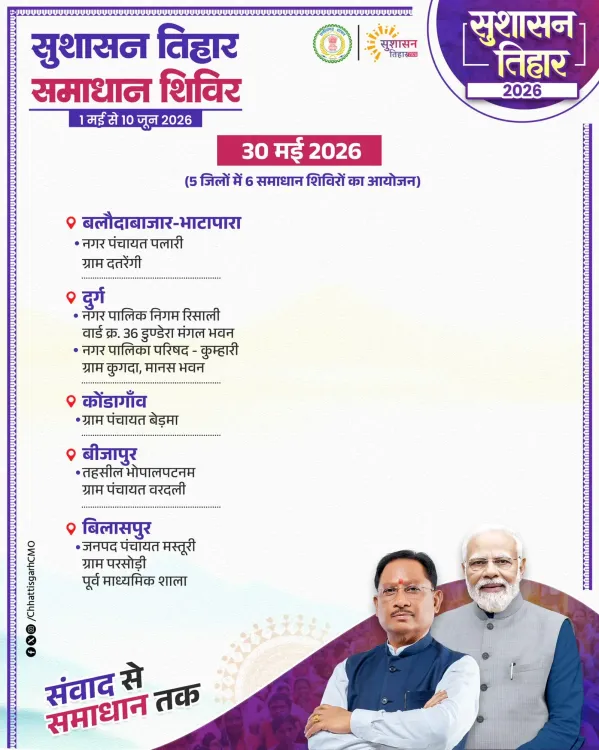
The Chhattisgarh CMO announced Samadhan Shivirs — public grievance camps — at multiple state locations on 30 May 2026 under Sushasan Tihar 2026, the BJP-led state government's recurring good-governance initiative aimed at direct citizen redressal.
Key Takeaways
The Chhattisgarh CMO announced Samadhan Shivirs for 30 May 2026 across multiple state locations.
The camps are part of Sushasan Tihar 2026 , a recurring good-governance festival run by the state government.
Chief Minister Vishnu Deo Sai has led the BJP-administered state since December 2023 .
The shivirs address citizen grievances including land records, pensions, certificates, and service-delivery complaints.
District collectors and local officials are typically responsible for overseeing on-the-spot redressal at these camps.
Camp-wise resolution statistics and follow-up collector orders will be key indicators of the programme's effectiveness.
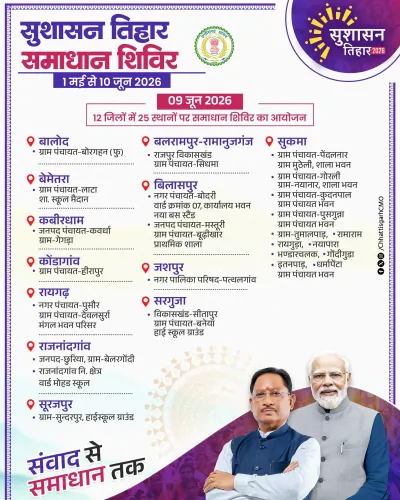
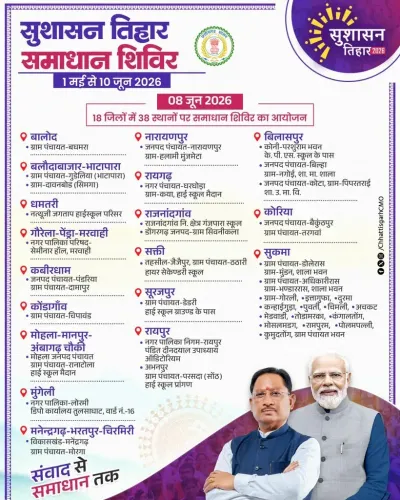
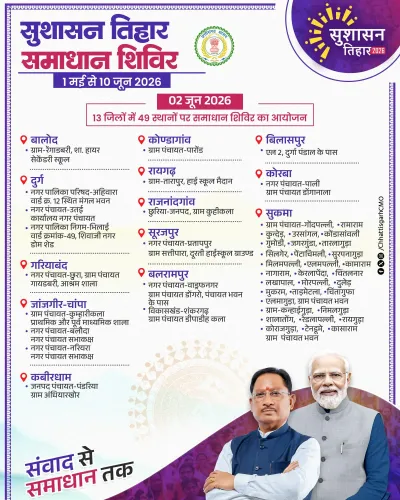
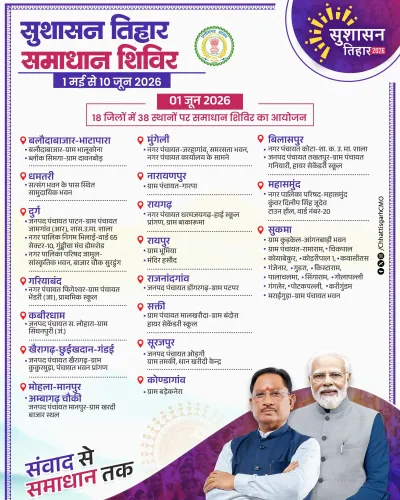
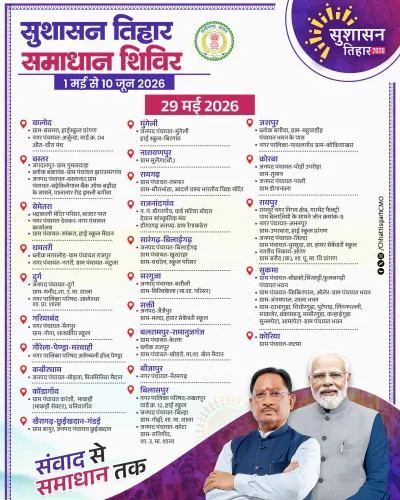
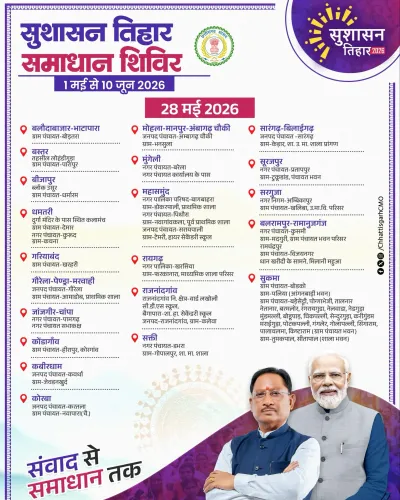
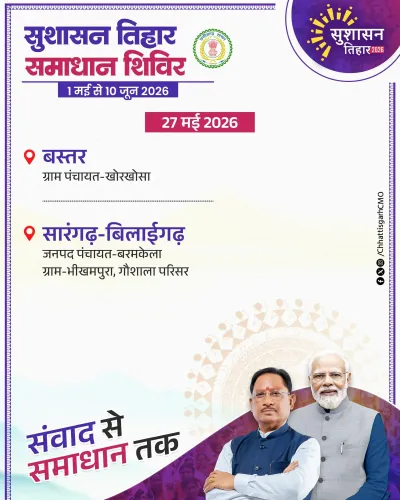
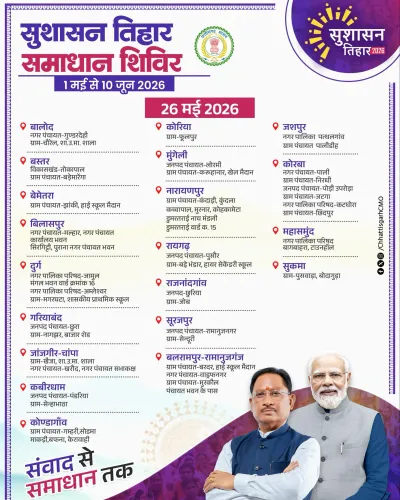
The Chief Minister's Office of Chhattisgarh announced on Friday, 29 May 2026 that Samadhan Shivirs — public grievance redressal camps — will be held at multiple locations across the state on Saturday, 30 May 2026, as part of the ongoing Sushasan Tihar 2026 initiative.
Context
The CMO's post stated: 'Sushasan Tihar ke tahat kal pradesh ke vibhinn sthanon par Samadhan Shiviro ka aayojan hoga' ('Under Sushasan Tihar, Samadhan Shivirs will be organised at various locations across the state tomorrow'). The announcement was accompanied by the hashtag #SushasanTihar2026, signalling an active, ongoing campaign cycle.
Sushasan Tihar — loosely translated as the 'Festival of Good Governance' — is a recurring initiative of the Chhattisgarh government under Chief Minister Vishnu Deo Sai, who has led the BJP-administered state since December 2023. The programme centres on bringing government services and grievance redressal directly to citizens at the local level.
Policy Backdrop
Chhattisgarh governments have organised district-level grievance camps and Jan Sunwai programmes since at least the early 2010s, building a tradition of direct citizen-administration interface. These exercises typically cover complaints related to land records, pension disbursements, caste and income certificates, and basic service delivery.
Across India, state administrations periodically deploy time-bound public camps to address service-delivery backlogs. Such programmes are frequently branded as governance festivals and are designed to demonstrate administrative responsiveness at the grassroots level.
Stakeholders and Impact
The primary beneficiaries of the Samadhan Shivirs are general citizens and rural households who may otherwise face procedural barriers in accessing government services or filing complaints. By decentralising the redressal process, the camps aim to reduce the burden on district headquarters and bring officials closer to the public.
District collectors and local administrative officers are typically tasked with overseeing these camps, ensuring that pending grievances are heard, logged, and actioned on the spot where possible. The multi-location format of the 30 May camps suggests a state-wide mobilisation of the administrative machinery.
What's Next
Attention will now turn to the government's release of camp-wise resolution statistics — a key metric that determines the credibility and effectiveness of the Sushasan Tihar exercise. Follow-up orders from district collectors in the weeks after the camps will indicate how many grievances were resolved on the day versus referred for further action.
If past editions are a guide, the CMO is likely to publish outcome data and highlight success stories, using the programme as a continuing demonstration of the Sai government's governance priorities ahead of future electoral and policy cycles.
Point of View
Blending administrative outreach with political optics. For the Sai government, sustaining a visible grievance-redressal calendar reinforces its 'delivery-first' positioning in a state where the BJP returned to power in late 2023. The multi-location format of the 30 May camps signals an attempt to project state-wide administrative reach rather than token activity in select districts. The real test, however, lies in post-camp follow-through: resolution rates and collector-level compliance will determine whether Sushasan Tihar is substantive governance or largely ceremonial branding.
NationPress
12 Oct 2026
Frequently Asked Questions
What is Sushasan Tihar in Chhattisgarh?
Sushasan Tihar, meaning 'Festival of Good Governance,' is a recurring initiative of the Chhattisgarh government that organises public grievance redressal camps — called Samadhan Shivirs — at multiple locations across the state to bring government services directly to citizens.
What is a Samadhan Shivir?
A Samadhan Shivir is a public camp where citizens can present complaints and grievances related to services such as land records, pensions, and certificates directly to government officials, who attempt to resolve issues on the spot or log them for follow-up.
When are the Samadhan Shivirs being held under Sushasan Tihar 2026?
The Chhattisgarh CMO announced that Samadhan Shivirs will be held on 30 May 2026 at various locations across the state as part of Sushasan Tihar 2026.
Who is the Chief Minister of Chhattisgarh in 2026?
Vishnu Deo Sai is the Chief Minister of Chhattisgarh, heading the BJP-led state government since December 2023 .
How can citizens benefit from Sushasan Tihar camps?
Citizens, particularly from rural households, can attend Samadhan Shivirs to file or follow up on grievances related to government services, land disputes, pension payments, and official certificates, with district-level officials present to provide direct redressal.